Skip to content

High-quality research proteins.

  • 1-800-805-6531

  • Mon - Sat 8.00-18.00, Sun - Closed

  • info@prospecbio.com

  • PO Box 6591 East Brunswick NJ 08816

  • Products
    • Cytokines
    • Growth factors
    • Chemokines
    • Cd antigens
    • Neurotrophins
    • Hormones
    • Enzymes
    • Viral antigens
    • Recombinant proteins
    • Natural proteins
    • Monoclonal antibodies
    • Polyclonal antibodies
    • Thermal Packaging
  • About
    • Company
    • Founder
    • Contribution
  • Customers
    • Eastern Asia
    • Eastern Europe
    • North America
    • South America
    • South East Asia
    • Southern Asia
    • Western Europe
  • Ordering
    • Ordering Method
    • Ordering - Credit Card
    • Ordering - PO
    • Shipping Fees
    • FAQs
  • Services
    • DNA Cloning
    • Protein Expression
    • Monoclonal Antibody
    • Fermentation
    • Technology License
  • Contact us
Log in

Country/region

  • USD $ | Albania
  • USD $ | Andorra
  • USD $ | Argentina
  • USD $ | Armenia
  • USD $ | Australia
  • USD $ | Austria
  • USD $ | Azerbaijan
  • USD $ | Belarus
  • USD $ | Belgium
  • USD $ | Bolivia
  • USD $ | Brazil
  • USD $ | Bulgaria
  • USD $ | Cambodia
  • USD $ | Canada
  • USD $ | Chile
  • USD $ | China
  • USD $ | Colombia
  • USD $ | Costa Rica
  • USD $ | Croatia
  • USD $ | Cyprus
  • USD $ | Czechia
  • USD $ | Denmark
  • USD $ | Estonia
  • USD $ | Finland
  • USD $ | France
  • USD $ | Georgia
  • USD $ | Germany
  • USD $ | Greece
  • USD $ | Hong Kong SAR
  • USD $ | Hungary
  • USD $ | Iceland
  • USD $ | India
  • USD $ | Ireland
  • USD $ | Israel
  • USD $ | Italy
  • USD $ | Japan
  • USD $ | Kazakhstan
  • USD $ | Latvia
  • USD $ | Liechtenstein
  • USD $ | Lithuania
  • USD $ | Madagascar
  • USD $ | Malta
  • USD $ | Mexico
  • USD $ | Moldova
  • USD $ | Monaco
  • USD $ | Netherlands
  • USD $ | New Zealand
  • USD $ | North Macedonia
  • USD $ | Norway
  • USD $ | Panama
  • USD $ | Paraguay
  • USD $ | Peru
  • USD $ | Philippines
  • USD $ | Poland
  • USD $ | Portugal
  • USD $ | Romania
  • USD $ | Singapore
  • USD $ | Slovakia
  • USD $ | Slovenia
  • USD $ | South Africa
  • USD $ | South Korea
  • USD $ | Spain
  • USD $ | Sri Lanka
  • USD $ | Sweden
  • USD $ | Switzerland
  • USD $ | Taiwan
  • USD $ | Thailand
  • USD $ | Türkiye
  • USD $ | Ukraine
  • USD $ | United Kingdom
  • USD $ | United States
  • USD $ | Uruguay
  • USD $ | Vatican City
  • USD $ | Venezuela
  • USD $ | Vietnam
  • Facebook
  • Instagram
logoProSpec - Recombinant Protein Manufacturer for academic and R&D industry
Become a distributor
Account Log in
Wishlist
Cart Cart(0)
  • Products
    +
    • Cytokines
    • Growth factors
    • Chemokines
    • Cd antigens
    • Neurotrophins
    • Hormones
    • Enzymes
    • Viral antigens
    • Recombinant proteins
    • Natural proteins
    • Monoclonal antibodies
    • Polyclonal antibodies
    • Thermal Packaging
  • About
    +
    • Company
    • Founder
    • Contribution
  • Customers
    +
    • Eastern Asia
    • Eastern Europe
    • North America
    • South America
    • South East Asia
    • Southern Asia
    • Western Europe
  • Ordering
    +
    • Ordering Method
    • Ordering - Credit Card
    • Ordering - PO
    • Shipping Fees
    • FAQs
  • Services
    +
    • DNA Cloning
    • Protein Expression
    • Monoclonal Antibody
    • Fermentation
    • Technology License
  • Contact us

Item added to your cart

View cart
View All
  • Cytokines
  • Growth factors
  • Chemokines
  • Cd antigens
  • Neurotrophins
  • Hormones
  • Enzymes
  • Viral antigens
  • Recombinant proteins
  • Natural proteins
  • Monoclonal antibodies
  • Polyclonal antibodies
  • Thermal Packaging
  • Tumor Necrosis Factor

    Tumor Necrosis Factor

    View All
  • 4-1BB

    4-1BB

    View All
  • Adiponectin

    Adiponectin

    View All
  • AIF1

    AIF1

    View All
  • Other Cytokines

    Other Cytokines

    View All
  • AITRL

    AITRL

    View All
  • Angiopoietin

    Angiopoietin

    View All
  • Apolipoprotein

    Apolipoprotein

    View All
  • B-Cell Activating Factor

    B-Cell Activating Factor

    View All
  • Beta Defensin

    Beta Defensin

    View All
  • Bone Morphogenetic Protein

    Bone Morphogenetic Protein

    View All
  • B type Natriuretic Peptide

    B type Natriuretic Peptide

    View All
  • BST

    BST

    View All
  • Betacellulin

    Betacellulin

    View All
  • Cardiotrophin

    Cardiotrophin

    View All
  • Activin

    Activin

    View All
  • Fibroblast Growth Factor

    Fibroblast Growth Factor

    View All
  • Other Growth Factors

    Other Growth Factors

    View All
  • CSF

    CSF

    View All
  • CTGF

    CTGF

    View All
  • IGFBP

    IGFBP

    View All
  • VEGF Protein

    VEGF Protein

    View All
  • EGF

    EGF

    View All
  • Epigen

    Epigen

    View All
  • Erythropoietin

    Erythropoietin

    View All
  • Insulin-Like Growth Factor

    Insulin-Like Growth Factor

    View All
  • Growth Hormone

    Growth Hormone

    View All
  • HDGF

    HDGF

    View All
  • Hepatocyte Growth Factor

    Hepatocyte Growth Factor

    View All
  • Insulin

    Insulin

    View All
  • BCA-1/ BLC (CXCL13)

    BCA-1/ BLC (CXCL13)

    View All
  • BRAK (CXCL14)

    BRAK (CXCL14)

    View All
  • C-10 (CCL6)

    C-10 (CCL6)

    View All
  • Other Chemokines

    Other Chemokines

    View All
  • MEC (CCL28)

    MEC (CCL28)

    View All
  • LD78-beta (CCL3L1)

    LD78-beta (CCL3L1)

    View All
  • CTACK (CCL27)

    CTACK (CCL27)

    View All
  • CXCL16

    CXCL16

    View All
  • CXCL17

    CXCL17

    View All
  • Platelet Factor-4 (CXCL4)

    Platelet Factor-4 (CXCL4)

    View All
  • ENA-78 (CXCL5)

    ENA-78 (CXCL5)

    View All
  • Eotaxin (CCL11,24,26)

    Eotaxin (CCL11,24,26)

    View All
  • Exodus-2 (CCL21)

    Exodus-2 (CCL21)

    View All
  • Fractalkine (CX3CL1)

    Fractalkine (CX3CL1)

    View All
  • CXCL6

    CXCL6

    View All
  • Other CD Antigens

    Other CD Antigens

    View All
  • CD14

    CD14

    View All
  • CD164

    CD164

    View All
  • CD1

    CD1

    View All
  • CD2

    CD2

    View All
  • CD200

    CD200

    View All
  • CD207

    CD207

    View All
  • CD226

    CD226

    View All
  • CD23

    CD23

    View All
  • CD244

    CD244

    View All
  • CD247

    CD247

    View All
  • CD27

    CD27

    View All
  • CD274

    CD274

    View All
  • CD300

    CD300

    View All
  • CD33

    CD33

    View All
  • Other Neurotrophins

    Other Neurotrophins

    View All
  • Beta-NGF

    Beta-NGF

    View All
  • BDNF

    BDNF

    View All
  • CDNF

    CDNF

    View All
  • CNTF

    CNTF

    View All
  • GDNF

    GDNF

    View All
  • Glia Maturation Factor

    Glia Maturation Factor

    View All
  • MANF

    MANF

    View All
  • Midkine

    Midkine

    View All
  • Neuroglobin

    Neuroglobin

    View All
  • Neurotrophic factors

    Neurotrophic factors

    View All
  • Neuregulin

    Neuregulin

    View All
  • Neuropilin

    Neuropilin

    View All
  • Pigment Epithelium-Derived Factor

    Pigment Epithelium-Derived Factor

    View All
  • Pleiotrophin

    Pleiotrophin

    View All
  • Peptide Hormones

    Peptide Hormones

    View All
  • Other Hormones

    Other Hormones

    View All
  • HCG

    HCG

    View All
  • Endothelin

    Endothelin

    View All
  • Exendin

    Exendin

    View All
  • FSH

    FSH

    View All
  • Glucagon

    Glucagon

    View All
  • GHRP

    GHRP

    View All
  • GLP

    GLP

    View All
  • Thyrostimulin

    Thyrostimulin

    View All
  • Inhibin A

    Inhibin A

    View All
  • LHRH

    LHRH

    View All
  • Melanotan

    Melanotan

    View All
  • Procalcitonin

    Procalcitonin

    View All
  • PTH

    PTH

    View All
  • Peroxiredoxin

    Peroxiredoxin

    View All
  • Peptidase

    Peptidase

    View All
  • Synthetase

    Synthetase

    View All
  • Transferase

    Transferase

    View All
  • Hydrolase

    Hydrolase

    View All
  • Dehydrogenase

    Dehydrogenase

    View All
  • ACE2

    ACE2

    View All
  • Esterase

    Esterase

    View All
  • Protein Kinases

    Protein Kinases

    View All
  • Other Enzymes

    Other Enzymes

    View All
  • Phosphatase

    Phosphatase

    View All
  • Deaminase

    Deaminase

    View All
  • Oxygenase

    Oxygenase

    View All
  • Adenylate Kinase

    Adenylate Kinase

    View All
  • Lyase

    Lyase

    View All
  • Chagas

    Chagas

    View All
  • SARS

    SARS

    View All
  • Influenza

    Influenza

    View All
  • ASFV

    ASFV

    View All
  • Astrovirus

    Astrovirus

    View All
  • Borrelia

    Borrelia

    View All
  • Helicobacter Pylori

    Helicobacter Pylori

    View All
  • Chikungunya

    Chikungunya

    View All
  • Chlamydia

    Chlamydia

    View All
  • Cytomegalo

    Cytomegalo

    View All
  • Dengue

    Dengue

    View All
  • EBV

    EBV

    View All
  • Ebola

    Ebola

    View All
  • Feline Leukemia Virus

    Feline Leukemia Virus

    View All
  • Hepatitis A

    Hepatitis A

    View All
  • Other

    Other

    View All
  • Actin

    Actin

    View All
  • ADAM

    ADAM

    View All
  • Complement Component

    Complement Component

    View All
  • Ag85

    Ag85

    View All
  • Eukaryotic Translation Initiation Factor

    Eukaryotic Translation Initiation Factor

    View All
  • Anterior Gradient Protein

    Anterior Gradient Protein

    View All
  • Heat Shock Protein

    Heat Shock Protein

    View All
  • Alpha-2-HS-Glycoprotein

    Alpha-2-HS-Glycoprotein

    View All
  • Hemoglobin

    Hemoglobin

    View All
  • Allergy

    Allergy

    View All
  • Anaplasma

    Anaplasma

    View All
  • Angiogenin

    Angiogenin

    View All
  • Ankyrin Repeat Domain

    Ankyrin Repeat Domain

    View All
  • Annexin

    Annexin

    View All
  • Other Natural Proteins

    Other Natural Proteins

    View All
  • Aprotinin

    Aprotinin

    View All
  • Transferrin

    Transferrin

    View All
  • Avidin

    Avidin

    View All
  • Anti Coagulation Factors

    Anti Coagulation Factors

    View All
  • Natural Albumin

    Natural Albumin

    View All
  • Natural Coagulation Factors

    Natural Coagulation Factors

    View All
  • Fibronectin

    Fibronectin

    View All
  • Thrombin

    Thrombin

    View All
  • Anti Human Enzyme

    Anti Human Enzyme

    View All
  • Other Monoclonal Antibodies

    Other Monoclonal Antibodies

    View All
  • Anti Human Cytokine

    Anti Human Cytokine

    View All
  • Anti Human Heat Shock Protein

    Anti Human Heat Shock Protein

    View All
  • Anti Mouse Lymphocyte

    Anti Mouse Lymphocyte

    View All
  • Anti Human Chemokine

    Anti Human Chemokine

    View All
  • Anti Human Lymphocyte

    Anti Human Lymphocyte

    View All
  • Anti Viral Monoclonal

    Anti Viral Monoclonal

    View All
  • Anti Mouse Cytokine

    Anti Mouse Cytokine

    View All
  • Anti-GST Monoclonal

    Anti-GST Monoclonal

    View All
  • Other Polyclonal Antibodies

    Other Polyclonal Antibodies

    View All
  • Anti Viral

    Anti Viral

    View All
  • Anti-GST Monoclonal

    Anti-GST Monoclonal

    View All
Back

Search results

28 results found for “Left-Right Determination Factor”

Name

Description

Product #

Price

Quantity

Shipping Method

  • View Data Sheet

    Name :

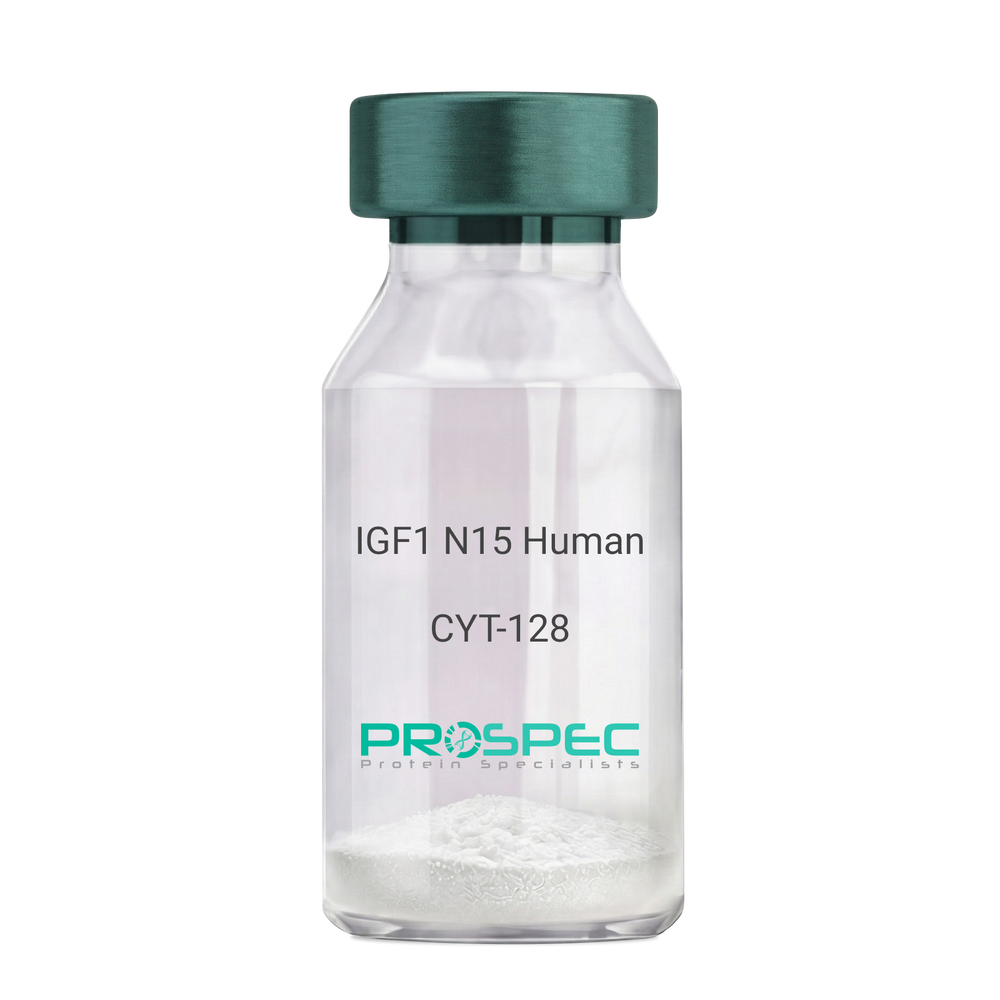
    IGF1 N15 Human

    Description:

    Insulin Like Growth Factor-1 N15 Labeled Human Recombinant

    Somatomedin C, IGF-I, IGFI, IGF1, IGF-IA, Mechano growth factor, MGF.

    Product # :

    CYT-128

    Price :

    Quantity :

    Shipping Method :

    Room Temp Icon

    Shipped at Room temp

    Add To Cart

    More Info

    • description
    • source
    • formulation
    • purity
    • biological activity
    • More Info
    • sds-page
    • Citations

    Description

    IGF1 N15 Human Recombinant produced in E.coli is a single, non-glycosylated polypeptide chain containing 70 amino acids and having a molecular mass of 7.74kDa. The N15 is stable isotope labeled. The IGF1 N15 is purified by proprietary chromatographic techniques.

    Source

    Escherichia Coli.

    Formulation

    IGF1 N15 protein was lyophilized from a 0.2µm filtered concentrated solution in PBS, pH 7.2.

    Purity

    Greater than 97.0% as determined by:
    (a) Analysis by RP-HPLC.
    (b) Analysis by SDS-PAGE.

    Biological Activity

    The ED50 as determined by a cell proliferation assay using serum free human MCF-7 cells is less than 2ng/ml, corresponding to a specific activity of > 5.0 × 10⁵ IU/mg.

    sds-page

    IGF-1 15N Human sds-page - Product image 1

    Citations

    More Info

    • Introduction

      The somatomedins, or insulin-like growth factors (IGFs), comprise a family of peptides that play important roles in mammalian growth and development. IGF1 mediates many of the growth-promoting effects of growth hormone (GH; MIM 139250). Early studies showed that growth hormone did not directly stimulate the incorporation of sulfate into cartilage, but rather acted through a serum factor, termed 'sulfation factor,' which later became known as 'somatomedin' (Daughaday et al., 1972). Three main somatomedins have been characterized: somatomedin C (IGF1), somatomedin A (IGF2; MIM 147470), and somatomedin B (MIM 193190) (Rotwein, 1986; Rosenfeld, 2003).

    • Synonyms

      Somatomedin C, IGF-I, IGFI, IGF1, IGF-IA, Mechano growth factor, MGF.

    • Physical Appearance

      Sterile Filtered White lyophilized (freeze-dried) powder.

    • Stability

      Lyophilized IGF1 N15 although stable at room temperature for 3 weeks, should be stored desiccated below -18°C. Upon reconstitution IGF1 N15 should be stored at 4°C between 2-7 days and for future use below -18°C. For long term storage it is recommended to add a carrier protein (0.1% HSA or BSA). Please prevent freeze-thaw cycles.

    • Solubility

      It is recommended to reconstitute the lyophilized IGF1 N15 in sterile 18M-cm H2O not less than 100µg/ml, which can then be further diluted to other aqueous solutions.

    • Amino Acid Sequence

      GPETLCGAEL VDALQFVCGD RGFYFNKPTG YGSSSRRAPQ TGIVDECCFR SCDLRRLEMY CAPLKPAKSA.

    • Background

      What is the molecular weight/Mw of IGF1 N15 HUMAN Protein?
      IGF1 N15 HUMAN Protein has a total Mw of 7.74kDa.

      What is the source or expression system of IGF1 N15 HUMAN Protein?
      Escherichia Coli.

      What is the Purity of IGF1 N15 HUMAN Protein?
      IGF1 N15 HUMAN Protein is >97% pure as determined by SDS-PAGE.

      What is the Biological Activity of IGF1 N15 HUMAN Protein?
      The ED50 as determined by a cell proliferation assay using serum free human MCF-7 cells is less than 2ng/ml, corresponding to a specific activity of > 5.0 × 10⁵ IU/mg.

      What is the amino acid sequence of IGF1 N15 HUMAN Protein?
      GPETLCGAEL VDALQFVCGD RGFYFNKPTG YGSSSRRAPQ TGIVDECCFR SCDLRRLEMY CAPLKPAKSA.

      What applications can IGF1 N15 HUMAN Protein be used in?
      IGF1 N15 HUMAN Protein can probably be used in western blot, ELISA and Lateral Flow.

      What is the endotoxin level for IGF1 N15 HUMAN Protein?
      The endotoxin level is minimal, IGF1 N15 HUMAN Protein was purified using conventional chromatography techniques.

    ProSpec's products are furnished for LABORATORY RESEARCH USE ONLY. The product may not be used as drugs, agricultural or pesticidal products, food additives or household chemicals.

    Igf1 N15 Human
  • View Data Sheet

    Name :

    LIF Rat

    Description:

    Leukemia Inhibitory Factor Rat Recombinant

    Leukemia inhibitory factor, Cholinergic neuronal differentiation factor, Lif.

    Product # :

    CYT-731

    Price :

    Quantity :

    Shipping Method :

    Room Temp Icon

    Shipped at Room temp

    Add To Cart

    More Info

    • description
    • source
    • formulation
    • purity
    • biological activity
    • More Info
    • Citations

    Description

    Leukemia Inhibitory Factor (LIF) Rat Recombinant produced in E.Coli is a single, non-glycosylated, polypeptide chain containing 180 amino acids and having a molecular mass of 19.8 kDa. The Leukemia Inhibitory Factor (LIF) is purified by proprietary chromatographic techniques.

    Source

    Escherichia Coli.

    Formulation

    LIF Rat was lyophilized from 0.2µm filtered concentrated solution in 1xPBS, pH 7.4.

    Purity

    Greater than 96.0% as determined by:
    (a) Analysis by RP-HPLC.
    (b) Analysis by SDS-PAGE.

    Biological Activity

    The activity of rat LIF is determined by the ability to induce differentiation of M1 myeloid leukemic cells. The minimum detectable concentration of rat LIF in this assay is 0.5ng/mL.

    Citations

    More Info

    • Introduction

      Leukemia Inhibitory Factor also called LIF is a lymphoid factor that promotes long-term maintenance of embryonic stem cells by suppressing spontaneous differentiation. Leukemia Inhibitory Factor has several functions such as cholinergic neuron differentiation, control of stem cell pluripotency, bone & fat metabolism, mitogenesis of factor dependent cell lines & promotion of megakaryocyte production in vivo. Human and mouse LIF exhibit a 78% identity in its amino acid sequence.

    • Synonyms

      Leukemia inhibitory factor, Cholinergic neuronal differentiation factor, Lif.

    • Physical Appearance

      Sterile Filtered White lyophilized (freeze-dried) powder.

    • Stability

      Lyophilized Leukemia Inhibitory Factor (LIF) although stable at room temperature for 3 weeks, should be stored desiccated below -18°C. Upon reconstitution Leukemia Inhibitory Factor (LIF) should be stored at 4°C between 2-7 days and for future use below -18°C. For long term storage it is recommended to add a carrier protein (0.1% HSA or BSA).Please prevent freeze-thaw cycles.

    • Solubility

      It is recommended to reconstitute the lyophilized Leukemia Inhibitory Factor (LIF) in sterile water not less than 100µg/ml, which can then be further diluted to other aqueous solutions.

    • Amino Acid Sequence

      SPLPITPVNA TCAIRHPCHG NLMNQIKSQL AQLNGSANAL FISYYTAQGE PFPNNVDKLC APNMTDFPPF HANGTEKTKL VELYRMVTYL GASLTNITWD QKNLNPTAVS LQIKLNATTD VMRGLLSSVL CRLCNKYHVG HVDVPCVPDN SSKEAFQRKK LGCQLLGTYK QVISVLAQAF .

    ProSpec's products are furnished for LABORATORY RESEARCH USE ONLY. The product may not be used as drugs, agricultural or pesticidal products, food additives or household chemicals.

    Lif Rat
  • View Data Sheet

    Name :

    LIF Human

    Description:

    Leukemia Inhibitory Factor Human Recombinant

    CDF, HILDA, D-FACTOR, Differentiation- stimulating factor, Melanoma-derived LPL inhibitor, MLPLI, Emfilermin, Leukemia inhibitory factor, LIF, DIA.

    Product # :

    CYT-644

    Price :

    Quantity :

    Shipping Method :

    Room Temp Icon

    Shipped at Room temp

    Add To Cart

    More Info

    • description
    • source
    • formulation
    • purity
    • biological activity
    • More Info
    • Citations

    Description

    Leukemia Inhibitory Factor (LIF) Human Recombinant produced in E.Coli is a single, non-glycosylated, polypeptide chain containing 180 amino acids and having a molecular mass of 19.7kDa. The Leukemia Inhibitory Factor (LIF) is purified by proprietary chromatographic techniques.

    Source

    Escherichia Coli.

    Formulation

    Leukemia Inhibitory Factor (LIF) was lyophilized from a concentrated (1mg/ml) sterile solution containing 1xPBS pH 7.4.

    Purity

    Greater than 98.0% as determined by:
    (a) Analysis by RP-HPLC.
    (b) Analysis by SDS-PAGE.

    Biological Activity

    The ED50 was determined by the M1 cell differentiation assay is < 0.01 ng/ml, corresponding to a specific activity of 100,000,000IU/mg.

    Citations

    More Info

    • Introduction

      Leukemia Inhibitory Factor also called LIF is a lymphoid factor that promotes long-term maintenance of embryonic stem cells by suppressing spontaneous differentiation. Leukemia Inhibitory Factor has several functions such as cholinergic neuron differentiation, control of stem cell pluripotency, bone & fat metabolism, mitogenesis of factor dependent cell lines & promotion of megakaryocyte production in vivo. Human and mouse LIF exhibit a 78% identity in its amino acid sequence.

    • Synonyms

      CDF, HILDA, D-FACTOR, Differentiation- stimulating factor, Melanoma-derived LPL inhibitor, MLPLI, Emfilermin, Leukemia inhibitory factor, LIF, DIA.

    • Physical Appearance

      Sterile Filtered White lyophilized (freeze-dried) powder.

    • Stability

      Lyophilized Leukemia Inhibitory Factor (LIF) although stable at room temperature for 3 weeks, should be stored desiccated below -18°C. Upon reconstitution Leukemia Inhibitory Factor (LIF) should be stored at 4°C between 2-7 days and for future use below -18°C.For long term storage it is recommended to add a carrier protein (0.1% HSA or BSA).Please prevent freeze-thaw cycles.

    • Solubility

      It is recommended to reconstitute the lyophilized Leukemia Inhibitory Factor (LIF) in sterile water not less than 100µg/ml, which can then be further diluted to other aqueous solutions.

    • Amino Acid Sequence

      SPLPITPVNA TCAIRHPCHN NLMNQIRSQL AQLNGSANAL FILYYTAQGE PFPNNLDKLC GPNVTDFPPF HANGTEKAKL VELYRIVVYL GTSLGNITRD QKILNPSALS LHSKLNATAD ILRGLLSNVL CRLCSKYHVG HVDVTYGPDT SGKDVFQKKK LGCQLLGKYK QIIAVLAQAF.

    • Background

      Leukemia Inhibitory Factor (LIF) Background

      Leukemia Inhibitory Factor (LIF) is a cytokine within the interleukin-6 family. It is influential in the hypothalamus and involved in energy balance.

      LIF stimulates ACTH secretion and affects the stress and immune response in the body. Administration of LIF has been shown to correct low plasma ACTH and repair hypothalamic-pituitary-adrenal (HPA) axis responses.

      Function and Applications of LIF

      LIF prevents the proliferation of myeloid leukemia cells by inducing their terminal differentiation. Beyond cancer, LIF influences bone metabolism, embryogenesis, and inflammation.

      Moreover, it supports the self-renewal of stem cells in culture by activating Stat3, thus preventing spontaneous differentiation, and is studied for potential benefits in fertility treatments.

      Structure and Interactions

      LIF's structure consists of a four alpha-helix bundle similar to other hematopoietic cytokines. It interacts with components such as the ciliary neurotrophic factor (CNTF) through multimeric receptors, influencing both cytokine's effects on cells. This interaction is crucial for forming high-affinity binding sites that mediate their biological activities.

    ProSpec's products are furnished for LABORATORY RESEARCH USE ONLY. The product may not be used as drugs, agricultural or pesticidal products, food additives or household chemicals.

    Lif Human
  • View Data Sheet

    Name :

    EGF Long Human

    Description:

    Epidermal Growth Factor Long Human Recombinant

    Urogastrone, URG, EGF.

    Product # :

    CYT-798

    Price :

    Quantity :

    Shipping Method :

    Room Temp Icon

    Shipped at Room temp

    Add To Cart

    More Info

    • description
    • source
    • formulation
    • purity
    • biological activity
    • More Info
    • Citations

    Description

    Recombinant Human EGF Long produced in E.coli cells is a single non-glycosylated, polypeptide chain containing 106 amino acids and having a molecular mass of 12.3kDa. The EGF Long is purified by proprietary chromatographic techniques.

    Source

    Escherichia Coli.

    Formulation

    The EGF Long was lyophilized from a 0.2µm filtered concentrated solution in 10mM HCl.

    Purity

    Greater than 95.0% as determined by:
    (a) Analysis by RP-HPLC.
    (b) Analysis by SDS-PAGE.

    Biological Activity

    The ED50 as determined by a cell proliferation assay using murine Balb/c 3T3 cells is less than 1.0 ng/ml, corresponding to a specific activity of > 1.0 × 10⁶ IU/mg.

    Citations

    More Info

    • Introduction

      Epidermal growth factor has a profound effect on the differentiation of specific cells in vivo and is a potent mitogenic factor for a variety of cultured cells of both ectodermal and mesodermal origin. The EGF precursor is believed to exist as a membrane-bound molecule which is proteolytically cleaved to generate the 53-amino acid peptide hormone that stimulates cells to divide. EGF stimulates the growth of various epidermal and epithelial tissues in vivo and in vitro and of some fibroblasts in cell culture. Long EGF is a recombinant analog of Human EGF developed as a replacement for use in therapeutic cell culture applications as a like-for-like supplement for Recombinant Human or native EGF. It includes the Human EGF amino acid sequence plus a 53 amino acid N-terminal extension peptide.

    • Synonyms

      Urogastrone, URG, EGF.

    • Physical Appearance

      Sterile Filtered White lyophilized (freeze-dried) powder.

    • Stability

      Lyophilized EGF Long although stable at room temperature for 3 weeks, should be stored desiccated below -18°C. Upon reconstitution EGF Long should be stored at 4°C between 2-7 days and for future use below -18°C.For long term storage it is recommended to add a carrier protein (0.1% HSA or BSA).Please prevent freeze-thaw cycles.

    • Solubility

      It is recommended to reconstitute the lyophilized EGF Long in sterile 100mM AcOH (acetic Acid) not less than 100µg/ml, which can then be further diluted to other aqueous solutions.

    • Amino Acid Sequence

      MFPAMPLSSL FANAVLRAQH LHQLAADTYK EFERAYIPEG QRYSIQVNFA HYGNSDSECP LSHDGYCLHD GVCMYIEALD KYACNCVVGY IGERCQYRDL KWWELR

    • Background

      What is the molecular weight/Mw of EGF Protein?
      EGF Protein has a total Mw of 12.3kDa.

      What is the source or expression system of EGF Protein?
      Escherichia Coli.

      What is the Purity of EGF Protein?
      EGF Protein is >95% pure as determined by SDS-PAGE.

      What is the Biological Activity of EGF Protein?
      The ED50 as determined by a cell proliferation assay using murine Balb/c 3T3 cells is less than 1.0 ng/ml, corresponding to a specific activity of > 1.0 × 10⁶ IU/mg.

      What is the amino acid sequence of EGF Protein?
      MFPAMPLSSL FANAVLRAQH LHQLAADTYK EFERAYIPEG QRYSIQVNFA HYGNSDSECP LSHDGYCLHD GVCMYIEALD KYACNCVVGY IGERCQYRDL KWWELR

      What applications can EGF Protein be used in?
      EGF Protein can probably be used in western blot, ELISA and Lateral Flow.

      What is the endotoxin level for EGF Protein?
      The endotoxin level is minimal, EGF Protein was purified using conventional chromatography techniques.

    ProSpec's products are furnished for LABORATORY RESEARCH USE ONLY. The product may not be used as drugs, agricultural or pesticidal products, food additives or household chemicals.

    Egf Long Human
  • View Data Sheet

    Name :

    Leptin Protein

    Description:

    Leptin Human Recombinant

    OB Protein, Obesity Protein, OBS, Obesity factor.

    Product # :

    CYT-228

    Price :

    Quantity :

    Shipping Method :

    Room Temp Icon

    Shipped at Room temp

    Add To Cart

    More Info

    • description
    • source
    • formulation
    • purity
    • biological activity
    • More Info
    • Citations

    Description

    Leptin Human Recombinant produced in E.Coli is a single, non-glycosylated, polypeptide chain containing 146 amino acids and having a molecular mass of 16 kDa.The Leptin is purified by proprietary chromatographic techniques.

    Source

    Escherichia Coli.

    Formulation

    The protein was lyophilized from a concentrated (1mg/ml) solution with 0.0045mM NaHCO3.

    Purity

    Greater than 95.0% as determined by:
    (a) Analysis by Gel filtration.
    (b) Analysis by SDS-PAGE.

    Biological Activity

    Biological Activity is evidenced by inducing proliferation of BAF/3 cells stably transfected with the long form of human leptin receptor.

    Citations

    More Info

    • Introduction

      A 16-kDa peptide hormone secreted from white adipocytes and implicated in the regulation of food intake and energy balance. Leptin provides the key afferent signal from fat cells in the feedback system that controls body fat stores.

    • Synonyms

      OB Protein, Obesity Protein, OBS, Obesity factor.

    • Physical Appearance

      Sterile Filtered White lyophilized (freeze-dried) powder.

    • Stability

      Lyophilized Leptin although stable at room temperature for 3 weeks, should be stored desiccated below -18°C. Upon reconstitution Leptin should be stored at 4°C between 2-7 days and for future use below -18°C. For long term storage it is recommended to add a carrier protein (0.1% HSA or BSA). Please prevent freeze-thaw cycles.

    • Solubility

      It is recommended to reconstitute the lyophilized Leptin in sterile water or 0.4% NaHCO3 pH-8-9, not less than 100µg/ml, which can then be further diluted to other aqueous solutions.

    • Amino Acid Sequence

      The sequence of the first five N-terminal amino acids was determined and was found to be Ala-Val-Pro-Ile-Gln.

    • Protein content

      Protein quantitation was carried out by UV spectroscopy at 280 nm using the absorbency value of 0.87 as the extinction coefficient for a 0.1% (1mg/ml) solution. This value is calculated by the PC GENE computer analysis program of protein sequences (IntelliGenetics).

    ProSpec's products are furnished for LABORATORY RESEARCH USE ONLY. The product may not be used as drugs, agricultural or pesticidal products, food additives or household chemicals.

    Leptin Human
  • View Data Sheet

    Name :

    Leptin Rat

    Description:

    Leptin Rat Recombinant

    OB Protein, Obesity Protein, OBS, Obesity factor.

    Product # :

    CYT-227

    Price :

    Quantity :

    Shipping Method :

    Room Temp Icon

    Shipped at Room temp

    Add To Cart

    More Info

    • description
    • source
    • formulation
    • purity
    • biological activity
    • More Info
    • Citations

    Description

    Leptin Rat Recombinant produced in E.Coli is a single, non-glycosylated, polypeptide chain containing 147 amino acids and having a molecular mass of 16 kDa.The Leptin is purified by proprietary chromatographic techniques.

    Source

    Escherichia Coli.

    Formulation

    The protein was lyophilized from a concentrated (1mg/ml) solution with 0.0045mM NaHCO3.

    Purity

    Greater than 95.0% as determined by:
    (a) Analysis by SEC-HPLC.
    (b) Analysis by SDS-PAGE.

    Biological Activity

    Biological activity of Leptin Rat is evidenced by inducing proliferation of BAF/3 cells stably transfected with the long form of human leptin receptor.

    Citations

    More Info

    • Introduction

      A 16-kDa peptide hormone secreted from white adipocytes and implicated in the regulation of food intake and energy balance. Leptin provides the key afferent signal from fat cells in the feedback system that controls body fat stores.

    • Synonyms

      OB Protein, Obesity Protein, OBS, Obesity factor.

    • Physical Appearance

      Sterile Filtered White lyophilized (freeze-dried) powder.

    • Stability

      Lyophilized Leptin although stable at room temperature for 3 weeks, should be stored desiccated below -18°C. Upon reconstitution Leptin should be stored at 4°C between 2-7 days and for future use below -18°C.For long term storage it is recommended to add a carrier protein (0.1% HSA or BSA).Please prevent freeze-thaw cycles.

    • Solubility

      It is recommended to reconstitute the lyophilized Leptin in sterile 18MΩ-cm H2O not less than 100µg/ml, which can then be further diluted to other aqueous solutions.

    • Amino Acid Sequence

      The sequence of the first five N-terminal amino acids was determined and was found to be Ala-Val-Pro-Ile-His.

    • Protein content

      Protein quantitation was carried out by two independent methods:1. UV spectroscopy at 280 nm using the absorbency value of 0.201 as the extinction coefficient for a 0.1% (1mg/ml) solution. This value is calculated by the PC GENE computer analysis program of protein sequences (IntelliGenetics).2. Analysis by RP-HPLC, using a calibrated solution of Leptin rat as a Reference Standard.

    ProSpec's products are furnished for LABORATORY RESEARCH USE ONLY. The product may not be used as drugs, agricultural or pesticidal products, food additives or household chemicals.

    Leptin Rat
  • View Data Sheet

    Name :

    Leptin Chicken

    Description:

    Leptin Chicken Recombinant

    OB Protein, Obesity Protein, OBS, Obesity factor.

    Product # :

    CYT-505

    Price :

    Quantity :

    Shipping Method :

    Room Temp Icon

    Shipped at Room temp

    Add To Cart

    More Info

    • description
    • source
    • formulation
    • purity
    • biological activity
    • More Info
    • Citations

    Description

    Leptin Chicken Recombinant produced in E.Coli is a single, non-glycosylated, polypeptide chain containing 145 amino acids and having a molecular mass of 16 kDa.The Leptin is purified by proprietary chromatographic techniques.

    Source

    Escherichia Coli.

    Formulation

    The protein was lyophilized from a concentrated (1mg/ml) solution with 0.0045mM NaHCO3.

    Purity

    Greater than 95.0% as determined by:
    (a) Analysis by SEC-HPLC.
    (b) Analysis by SDS-PAGE.

    Biological Activity

    Biological active as evidenced by inducing proliferation of BAF/3 cells stably transfected with the long form of human leptin receptor. Its activity is however 5-10 fold lower as compared to mammalian leptins.

    Citations

    More Info

    • Introduction

      A 16-kDa peptide hormone secreted from white adipocytes and implicated in the regulation of food intake and energy balance. Leptin provides the key afferent signal from fat cells in the feedback system that controls body fat stores.

    • Synonyms

      OB Protein, Obesity Protein, OBS, Obesity factor.

    • Physical Appearance

      Sterile Filtered White lyophilized (freeze-dried) powder.

    • Stability

      Lyophilized Leptin although stable at room temperature for 3 weeks, should be stored desiccated below -18°C. Upon reconstitution Leptin should be stored at 4°C between 2-7 days and for future use below -18°C.For long term storage it is recommended to add a carrier protein (0.1% HSA or BSA).Please prevent freeze-thaw cycles.

    • Solubility

      It is recommended to reconstitute the lyophilized Leptin in sterile 18MΩ-cm H2O not less than 100µg/ml, which can then be further diluted to other aqueous solutions.

    • Amino Acid Sequence

      The sequence of the first five N-terminal amino acids was determined and was found to be Ala-Val-Pro-Cys-Gln.

      Recombinant Chicken leptin was produced according to the a.a. sequence published by the groups of Taouis & McMutry, see Raver et al. Protein Expr Purif. 1998 Dec; 14(3):403-8.

    • Protein content

      Protein quantitation was carried out by two independent methods1. UV spectroscopy at 280 nm using the absorbency value of 0.19 as the extinction coefficient for a 0.1% (1mg/ml) solution. This value is calculated by the PC GENE computer analysis program of protein sequences (IntelliGenetics). 2. Analysis by RP-HPLC,using calibrated solution of Leptin Chicken as a Reference Standard.

    ProSpec's products are furnished for LABORATORY RESEARCH USE ONLY. The product may not be used as drugs, agricultural or pesticidal products, food additives or household chemicals.

    Leptin Chicken
  • View Data Sheet

    Name :

    Leptin Bovine

    Description:

    Leptin Bovine Recombinant

    OB Protein, Obesity Protein, OBS, Obesity factor.

    Product # :

    CYT-502

    Price :

    Quantity :

    Shipping Method :

    Room Temp Icon

    Shipped at Room temp

    Add To Cart

    More Info

    • description
    • source
    • formulation
    • purity
    • biological activity
    • More Info
    • Citations

    Description

    Leptin Bovine Recombinant produced in E.Coli is a single, non-glycosylated, polypeptide chain containing 146 amino acids and having a molecular mass of 16 kDa.The Leptin is purified by proprietary chromatographic techniques.

    Source

    Escherichia Coli.

    Formulation

    The protein was lyophilized from a concentrated (1mg/ml) solution with 0.02% NaHCO3.

    Purity

    Greater than 98.0% as determined by:
    (a) Gel filtration analysis.
    (b) Analysis by SDS-PAGE.

    Biological Activity

    Biological active as evidenced by inducing proliferation of BAF/3 cells stably transfected with the long form of human leptin receptor.

    Citations

    More Info

    • Introduction

      A 16-kDa peptide hormone secreted from white adipocytes and implicated in the regulation of food intake and energy balance. Leptin provides the key afferent signal from fat cells in the feedback system that controls body fat stores.

    • Synonyms

      OB Protein, Obesity Protein, OBS, Obesity factor.

    • Physical Appearance

      Sterile Filtered White lyophilized (freeze-dried) powder.

    • Stability

      Lyophilized Leptin although stable at room temperature for 3 weeks, should be stored desiccated below -18°C. Upon reconstitution Leptin should be stored at 4°C between 2-7 days and for future use below -18°C.For long term storage it is recommended to add a carrier protein (0.1% HSA or BSA).Please prevent freeze-thaw cycles.

    • Solubility

      It is recommended to reconstitute the lyophilized Leptin in sterile 0.4% NaHCO3 not less than 100µg/ml, which can then be further diluted to other aqueous solutions.

    • Amino Acid Sequence

      The sequence of the first five N-terminal amino acids was determined and was found to be Ala-Val-Pro-Ile-Arg.

    • Protein content

      Protein quantitation was carried out by UV spectroscopy at 280 nm using the absorbency value of 0.2 as the extinction coefficient for a 0.1% (1mg/ml) solution. This value is calculated by the PC GENE computer analysis program of protein sequences (IntelliGenetics).

    ProSpec's products are furnished for LABORATORY RESEARCH USE ONLY. The product may not be used as drugs, agricultural or pesticidal products, food additives or household chemicals.

    Leptin Bovine
  • View Data Sheet

    Name :

    Leptin Horse

    Description:

    Leptin Horse Recombinant

    OB Protein, Obesity Protein, OBS, Obesity factor.

    Product # :

    CYT-504

    Price :

    Quantity :

    Shipping Method :

    Room Temp Icon

    Shipped at Room temp

    Add To Cart

    More Info

    • description
    • source
    • formulation
    • purity
    • biological activity
    • More Info
    • Citations

    Description

    Leptin Horse Recombinant produced in E.Coli is a single, non-glycosylated, polypeptide chain containing 146 amino acids and having a molecular mass of 16 kDa.The Leptin is purified by proprietary chromatographic techniques.

    Source

    Escherichia Coli.

    Formulation

    The protein was lyophilized from a concentrated (1mg/ml) solution with 0.0045mM NaHCO3.

    Purity

    Greater than 95.0% as determined by:
    (a) Analysis by SEC-HPLC.
    (b) Analysis by SDS-PAGE.

    Biological Activity

    Biological active as evidenced by inducing proliferation of BAF/3 cells stably transfected with the long form of human leptin receptor.

    Citations

    More Info

    • Introduction

      A 16-kDa peptide hormone secreted from white adipocytes and implicated in the regulation of food intake and energy balance. Leptin provides the key afferent signal from fat cells in the feedback system that controls body fat stores.

    • Synonyms

      OB Protein, Obesity Protein, OBS, Obesity factor.

    • Physical Appearance

      Sterile Filtered White lyophilized (freeze-dried) powder.

    • Stability

      Lyophilized Leptin although stable at room temperature for 3 weeks, should be stored desiccated below -18°C. Upon reconstitution Leptin should be stored at 4°C between 2-7 days and for future use below -18°C.For long term storage it is recommended to add a carrier protein (0.1% HSA or BSA).Please prevent freeze-thaw cycles.

    • Solubility

      It is recommended to reconstitute the lyophilized Leptin in sterile 18MΩ-cm H2O not less than 100µg/ml, which can then be further diluted to other aqueous solutions.

    • Amino Acid Sequence

      The sequence of the first five N-terminal amino acids was determined and was found to be Ala-Val-Pro-Ile-Gln.

    • Protein content

      Protein quantitation was carried out by two independent methods1. UV spectroscopy at 280 nm using the absorbency value of 0.1 as the extinction coefficient for a 0.1% (1mg/ml) solution. This value is calculated by the PC GENE computer analysis program of protein sequences (IntelliGenetics). 2. Analysis by RP-HPLC,using calibrated solution of Leptin Horse as a Reference Standard.

    ProSpec's products are furnished for LABORATORY RESEARCH USE ONLY. The product may not be used as drugs, agricultural or pesticidal products, food additives or household chemicals.

    Leptin Horse
  • View Data Sheet

    Name :

    MIF Human His N

    Description:

    Macrophage Migration Inhibitory Factor Human, Recombinant His Tag N-Terminus

    Phenylpyruvate tautomerase, Glycosylation-inhibiting factor, GIF, MMIF, MIF.

    Product # :

    CYT-431

    Price :

    Quantity :

    Shipping Method :

    Ice Icon

    Shipped with Ice Packs

    Add To Cart

    More Info

    • description
    • source
    • formulation
    • purity
    • More Info
    • Citations

    Description

    MIF human Recombinant, fused to 40 a.a. His-tag at N-terminus, was cloned into an E. coli expression vector and was purified to apparent homogeneity by using conventional column chromatography techniques. Macrophage Inducing Factor Human Recombinant ( 1-115 a.a. ) is a single, non-glycosylated, polypeptide chain having a total amino acids of 155 and molecular mass of 17kDa.

    Source

    Escherichia Coli.

    Formulation

    1mg/ml solution containing PBS pH-7.4.

    Purity

    Greater than 95.0% as determined by:
    (a) Analysis by RP-HPLC.
    (b) Analysis by SDS-PAGE.

    Citations

    More Info

    • Introduction

      The cytokine Macrophage migration inhibitory factor (MIF) has been identified to be secreted by the pituitary gland and the monocyte/macrophage and to play an important role in endotoxic shock. MIF has the unique property of being released from macrophages and T cells in response to physiological concentrations of glucocorticoids. The secretion of MIF is tightly regulated and decreases at high, anti-inflammatory steroid concentration.

    • Synonyms

      Phenylpyruvate tautomerase, Glycosylation-inhibiting factor, GIF, MMIF, MIF.

    • Physical Appearance

      Sterile filtered colorless solution.

    • Stability

      Liquid MIF although stable 4°C for 1 week, should be stored below -18°C. Please prevent freeze-thaw cycles.

    • Amino Acid Sequence

      MRGSHHHHHHGMASMTGGQQMGRDLYDDDDKDRWGSMPMFIVNTNV PRASVPDGFL SELTQQLAQA TGKPPQYIAV HVVPDQLMAF GGSSEPCALC LHSIGKIGGA QNRSYSKLLC GLLAERLRIS PDRVYINYYD MNAANVGWNN STFA.

    ProSpec's products are furnished for LABORATORY RESEARCH USE ONLY. The product may not be used as drugs, agricultural or pesticidal products, food additives or household chemicals.

    Mif Human His N
  • View Data Sheet

    Name :

    Leptin Ovine

    Description:

    Leptin Ovine Recombinant

    OB Protein, Obesity Protein, OBS, Obesity factor.

    Product # :

    CYT-239

    Price :

    Quantity :

    Shipping Method :

    Room Temp Icon

    Shipped at Room temp

    Add To Cart

    More Info

    • description
    • source
    • formulation
    • purity
    • biological activity
    • More Info
    • Citations

    Description

    Leptin Ovine Recombinant produced in E.Coli is a single, non-glycosylated, polypeptide chain containing 146 amino acids and having a molecular mass of 16 kDa.The Leptin is purified by proprietary chromatographic techniques.

    Source

    Escherichia Coli.

    Formulation

    The protein was lyophilized from a concentrated (1mg/ml) solution with 0.0045mM NaHCO3.

    Purity

    Greater than 95.0% as determined by:
    (a) Analysis by SEC-HPLC.
    (b) Analysis by SDS-PAGE.

    Biological Activity

    Biological active as evidenced by inducing proliferation of BAF/3 cells stably transfected with the long form of human leptin receptor.

    Citations

    More Info

    • Introduction

      A 16-kDa peptide hormone secreted from white adipocytes and implicated in the regulation of food intake and energy balance. Leptin provides the key afferent signal from fat cells in the feedback system that controls body fat stores.

    • Synonyms

      OB Protein, Obesity Protein, OBS, Obesity factor.

    • Physical Appearance

      Sterile Filtered White lyophilized (freeze-dried) powder.

    • Stability

      Lyophilized Leptin although stable at room temperature for 3 weeks, should be stored desiccated below -18°C. Upon reconstitution Leptin should be stored at 4°C between 2-7 days and for future use below -18°C.For long term storage it is recommended to add a carrier protein (0.1% HSA or BSA).Please prevent freeze-thaw cycles.

    • Solubility

      It is recommended to reconstitute the lyophilized Leptin in sterile 18MΩ-cm H2O not less than 100µg/ml, which can then be further diluted to other aqueous solutions.

    • Amino Acid Sequence

      The sequence of the first five N-terminal amino acids was determined and was found to be Ala-Val-Pro-Ile-Arg.

    • Protein content

      Protein quantitation was carried out by two independent methods1. UV spectroscopy at 280 nm using the absorbency value of 0.2 as the extinction coefficient for a 0.1% (1mg/ml) solution. This value is calculated by the PC GENE computer analysis program of protein sequences (IntelliGenetics). 2. Analysis by RP-HPLC,using calibrated solution of Leptin Ovine as a Reference Standard.

    ProSpec's products are furnished for LABORATORY RESEARCH USE ONLY. The product may not be used as drugs, agricultural or pesticidal products, food additives or household chemicals.

    Leptin Ovine
  • View Data Sheet

    Name :

    M CSF Mouse

    Description:

    Macrophage-Colony Stimulating Factor Mouse Recombinant

    CSF-1, Lanimostim, MCSF, M-CSF.

    Product # :

    CYT-439

    Price :

    Quantity :

    Shipping Method :

    Room Temp Icon

    Shipped at Room temp

    Add To Cart

    More Info

    • description
    • source
    • formulation
    • purity
    • biological activity
    • More Info
    • Citations

    Description

    Macrophage Colony Stimulating Factor Mouse Recombinant produced in E.coli is a disulfide linked homodimer, non-glycosylated, polypeptide chain containing 2 x 156 amino acids and having a total molecular mass of 36.4 KD.MCSF is purified by proprietary chromatographic techniques.

    Source

    Escherichia Coli.

    Formulation

    The protein was lyophilized from a sterile (0.2µm) filtered solution containing 10mM sodium phosphate, 50mM sodium chloride, pH 7.5.

    Purity

    Greater than 95.0% as determined by SDS-PAGE.

    Biological Activity

    The ED50, as calculated by the dose-dependant stimulation of the proliferation of murine M-NFS-60 indicator cells is 1.33ng/ml corresponding to a specific activity of 7.5x10⁵ units/mg.

    Citations

    More Info

    • Introduction

      Granulocyte/Macrophage Colony-Stimulating Factors are cytokines that act in hematopoiesis by controlling the production, differentiation, and function of 2 related white cell populations of the blood, the granulocytes and the monocytes-macrophages. CSF-1 induces cells of the monocyte/macrophage lineage. It plays a role in immunological defenses, bone metabolism, lipoproteins clearance, fertility and pregnancy.

    • Synonyms

      CSF-1, Lanimostim, MCSF, M-CSF.

    • Physical Appearance

      Sterile Filtered White lyophilized (freeze-dried) powder.

    • Stability

      Lyophilized M-CSF although stable at room temperature for 3 weeks, should be stored desiccated below -18°C. Upon reconstitution MCSF should be stored at 4°C between 2-7 days and for future use below -18°C.Please prevent freeze-thaw cycles.

    • Solubility

      It is recommended to reconstitute the lyophilized M-CSF in sterile 18MΩ-cm H2O not less than 100µg/ml, which can then be further diluted to other aqueous solutions.

    • Amino Acid Sequence

      MKEVSEHCSH MIGNGHLKVL QQLIDSQMET SCQIAFEFVD QEQLDDPVCY LKKAFFLVQD IIDETMRFKD NTPNANATER LQELSNNLNS CFTKDYEEQN KACVRTFHET PLQLLEKIKN FFNETKNLLE KDWNIFTKNC NNSFAKCSSR DVVTKP.

    • Background

      Macrophage-Colony Stimulating Factor Mouse Recombinant: An In-Depth Analysis

      Abstract:

      Macrophage-Colony Stimulating Factor (M-CSF) is a crucial cytokine involved in the regulation of macrophage biology, including their differentiation, survival, and function. This research paper provides an in-depth analysis of M-CSF Mouse Recombinant, focusing on its structure, signaling pathways, and diverse functions in the context of human research. Additionally, the paper explores the therapeutic potential of M-CSF modulation in various diseases.

      Introduction:

      M-CSF plays a vital role in the development and maintenance of macrophages, key immune cells involved in innate immunity and tissue homeostasis. This paper aims to provide a comprehensive analysis of M-CSF Mouse Recombinant, highlighting its importance in human macrophage biology and its potential therapeutic applications.

      Structure and Function of M-CSF:

      M-CSF is a homodimeric protein that binds to its receptor, CSF-1R, leading to the activation of downstream signaling pathways. It regulates the proliferation, survival, and activation of macrophages, influencing immune responses and tissue remodeling processes.

      Signaling Pathways:

      Upon binding to CSF-1R, M-CSF triggers various intracellular signaling pathways, including the MAPK pathway, PI3K/Akt pathway, and JAK/STAT pathway. These pathways regulate gene expression and mediate cellular responses, impacting macrophage functions.

      Role in Macrophage Development and Function:

      M-CSF is essential for the differentiation and maturation of macrophages from hematopoietic progenitor cells. It promotes the survival, proliferation, and activation of macrophages, enhancing their phagocytic activity, cytokine production, and antigen presentation capabilities.

      Therapeutic Potential:

      Given its crucial role in macrophage biology, M-CSF modulation has emerged as a potential therapeutic strategy. M-CSF inhibitors and CSF-1R antagonists have shown promise in the treatment of inflammatory and autoimmune diseases, as well as certain cancers. Targeting M-CSF signaling can modulate immune responses and affect disease progression.

      Clinical Applications and Future Directions:

      The therapeutic potential of M-CSF modulation is being explored in various clinical settings. Clinical trials investigating M-CSF inhibitors as monotherapy or combination therapy are underway in diseases such as rheumatoid arthritis and cancer. Future research should focus on understanding the intricate mechanisms of M-CSF signaling, optimizing therapeutic strategies, and developing personalized treatment approaches.

    ProSpec's products are furnished for LABORATORY RESEARCH USE ONLY. The product may not be used as drugs, agricultural or pesticidal products, food additives or household chemicals.

    M Csf Mouse
  • View Data Sheet

    Name :

    Leptin Rabbit

    Description:

    Leptin Rabbit Recombinant

    OB Protein, Obesity Protein, OBS, Obesity factor.

    Product # :

    CYT-507

    Price :

    Quantity :

    Shipping Method :

    Room Temp Icon

    Shipped at Room temp

    Add To Cart

    More Info

    • description
    • source
    • formulation
    • purity
    • biological activity
    • More Info
    • Citations

    Description

    Leptin Rabbit Recombinant produced in E.Coli is a single, non-glycosylated, polypeptide chain containing 146 amino acids and having a molecular mass of 16 kDa.The Leptin is purified by proprietary chromatographic techniques.

    Source

    Escherichia Coli.

    Formulation

    The protein was lyophilized from a concentrated (1mg/ml) solution with 0.02% NaHCO3.

    Purity

    Greater than 98.0% as determined by:
    (a) Analysis by SEC-HPLC.
    (b) Analysis by SDS-PAGE.

    Biological Activity

    Biological active as evidenced by inducing proliferation of BAF/3 cells stably transfected with the long form of human leptin receptor.

    Citations

    More Info

    • Introduction

      A 16-kDa peptide hormone secreted from white adipocytes and implicated in the regulation of food intake and energy balance. Leptin provides the key afferent signal from fat cells in the feedback system that controls body fat stores.

    • Synonyms

      OB Protein, Obesity Protein, OBS, Obesity factor.

    • Physical Appearance

      Sterile Filtered White lyophilized (freeze-dried) powder.

    • Stability

      Lyophilized Leptin although stable at room temperature for 3 weeks, should be stored desiccated below -18°C. Upon reconstitution Leptin should be stored at 4°C between 2-7 days and for future use below -18°C.For long term storage it is recommended to add a carrier protein (0.1% HSA or BSA).Please prevent freeze-thaw cycles.

    • Solubility

      It is recommended to reconstitute the lyophilized Leptin in sterile 0.4% NaHCO3 adjusted to pH-8-9, not less than 100µg/ml, which can then be further diluted to other aqueous solutions.

    • Amino Acid Sequence

      The sequence of the first five N-terminal amino acids was determined and was found to be Ala-Val-Pro-Ile-Arg.

    • Protein content

      Protein quantitation was carried out by UV spectroscopy at 280 nm using the absorbency value of 0.505 as the extinction coefficient for a 0.1% (1mg/ml) solution at pH 8.0. This value is calculated by the PC GENE computer analysis program of protein sequences (IntelliGenetics).

    ProSpec's products are furnished for LABORATORY RESEARCH USE ONLY. The product may not be used as drugs, agricultural or pesticidal products, food additives or household chemicals.

    Leptin Rabbit
  • View Data Sheet

    Name :

    Leptin N82K Human, PEG

    Description:

    Leptin N82K Human Recombinant, Pegylated

    OB Protein, Obesity Protein, OBS, Obesity factor.

    Product # :

    CYT-1107

    Price :

    Quantity :

    Shipping Method :

    Room Temp Icon

    Shipped at Room temp

    Add To Cart

    More Info

    • description
    • source
    • formulation
    • purity
    • biological activity
    • More Info
    • Citations

    Description

    Pegylated Leptin N82K Human Recombinant produced in E.Coli is a single non-glycosilated polypeptide chain containing 146 amino acids, an additional Ala at N-terminus and one molecule of PEG 20 kDa at its N-terminus acids and having a molecular weight of 35.6kDa. However due to enlarged hydrodymanic volume it runs on the SDS-PAGE as 48 kDa protein and in gel-filtration on Superdex 200 as over 200 kDa protein. Pegylated Leptin N82K Human Recombinant was purified by proprietary chromatographic techniques.

    Source

    Escherichia Coli.

    Formulation

    Lyophilized from a concentrated (0.65mg/ml) solution with 0.003mM NaHCO3 Having 35-40% protein.

    Purity

    Greater than 99.0% as determined by:
    (a) Gel filtration analysis.
    (b) Analysis by SDS-PAGE.

    Biological Activity

    Pegylated Leptin Human is capable of stimulatng proliferation of BAF/3 cells stably transfected with the long form of human leptin receptor. Pegylated Leptin in vitro activity is 5-7 fold lower than the non-pegylated recombinant human leptin but in vivo Pegylated Leptin has profound weight reducing effect (as compared to the non-pegylated recombinant human leptin), resulting mainly from reduced food intake.

    Citations

    More Info

    • Introduction

      Leptin takes an important part in the regulation of energy balance and body weight control.After entering the circulation, Leptin binds LEPRwhich results in the activation of several major signalling pathways. In the hypothalamus Leptin acts as an appetite-regulating factor that induces a decrease in food intake and an increase in energy consumption and also regulates bone mass and secretion of hypothalamo-pituitary-adrenal hormones. In the periphery, increases basal metabolism, regulates pancreatic beta-cell function and insulin secretion and affects innate and adaptive immunity.

    • Synonyms

      OB Protein, Obesity Protein, OBS, Obesity factor.

    • Physical Appearance

      Sterile Filtered White lyophilized (freeze-dried) powder.

    • Stability

      Lyophilized Pegylated Leptin although stable at room temperature for 3 weeks, should be stored desiccated below -18°C. Upon reconstitution Pegylated Leptin N82K should be stored at 4°C between 2-7 days and for future use below -18°C. For long term storage it is recommended to add a carrier protein (0.1% HSA or BSA). Please prevent freeze-thaw cycles.

    • Solubility

      It is recommended to reconstitute the lyophilized Pegylated Leptin in sterile water or 0.4% NaHCO3 adjusted to pH 8-9, not less than 100µg/ml, which can then be further diluted to other aqueous solutions.

    ProSpec's products are furnished for LABORATORY RESEARCH USE ONLY. The product may not be used as drugs, agricultural or pesticidal products, food additives or household chemicals.

    Leptin Mutant Protein
  • View Data Sheet

    Name :

    Leptin Porcine

    Description:

    Leptin Porcine Recombinant

    OB Protein, Obesity Protein, OBS, Obesity factor.

    Product # :

    CYT-503

    Price :

    Quantity :

    Shipping Method :

    Room Temp Icon

    Shipped at Room temp

    Add To Cart

    More Info

    • description
    • source
    • formulation
    • purity
    • biological activity
    • More Info
    • Citations

    Description

    Leptin Porcine Recombinant produced in E.Coli is a single, non-glycosylated, polypeptide chain containing 146 amino acids and additional Ala at N-terminus, having a molecular mass of 16kDa. The Leptin is purified by proprietary chromatographic techniques.

    Source

    Escherichia Coli.

    Formulation

    The protein was lyophilized from a concentrated (1mg/ml) solution with 0.02% NaHCO3.

    Purity

    Greater than 98.0% as determined by:
    (a) Gel filtration analysis.
    (b) Analysis by SDS-PAGE.

    Biological Activity

    Biological active as evidenced by inducing proliferation of BAF/3 cells stably transfected with the long form of human leptin receptor.

    Citations

    More Info

    • Introduction

      A 16-kDa peptide hormone secreted from white adipocytes and implicated in the regulation of food intake and energy balance. Leptin provides the key afferent signal from fat cells in the feedback system that controls body fat stores.

    • Synonyms

      OB Protein, Obesity Protein, OBS, Obesity factor.

    • Physical Appearance

      Sterile Filtered White lyophilized (freeze-dried) powder.

    • Stability

      Lyophilized Leptin although stable at room temperature for 3 weeks, should be stored desiccated below -18°C. Upon reconstitution Leptin should be stored at 4°C between 2-7 days and for future use below -18°C.For long term storage it is recommended to add a carrier protein (0.1% HSA or BSA).Please prevent freeze-thaw cycles.

    • Solubility

      It is recommended to reconstitute the lyophilized recombinant porcine leptin in sterile 0.4% NaHCO3 adjusted to ph 8-9, not less than 100µg/ml, which can then be further diluted to other aqueous solutions.

    • Amino Acid Sequence

      The sequence of the first five N-terminal amino acids was determined and was found to be Ala-Val-Pro-Ile-Trp.

    • Protein content

      Protein quantitation was carried out by two independent methods:1. UV spectroscopy at 280 nm using the absorbency value of 0.57 as the extinction coefficient for a 0.1% (1mg/ml) solution. This value is calculated by the PC GENE computer analysis program of protein sequences (IntelliGenetics). 2. Analysis by RP-HPLC,using calibrated solution of Leptin Porcine as a Reference Standard.

    ProSpec's products are furnished for LABORATORY RESEARCH USE ONLY. The product may not be used as drugs, agricultural or pesticidal products, food additives or household chemicals.

    Leptin Porcine
  • View Data Sheet

    Name :

    GCSF Rat

    Description:

    Granulocyte-Colony Stimulating Factor Rat Recombinant

    Granulocyte colony stimulating factor, Protein Csf3, Csf3.

    Product # :

    CYT-940

    Price :

    Quantity :

    Shipping Method :

    Room Temp Icon

    Shipped at Room temp

    Add To Cart

    More Info

    • description
    • source
    • formulation
    • purity
    • biological activity
    • More Info
    • Citations

    Description

    GCSF Rat Recombinant produced in E.Coli is a single, non-glycosylated, polypeptide chain containing 195 amino acids and having a molecular mass of 21.5kDa.The G-CSF is purified by proprietary chromatographic techniques.

    Source

    Escherichia Coli.

    Formulation

    Lyophilized from a 0.2µm filtered solution in 5mM Sodium Citrate, pH 4.0.

    Purity

    Greater than 97.0% as determined by:
    (a)Analysis by RP-HPLC.
    (b)Analysis by SDS-PAGE.

    Biological Activity

    The ED50 determined by a cell proliferation assay using murine NFS-60 cells is less than 0.05ng/ml, corresponding to a specific activity of > 2.0× 10⁷ IU/mg.

    Citations

    More Info

    • Introduction

      GCSF is a cytokine that controls the production, differentiation, and function of granulocytes. The active protein is found extracellularly. Three transcript variants encoding three different isoforms have been found for the GCSF gene. Granulocyte/macrophage colony-stimulating factors are cytokines that act in hematopoiesis by controlling the production, differentiation, and function of 2 related white cell populations of the blood, the granulocytes and the monocytes-macrophages. This csf induces granulocytes.

    • Synonyms

      Granulocyte colony stimulating factor, Protein Csf3, Csf3.

    • Physical Appearance

      Sterile Filtered White lyophilized (freeze-dried) powder.

    • Stability

      Lyophilized G-CSF although stable at room temperature for 3 weeks, should be stored desiccated below -18°C. Upon reconstitution GCSF should be stored at 4°C between 2-7 days and for future use below -18°C.For long term storage it is recommended to add a carrier protein (0.1% HSA or BSA).Please prevent freeze-thaw cycles.

    • Solubility

      It is recommended to reconstitute the lyophilized GCSF in sterile 18M-cm H2O not less than 100µg/ml, which can then be further diluted to other aqueous solutions.

    • Amino Acid Sequence

      KKIPLLTVSS LPPSLPLPRS FLLKSLEQVR KIQARNTELL EQLCATYKLC HPEELVLFGH SLGIPKASLS SCSSQALQQT KCLSQLHSGL FLYQGLLQAL AGISSELAPT LDMLHLDVDN FATTIWQQME SLGVAPTVQP TQSTMPIFTS AFQRRAGGVL VTSYLQSFLE TAHHALHHLP RPAQKHFPES LFISI.

    • Background

      What is the molecular weight/Mw of G CSF RAT Protein?
      G CSF RAT Protein has a total Mw of 21.5kDa.

      What is the source or expression system of G CSF RAT Protein?
      Escherichia Coli.

      What is the Purity of G CSF RAT Protein?
      G CSF RAT Protein is >97% pure as determined by SDS-PAGE.

      What is the Biological Activity of G CSF RAT Protein?
      The ED50 determined by a cell proliferation assay using murine NFS-60 cells is less than 0.05ng/ml, corresponding to a specific activity of > 2.0× 10⁷ IU/mg.

      What is the amino acid sequence of G CSF RAT Protein?
      KKIPLLTVSS LPPSLPLPRS FLLKSLEQVR KIQARNTELL EQLCATYKLC HPEELVLFGH SLGIPKASLS SCSSQALQQT KCLSQLHSGL FLYQGLLQAL AGISSELAPT LDMLHLDVDN FATTIWQQME SLGVAPTVQP TQSTMPIFTS AFQRRAGGVL VTSYLQSFLE TAHHALHHLP RPAQKHFPES LFISI.

      What applications can G CSF RAT Protein be used in?
      G CSF RAT Protein can probably be used in western blot, ELISA and Lateral Flow.

      What is the endotoxin level for G CSF RAT Protein?
      The endotoxin level is minimal, G CSF RAT Protein was purified using conventional chromatography techniques.


    ProSpec's products are furnished for LABORATORY RESEARCH USE ONLY. The product may not be used as drugs, agricultural or pesticidal products, food additives or household chemicals.

    Gcsf Rat
  • View Data Sheet

    Name :

    Leptin Salamander

    Description:

    Leptin Salamander Recombinant

    OB Protein, Obesity Protein, OBS, Obesity factor, Leptin.

    Product # :

    CYT-704

    Price :

    Quantity :

    Shipping Method :

    Room Temp Icon

    Shipped at Room temp

    Add To Cart

    More Info

    • description
    • source
    • formulation
    • purity
    • biological activity
    • More Info
    • Citations

    Description

    Leptin Salamander Recombinant produced in E.Coli is a single, non-glycosylated, polypeptide chain containing 146 amino and additional Ala at N-terminus acids and having a molecular mass of 16kDa. The Salamander Leptin is purified by proprietary chromatographic techniques.

    Source

    Escherichia Coli.

    Formulation

    The Salamander Leptin was lyophilized from a concentrated (1mg/ml) solution with 0.0045mM NaHCO3.

    Purity

    Greater than 99.0% as determined by:
    (a) Analysis by Gel-Filtration.
    (b) Analysis by SDS-PAGE.

    Biological Activity

    By inducing proliferation of BAF/3 cells stably transfected with the long form of human leptin receptor. Its activity in that test is similar to that of mouse leptin.

    Citations

    More Info

    • Introduction

      A 16-kDa peptide hormone secreted from white adipocytes and implicated in the regulation of food intake and energy balance. Leptin provides the key afferent signal from fat cells in the feedback system that controls body fat stores.

    • Synonyms

      OB Protein, Obesity Protein, OBS, Obesity factor, Leptin.

    • Physical Appearance

      Sterile Filtered White lyophilized (freeze-dried) powder.

    • Stability

      Lyophilized recombinant salamander leptin although stable at room temperature for several weeks, should be stored desiccated below -18C. Upon reconstitution of recombinant salamander leptin at > 0.1 mg/ml and up to 2 mg/ml and filter sterilization recombinant salamander leptin can be stored at +4C for at least two weeks.

    • Solubility

      It is recommended to reconstitute the lyophilized Salamander Leptin in sterile 0.4% NaHCO3 pH-9 not less than 100µg/ml, which can then be further diluted to other aqueous solutions.

    • Amino Acid Sequence

      The sequence of the ten N-terminal amino acids was determined and was found to be Ala-Ile-Met-Val-Asp-Gln-Leu-Arg-Met-Asp.

    • Protein content

      Protein quantitation was carried out by UV spectroscopy at 280 nm using the absorbency value of 0.104 as the extinction coefficient for a 0.1% (1mg/ml) solution. This value is calculated by the PC GENE computer analysis program of protein sequences (IntelliGenetics).

    ProSpec's products are furnished for LABORATORY RESEARCH USE ONLY. The product may not be used as drugs, agricultural or pesticidal products, food additives or household chemicals.

    Leptin Salamander
  • View Data Sheet

    Name :

    Leptin Rat, PEG

    Description:

    Pegylated Rat Leptin Recombinant

    OB Protein, Obesity Protein, OBS, Obesity factor.

    Product # :

    CYT-592

    Price :

    Quantity :

    Shipping Method :

    Room Temp Icon

    Shipped at Room temp

    Add To Cart

    More Info

    • description
    • source
    • formulation
    • purity
    • biological activity
    • More Info
    • Citations

    Description

    Mono-Pegylated Leptin Rat Recombinant produced in E.Coli is a single, non-glycosylated, polypeptide chain containing 146 amino acids and an additional Ala at N-terminus having a molecular mass of 35.6 kDa (with 20 kDa PEG) as determined by mass spectometry. However due to enlarged hydrodymanic volume it runs on the SDS-PAGE as 48 kDa protein and in gel-filtration on Superdex 200 as over 100 kDa protein. Its half-life in circulation after SC injection was over 20 hours. Rat Leptin was purified by proprietary chromatographic techniques according to Salomon et al (2006) Protein Expression and Purification 47, 128–136 and then pegylated.

    Source

    Escherichia Coli.

    Formulation

    The protein was lyophilized from a concentrated (0.65mg/ml) solution with 0.003mM NaHCO3.

    Purity

    Greater than 99.0% as determined by:
    (a) Analysis by Gel-Filtration.
    (b) Analysis by SDS-PAGE.

    Biological Activity

    Pegylated Rat Leptin is capable of stimulatng proliferation of BAF/3 cells stably transfected with the long form of human leptin receptor. Its in vitro activity is only slightly lower than the non-pegylated antagonist but in vivo it has profound weight reducing effect (as compared to the non-pegylated leptin), resulting mainly from reduced food intake.

    Citations

    More Info

    • Introduction

      A 16-kDa peptide hormone secreted from white adipocytes and implicated in the regulation of food intake and energy balance. Leptin provides the key afferent signal from fat cells in the feedback system that controls body fat stores.

    • Synonyms

      OB Protein, Obesity Protein, OBS, Obesity factor.

    • Physical Appearance

      Sterile Filtered White lyophilized (freeze-dried) powder.

    • Stability

      Lyophilized pegylated Rat Leptin Antagonist although stable at room temperature for several weeks, should be stored desiccated below -18°C. Upon reconstitution of pegylated Rat Leptin at > 0.1 mg/ml and up to 2 mg/ml and filter sterilization Rat leptin can be stored at 4C or even room temperature for several weeks making it suitable for long term infusion studies using osmotic pumps. At lower concentration addition of a carrier protein (0.1% HSA or BSA) is suggested. Please prevent freeze-thaw cycles.

    • Solubility

      It is recommended to reconstitute the lyophilized pegylated Rat Leptin in sterile water or in sterile 0.4% NaHCO3 adjusted to pH-8.5, not less than 100µg/ml, which can then be further diluted to other aqueous solutions.

    ProSpec's products are furnished for LABORATORY RESEARCH USE ONLY. The product may not be used as drugs, agricultural or pesticidal products, food additives or household chemicals.

    Leptin Rat Pegylated
  • View Data Sheet

    Name :

    EGF Mouse

    Description:

    Epidermal Growth Factor Mouse

    Urogastrone, URG, EGF.

    Product # :

    CYT-554

    Price :

    Quantity :

    Shipping Method :

    Room Temp Icon

    Shipped at Room temp

    Add To Cart

    More Info

    • description
    • source
    • formulation
    • purity
    • biological activity
    • More Info
    • Citations

    Description

    Epidermal Growth Factor Mouse purified from submaxillary gland is a single, glycosylated, polypeptide chain having a molecular mass of 6.1 kDa.The EGF is purified by proprietary chromatographic techniques.

    Source

    Mouse Submaxillary Gland.

    Formulation

    The protein was lyophilized from a concentrated (1mg/ml) solution containing 0.01M sodium acetate buffer.

    Purity

    Greater than 95.0% as determined by:
    (a) Analysis by RP-HPLC.
    (b) Analysis by SDS-PAGE.

    Biological Activity

    The biological activity is measured in a proliferation assay using BALB/MK cells.

    Citations

    More Info

    • Introduction

      Epidermal growth factor has a profound effect on the differentiation of specific cells in vivo and is a potent mitogenic factor for a variety of cultured cells of both ectodermal and mesodermal origin. The EGF precursor is believed to exist as a membrane-bound molecule which is proteolytically cleaved to generate the 53-amino acid peptide hormone that stimulates cells to divide.
      EGF stimulates the growth of various epidermal and epithelial tissues in vivo and in vitro and of some fibroblasts in cell culture.

    • Synonyms

      Urogastrone, URG, EGF.

    • Physical Appearance

      Sterile Filtered White lyophilized (freeze-dried) powder.

    • Stability

      Lyophilized Epidermal Growth Factor Mouse although stable at room temperature for 3 weeks, should be stored desiccated below -18°C. Upon reconstitution EGF should be stored at 4°C between 2-7 days and for future use below -18°C.For long term storage it is recommended to add a carrier protein (0.1% HSA or BSA).Please prevent freeze-thaw cycles.

    • Solubility

      It is recommended to reconstitute the lyophilized Epidermal Growth Factor in sterile 18MΩ-cm H2O not less than 100µg/ml, which can then be further diluted to other aqueous solutions.

    • Background

      Illuminating Novel Avenues: Epidermal Growth Factor Mouse Variant in Cellular Dynamics and Therapeutic Prospects

      Abstract:

      This research paper delves into unexplored dimensions of the Epidermal Growth Factor Mouse Variant (EGF-M), unraveling its intricate molecular attributes, signaling cascades, and therapeutic implications. Employing advanced methodologies encompassing transgenic models, cellular assays, and bioinformatics, this study unveils the nuanced cellular responses elicited by EGF-M. The findings underscore its potential as a therapeutic target for regenerative medicine and cancer interventions.

      Introduction:

      Epidermal Growth Factor (EGF) orchestrates pivotal cellular processes. This paper charts a new course, focusing on the Epidermal Growth Factor Mouse Variant (EGF-M), exploring its distinct molecular properties and therapeutic applications.

      Molecular Insights and Receptor Binding:

      EGF-M's interaction with the epidermal growth factor receptor (EGFR) initiates a cascade of intracellular events. Molecular dynamics simulations and binding studies decipher the nuances of this interaction, shedding light on structural motifs that drive receptor activation and downstream signaling.

      Cellular Signaling and Functional Responses:

      EGF-M engages canonical and non-canonical signaling pathways, including the mitogen-activated protein kinase (MAPK) pathway and phosphoinositide 3-kinase (PI3K)/Akt pathway. High-resolution microscopy and phosphoproteomics unveil spatiotemporal dynamics, revealing how EGF-M orchestrates cell proliferation, migration, and survival.

      Transgenic Mouse Models and In Vivo Implications:

      In transgenic mouse models, EGF-M's impact on tissue regeneration becomes evident. Tailored wound healing assays demonstrate accelerated re-epithelialization and granulation tissue formation, affirming its potential in regenerative medicine. Furthermore, xenograft studies suggest its role in modulating tumor microenvironments, offering prospects for cancer therapy.

      Bioinformatics in EGF-M Interactions:

      Advanced bioinformatics analyses deepen our understanding of EGF-M's cellular interactions. Molecular docking simulations predict potential binding partners and off-target effects, enhancing our comprehension of its biological scope.

      Therapeutic Implications and Future Directions:

      EGF-M's distinctive attributes open doors for therapeutic innovation. Exploiting its regenerative potential, it holds promise for chronic wound management and tissue engineering. Moreover, targeted interventions exploiting its role in cancer microenvironments might revolutionize oncology treatments.

      Challenges and Prospects:

      Despite promising strides, challenges linger, including deciphering cross-talk between signaling pathways. Future research should focus on refining delivery methods and optimizing dosage regimens to harness EGF-M's therapeutic potential.

      Conclusion:

      In a synthesis of intricate molecular insights and transformative therapeutic avenues, Epidermal Growth Factor Mouse Variant emerges as a captivating subject. Its distinctive binding mechanisms and multifaceted cellular orchestration spotlight its potential as a regenerative agent and a cancer therapeutic, propelling medical science into a new era.

      What is the molecular weight/Mw of EGF Protein?
      EGF Protein has a total Mw of 6.1Da.

      What is the source or expression system of EGF Protein?
      Mouse Submaxillary Gland.

      What is the Purity of EGF Protein?
      EGF Protein is >95% pure as determined by SDS-PAGE.

      What is the Biological Activity of EGF Protein?
      The biological activity is measured in a proliferation assay using BALB/MK cells.

      What is the amino acid sequence of EGF Protein?
      EGF Protein is composed from 53 amino acids.

      What applications can EGF Protein be used in?
      EGF Protein can probably be used in western blot, ELISA and Lateral Flow.

      What is the endotoxin level for EGF Protein?
      The endotoxin level is minimal, EGF Protein was purified using conventional chromatography techniques.

    ProSpec's products are furnished for LABORATORY RESEARCH USE ONLY. The product may not be used as drugs, agricultural or pesticidal products, food additives or household chemicals.

    Egf Mouse
  • View Data Sheet

    Name :

    PLGF Human, HEK

    Description:

    Placental Growth Factor Human Recombinant

    PIGF, PGF, PLGF-1

    Product # :

    CYT-1193

    Price :

    Quantity :

    Shipping Method :

    Ice Icon

    Shipped with Ice Packs

    Add To Cart

    More Info

    • description
    • source
    • formulation
    • purity
    • More Info
    • Citations

    Description

    PLGF Human Recombinant produced in HEK293 cells is a single, glycosylated polypeptide chain (a.a 21-170) containing 160 amino acids and having a molecular mass of 18.3kDa.PLGF is fused to a 6 amino acid His-tag at C-terminus & purified by proprietary chromatographic techniques.

    Source

    HEK293 cells.

    Formulation

    PLGF protein (0.25mg/ml) contains 10% glycerol and Phosphate-Buffered Saline (pH 7.4).

    Purity

    Greater than 95.0% as determined by SDS-PAGE.

    Citations

    More Info

    • Introduction

      Placental Growth Factor (PLGF) which is a member of the VEGF sub-family, is a growth factor active in angiogenesis, and endothelial cell growth, stimulating their proliferation and migration. PLGFmainly plays a role in trophoblast growth and differentiation and binds to receptor vegfr-1/flt1.

    • Synonyms

      PIGF, PGF, PLGF-1

    • Physical Appearance

      Sterile filtered colorless solution.

    • Stability

      Store at 4°C if entire vial will be used within 2-4 weeks.Store, frozen at -20°C for longer periods of time.For long term storage it is recommended to add a carrier protein (0.1% HSA or BSA).Avoid multiple freeze-thaw cycles.

    • Amino Acid Sequence

      DGSMAVPPQQ WALSAGNGSS EVEVVPFQEV WGRSYCRALE RLVDVVSEYP SEVEHMFSPS CVSLLRCTGC CGDENLHCVP VETANVTMQL LKIRSGDRPS YVELTFSQHV RCECRPLREK MKPERRRPKG RGKRRREKQR PTDCHLCGDA VPRRHHHHHH

    ProSpec's products are furnished for LABORATORY RESEARCH USE ONLY. The product may not be used as drugs, agricultural or pesticidal products, food additives or household chemicals.

    Plgf Human
  • View Data Sheet

    Name :

    PLGF1 Human, Sf9

    Description:

    Placental Growth Factor-1 Human Recombinant, Sf9

    PIGF, PGF, PLGF-1.

    Product # :

    CYT-419

    Price :

    Quantity :

    Shipping Method :

    Room Temp Icon

    Shipped at Room temp

    Add To Cart

    More Info

    • description
    • source
    • formulation
    • purity
    • biological activity
    • More Info
    • Citations

    Description

    Placenta Growth Factor-1 Human Recombinant produced in insect cells is a homodimer, glycosylated polypeptide chain containing 2 x 131 amino acids and having a total molecular mass of approximately 34 kDa. The PLGF-1 is purified by proprietary chromatographic techniques.

    Source

    Insect Cells.

    Formulation

    Lyophilized from a concentrated (1mg/ml) solution containing 50mM acetic acid.

    Purity

    Greater than 95.0% as determined by SDS-PAGE.

    Biological Activity

    The ED50 as determined by its ability to bind to immobilized rh-sFlt-1 in a functional ELISA. PlGF-1 human Recombinant can bind to immobilized rh-sFlt-1 (100ng/well) with a linear range at 0.5-10ng/ml, corresponding to a Specific Activity of 1x10⁵-2x10⁶units/mg.

    Citations

    More Info

    • Introduction

      PLGF is a growth factor active in angiogenesis, and endothelial cell growth, stimulating their proliferation and migration. It binds to receptor vegfr-1/flt1.

    • Synonyms

      PIGF, PGF, PLGF-1.

    • Physical Appearance

      Sterile Filtered White lyophilized (freeze-dried) powder.

    • Stability

      Lyophilized Placenta Growth Factor 1 although stable at room temperature for 3 weeks, should be stored desiccated below -18°C. Upon reconstitution PLGF1 should be stored at 4°C between 2-7 days and for future use below -18°C.Please prevent freeze-thaw cycles.

    • Solubility

      It is recommended to reconstitute the lyophilized Placenta Growth Factor 1 in sterile 0.1M acetic acid not less than 100µg/ml, which can then be further diluted to other aqueous solutions.

    • Amino Acid Sequence

      The sequence of the first five N-terminal amino acids was determined and was found to be Met-Leu-Pro-Ala-Val.

    ProSpec's products are furnished for LABORATORY RESEARCH USE ONLY. The product may not be used as drugs, agricultural or pesticidal products, food additives or household chemicals.

    Pigf Human
  • View Data Sheet

    Name :

    GM- CSF Human

    Description:

    Granulocyte Macrophage-Colony Stimulating Factor Human Recombinant

    CSF-2, MGI-1GM, GM-CSF, Pluripoietin-alpha, MGC131935, MGC138897.

    Product # :

    CYT-221

    Price :

    Quantity :

    Shipping Method :

    Room Temp Icon

    Shipped at Room temp

    Add To Cart

    More Info

    • description
    • source
    • formulation
    • purity
    • biological activity
    • More Info
    • Citations

    Description

    Granulocyte Macrophage Colony Stimulating Factor Human Recombinant produced in E.Coli is a single, non-glycosylated, polypeptide chain containing 127 amino acids and having a molecular mass of 14477 Dalton. GM-CSF is purified by proprietary chromatographic techniques.

    Source

    Escherichia Coli.

    Formulation

    GM-CSF was lyophilized after extensive dialysis against 2mM sodium phosphate buffer pH= 7.4±0.1.

    Purity

    Greater than 98.0% as determined by:
    1. Analysis by RP-HPLC.
    2. Analysis by SDS-PAGE.

    Biological Activity

    The ED50 as determined by the dose-dependant stimulation of the proliferation of human TF-1 cells (human erythroleukemic indicator cell line) is < 0.1 ng/ml, corresponding to a Specific Activity of 11,100,000 IU/mg.

    Citations

    More Info

    • Introduction

      Granulocyte Macrophage Colony Stimulating Factor (GM-CSF) was first characterized as a growth factor that supports the in-vitro colony formation of granulocytes-macrophages progenitor cells. It is a pleiotropic cytokine and a member of a family of endogenous cytokines of the hematopoietic system. GM-CSF is produced as a response to immune or inflammatory stimuli by activated cells of the hematopoietic system such as T cells, B cells, macrophages, mast cells and also fibroblasts and alveolar epithelial cells. It plays an important role in regulating the proliferation, differentiation, survival and activation of hematopoietic cells such as granulocytes and monocytes ,neutrophiles, basophiles and eosonophoiles, erythroid cells, megakaryocytes and T cells.
      Human and mouse GM-CSF have about 56% homology and are species specific. Human GM-CSF is not active on mouse cells and vice versa. It is active on canine and feline cells.
      GMCSF is 144 amino acids, 22kDa glycoprotein. It is composed of four bundles alpha helices. Its receptor is heterodimers with a ligand-specific alpha subunit and a betac subunit that is shared with the interleukin IL-3 and IL-5 receptors. This unusual form of receptor assembly likely applies also to IL-3 and IL-5 receptors. Cross-linking the two receptor subunits is required for receptor activation and signaling .
      GMCSF has been shown to be involved in maturation, mobilization and antigen presentation of myeloid dentritic cells (DCs) in-vivo or ex-vivo. This function promotes Th1 immune responses, cytotoxcity, anti-angiogenesis as well as allergic inflammation, and the development of autoimmunity. Therefore GMCSF can be used in immunotherapy for the treatment of immune suppressed and immune-compromised patients as well as in veterinary medicine for the same purpose. GM-CSF is also important in regulation of embryo development and pregnancy and specifically in embryo implantation and subsequent development .

    • Synonyms

      CSF-2, MGI-1GM, GM-CSF, Pluripoietin-alpha, MGC131935, MGC138897.

    • Physical Appearance

      Sterile Filtered White lyophilized (freeze-dried) powder.

    • Stability

      Lyophilized Granulocyte Macrophage Colony Stimulating Factor although stable at room temperature for 3 weeks, should be stored desiccated below -18°C. Upon reconstitution GMCSF should be stored at 4°C between 2-7 days and for future use below -18°C.For long term storage it is recommended to add a carrier protein (0.1% HSA or BSA).Please prevent freeze-thaw cycles.

    • Solubility

      It is recommended to reconstitute the lyophilized Granulocyte Macrophage Colony Stimulating Factor in sterile 18MΩ-cm H2O not less than 100µg/ml, which can then be further diluted to other aqueous solutions.

    • Amino Acid Sequence

      The sequence of the first five N-terminal amino acids was determined and was found to be Ala-Pro-Ala-Arg-Ser.
      N-terminal methionine has been completely removed enzymatically.

    • Background

      What is the molecular weight/Mw of GM CSF HUMAN Protein?
      GM CSF HUMAN Protein has a total Mw of 14.47kDa.

      What is the source or expression system of GM CSF HUMAN Protein?
      Escherichia Coli.

      What is the Purity of GM CSF HUMAN Protein?
      GM CSF HUMAN Protein is >98% pure as determined by SDS-PAGE.

      What is the Biological Activity of GM CSF HUMAN Protein?
      The ED50 as determined by the dose-dependant stimulation of the proliferation of human TF-1 cells (human erythroleukemic indicator cell line) is < 0.1 ng/ml, corresponding to a Specific Activity of 11,100,000 IU/mg.

      What is the amino acid sequence of GM CSF HUMAN Protein?
      The sequence of the first five N-terminal amino acids was determined and was found to be Ala-Pro-Ala-Arg-Ser.
      N-terminal methionine has been completely removed enzymatically.

      What applications can GM CSF HUMAN Protein be used in?
      GM CSF HUMAN Protein can probably be used in western blot, ELISA and Lateral Flow.

      What is the endotoxin level for GM CSF HUMAN Protein?
      The endotoxin level is minimal, GM CSF HUMAN Protein was purified using conventional chromatography techniques.


    • Protein content

      GM-CSF quantitation was carried out by two independent methods:1. UV spectroscopy at 280 nm using the absorbency value of 0.963 as the extinction coefficient for a 0.1% (1mg/ml) solution. This value is calculated by the PC GEN computer analysis program of protein sequences (IntelliGenetics). 2. Analysis by RP-HPLC, using a standard solution of GM-CSF as a Reference Standard.

    ProSpec's products are furnished for LABORATORY RESEARCH USE ONLY. The product may not be used as drugs, agricultural or pesticidal products, food additives or household chemicals.

    Gm Csf Human
  • View Data Sheet

    Name :

    CNTF Mouse

    Description:

    Ciliary-Neurotrophic Factor Mouse Recombinant

    HCNTF, CNTF, Ciliary Neurotrophic Factor.

    Product # :

    CYT-139

    Price :

    Quantity :

    Shipping Method :

    Room Temp Icon

    Shipped at Room temp

    Add To Cart

    More Info

    • description
    • source
    • formulation
    • purity
    • biological activity
    • More Info
    • Citations

    Description

    Ciliary Neurotrophic Factor Recombinant Mouse produced in E.Coli is a single, non-glycosylated polypeptide chain containing 198 amino acids and having a molecular mass of 22.6kDa. The CNTF is purified by proprietary chromatographic techniques.

    Source

    Escherichia Coli.

    Formulation

    Lyophilized from a 0.2µm filtered concentrated solution in PBS, pH 7.4.

    Purity

    Greater than 97.0% as determined by:
    (a) Analysis by RP-HPLC.
    (b) Analysis by SDS-PAGE.

    Biological Activity

    Fully biologically active when compared to standard. The ED50 as determined by the dose-dependant stimulation of TF-1 cells is less than 35ng/ml, corresponding to a Specific Activity of 3.0×10⁴ IU/mg.

    Citations

    More Info

    • Introduction

      CNTF is a polypeptide hormone whose actions appear to be restricted to the nervous system where it promotes neurotransmitter synthesis and neurite outgrowth in certain neuronal populations. The protein is a potent survival factor for neurons and oligodendrocytes and may be relevant in reducing tissue destruction during inflammatory attacks. A mutation in this gene, which results in aberrant splicing, leads to ciliary neurotrophic factor deficiency, but this phenotype is not causally related to neurologic disease. In addition to the predominant monocistronic transcript originating from this locus, the gene is also co-transcribed with the upstream ZFP91 gene. Co-transcription from the two loci results in a transcript that contains a complete coding region for the zinc finger protein but lacks a complete coding region for ciliary neurotrophic factor.
      CNTF is a survival factor for various neuronal cell types. Seems to prevent the degeneration of motor axons after axotomy.

    • Synonyms

      HCNTF, CNTF, Ciliary Neurotrophic Factor.

    • Physical Appearance

      Sterile Filtered White lyophilized (freeze-dried) powder.

    • Stability

      Lyophilized Ciliary Neurotrophic Factor although stable at room temperature for 3 weeks, should be stored desiccated below -18°C. Upon reconstitution CNTF should be stored at 4°C between 2-7 days and for future use below -18°C.Please prevent freeze-thaw cycles.

    • Solubility

      It is recommended to reconstitute the lyophilized CNTF in sterile 18M-cm H2O not less than 100µg/ml, which can then be further diluted to other aqueous solutions.

    • Amino Acid Sequence

      MAFAEQSPLT LHRRDLCSRS IWLARKIRSD LTALMESYVK HQGLNKNISL DSVDGVPVAS TDRWSEMTEA ERLQENLQAY RTFQGMLTKL LEDQRVHFTP TEGDFHQAIH TLTLQVSAFA YQLEELMALL EQKVPEKEAD GMPVTIGDGG LFEKKLWGLK VLQELSQWTV RSIHDLRVIS SHHMGISAHE SHYGAKQM

    • Background

      What is the molecular weight/Mw of CNTF Protein?
      CNTF Protein has a total Mw of 22.6kDa.

      What is the source or expression system of CNTF Protein?
      Escherichia Coli.

      What is the Purity of CNTF Protein?
      CNTF Protein is >97% pure as determined by SDS-PAGE.

      What is the Biological Activity of CNTF Protein?
      Fully biologically active when compared to standard. The ED50 as determined by the dose-dependant stimulation of TF-1 cells is less than 35ng/ml, corresponding to a Specific Activity of 3.0×10⁴ IU/mg.

      What is the amino acid sequence of CNTF Protein?
      MAFAEQSPLT LHRRDLCSRS IWLARKIRSD LTALMESYVK HQGLNKNISL DSVDGVPVAS TDRWSEMTEA ERLQENLQAY RTFQGMLTKL LEDQRVHFTP TEGDFHQAIH TLTLQVSAFA YQLEELMALL EQKVPEKEAD GMPVTIGDGG LFEKKLWGLK VLQELSQWTV RSIHDLRVIS SHHMGISAHE SHYGAKQM

      What applications can CNTF Protein be used in?
      CNTF Protein can probably be used in western blot, ELISA and Lateral Flow.

      What is the endotoxin level for CNTF Protein?
      The endotoxin level is minimal, CNTF Protein was purified using conventional chromatography techniques.

    ProSpec's products are furnished for LABORATORY RESEARCH USE ONLY. The product may not be used as drugs, agricultural or pesticidal products, food additives or household chemicals.

    Cntf Mouse
  • View Data Sheet

    Name :

    PLGF-1 Human

    Description:

    Placental Growth Factor-1 Human Recombinant

    PIGF, PGF, PLGF-1.

    Product # :

    CYT-1227

    Price :

    Quantity :

    Shipping Method :

    Ice Icon

    Shipped with Ice Packs

    Add To Cart

    More Info

    • description
    • source
    • formulation
    • purity
    • biological activity
    • More Info
    • Citations

    Description

    PLGF1 Human Recombinant produced in HEK293 cells is a single, glycosylated polypeptide chain (a.a 19-149) containing 137 amino acids and having a molecular mass of 15.5kDa. PLGF1 is fused to a 6 amino acid His tag at C-terminus and purified by proprietary chromatographic techniques.

    Source

    HEK293 cells.

    Formulation

    PLGF1 protein (0.5mg/ml) contains Phosphate-Buffered Saline (pH 7.4) and 10% glycerol.

    Purity

    Greater than 90.0% as determined by SDS-PAGE.

    Biological Activity

    Measured by its binding ability in a functional ELISA with Human VEGFR1/Flt-1.

    Citations

    More Info

    • Synonyms

      PIGF, PGF, PLGF-1.

    • Physical Appearance

      Sterile Filtered colorless solution.

    • Stability

      Store at 4°C if entire vial will be used within 2-4 weeks. Store, frozen at -20°C for longer periods of time. For long term storage it is recommended to add a carrier protein (0.1% HSA or BSA). Avoid multiple freeze-thaw cycles.

    • Amino Acid Sequence

      LPAVPPQQWA LSAGNGSSEV EVVPFQEVWG RSYCRALERL VDVVSEYPSE VEHMFSPSCV SLLRCTGCCG DENLHCVPVE TANVTMQLLK IRSGDRPSYV ELTFSQHVRC ECRPLREKMK PERCGDAVPR RHHHHHH.

    • Background

      Implications in Pathological Angiogenesis:

      While PLGF1 is essential for normal vascular development, dysregulation of its expression is associated with pathological angiogenesis. In conditions such as cancer, PLGF1 can contribute to the formation of abnormal blood vessels that support tumor growth and metastasis. Investigations involving PLGF1 Human Recombinant provide insights into the mechanisms by which PLGF1 contributes to pathological angiogenesis, offering potential targets for anti-angiogenic therapies.

      Challenges and Future Directions:

      While the potential of PLGF1 Human Recombinant in understanding angiogenesis is evident, challenges persist. Fine-tuning its applications, understanding its interactions with other angiogenic factors, and deciphering the context-dependent nature of its functions are critical considerations for translational success. Additionally, developing strategies to selectively target PLGF1 in pathological conditions without compromising its physiological roles poses a challenge in the pursuit of therapeutic interventions.

      PLGF1 Human Recombinant stands at the forefront of angiogenesis research, offering a controlled platform for scientific exploration. Its structural insights, angiogenic signaling functions, and implications in both physiological and pathological contexts position it as a key player in the evolving landscape of vascular biology. As researchers continue to delve into the molecular intricacies of PLGF1, they not only enhance our understanding of angiogenesis but also pave the way for transformative advancements in vascular-targeted therapies, shaping the future of precision medicine and anti-angiogenic interventions.

    ProSpec's products are furnished for LABORATORY RESEARCH USE ONLY. The product may not be used as drugs, agricultural or pesticidal products, food additives or household chemicals.

    Plgf1 Human
  • 1
  • 2
Your browser does not support the video tag.

Products

  • Cytokines
  • Growth Factors
  • Chemokines
  • CD Antigens
  • Neurotrophins
  • Hormones
  • Enzymes
  • Viral Antigens
  • Recombinant Proteins
  • Natural Proteins
  • Monoclonal Antibodies
  • Polyclonal Antibodies
  • Thermal Packaging

About

  • Company
  • Founder
  • Contribution
  • Contact Us
  • My Account

Ordering

  • Ordering Method
  • Ordering - Credit Card
  • Ordering PO
  • Shipping Fees
  • FAQ's

Legal

  • Terms & Conditions
  • Privacy
  • Site Map
  • info@prospecbio.com
  • Facebook
  • Instagram
  • Linkedin Profile

© 2026 ProSpec-Tany TechnoGene Ltd. All Rights Reserved.

  • Choosing a selection results in a full page refresh.
  • Opens in a new window.