Skip to content

High-quality research proteins.

  • 1-800-805-6531

  • Mon - Sat 8.00-18.00, Sun - Closed

  • info@prospecbio.com

  • PO Box 6591 East Brunswick NJ 08816

  • Products
    • Cytokines
    • Growth factors
    • Chemokines
    • Cd antigens
    • Neurotrophins
    • Hormones
    • Enzymes
    • Viral antigens
    • Recombinant proteins
    • Natural proteins
    • Monoclonal antibodies
    • Polyclonal antibodies
    • Thermal Packaging
  • About
    • Company
    • Founder
    • Contribution
  • Customers
    • Eastern Asia
    • Eastern Europe
    • North America
    • South America
    • South East Asia
    • Southern Asia
    • Western Europe
  • Ordering
    • Ordering Method
    • Ordering - Credit Card
    • Ordering - PO
    • Shipping Fees
    • FAQs
  • Services
    • DNA Cloning
    • Protein Expression
    • Monoclonal Antibody
    • Fermentation
    • Technology License
  • Contact us
Log in

Country/region

  • USD $ | Albania
  • USD $ | Andorra
  • USD $ | Argentina
  • USD $ | Armenia
  • USD $ | Australia
  • USD $ | Austria
  • USD $ | Azerbaijan
  • USD $ | Belarus
  • USD $ | Belgium
  • USD $ | Bolivia
  • USD $ | Brazil
  • USD $ | Bulgaria
  • USD $ | Cambodia
  • USD $ | Canada
  • USD $ | Chile
  • USD $ | China
  • USD $ | Colombia
  • USD $ | Costa Rica
  • USD $ | Croatia
  • USD $ | Cyprus
  • USD $ | Czechia
  • USD $ | Denmark
  • USD $ | Estonia
  • USD $ | Finland
  • USD $ | France
  • USD $ | Georgia
  • USD $ | Germany
  • USD $ | Greece
  • USD $ | Hong Kong SAR
  • USD $ | Hungary
  • USD $ | Iceland
  • USD $ | India
  • USD $ | Ireland
  • USD $ | Israel
  • USD $ | Italy
  • USD $ | Japan
  • USD $ | Kazakhstan
  • USD $ | Latvia
  • USD $ | Liechtenstein
  • USD $ | Lithuania
  • USD $ | Madagascar
  • USD $ | Malta
  • USD $ | Mexico
  • USD $ | Moldova
  • USD $ | Monaco
  • USD $ | Netherlands
  • USD $ | New Zealand
  • USD $ | North Macedonia
  • USD $ | Norway
  • USD $ | Panama
  • USD $ | Paraguay
  • USD $ | Peru
  • USD $ | Philippines
  • USD $ | Poland
  • USD $ | Portugal
  • USD $ | Romania
  • USD $ | Singapore
  • USD $ | Slovakia
  • USD $ | Slovenia
  • USD $ | South Africa
  • USD $ | South Korea
  • USD $ | Spain
  • USD $ | Sri Lanka
  • USD $ | Sweden
  • USD $ | Switzerland
  • USD $ | Taiwan
  • USD $ | Thailand
  • USD $ | Türkiye
  • USD $ | Ukraine
  • USD $ | United Kingdom
  • USD $ | United States
  • USD $ | Uruguay
  • USD $ | Vatican City
  • USD $ | Venezuela
  • USD $ | Vietnam
  • Facebook
  • Instagram
logoProSpec - Recombinant Protein Manufacturer for academic and R&D industry
Become a distributor
Account Log in
Wishlist
Cart Cart(0)
  • Products
    +
    • Cytokines
    • Growth factors
    • Chemokines
    • Cd antigens
    • Neurotrophins
    • Hormones
    • Enzymes
    • Viral antigens
    • Recombinant proteins
    • Natural proteins
    • Monoclonal antibodies
    • Polyclonal antibodies
    • Thermal Packaging
  • About
    +
    • Company
    • Founder
    • Contribution
  • Customers
    +
    • Eastern Asia
    • Eastern Europe
    • North America
    • South America
    • South East Asia
    • Southern Asia
    • Western Europe
  • Ordering
    +
    • Ordering Method
    • Ordering - Credit Card
    • Ordering - PO
    • Shipping Fees
    • FAQs
  • Services
    +
    • DNA Cloning
    • Protein Expression
    • Monoclonal Antibody
    • Fermentation
    • Technology License
  • Contact us

Item added to your cart

View cart
View All
  • Cytokines
  • Growth factors
  • Chemokines
  • Cd antigens
  • Neurotrophins
  • Hormones
  • Enzymes
  • Viral antigens
  • Recombinant proteins
  • Natural proteins
  • Monoclonal antibodies
  • Polyclonal antibodies
  • Thermal Packaging
  • Tumor Necrosis Factor

    Tumor Necrosis Factor

    View All
  • 4-1BB

    4-1BB

    View All
  • Adiponectin

    Adiponectin

    View All
  • AIF1

    AIF1

    View All
  • Other Cytokines

    Other Cytokines

    View All
  • AITRL

    AITRL

    View All
  • Angiopoietin

    Angiopoietin

    View All
  • Apolipoprotein

    Apolipoprotein

    View All
  • B-Cell Activating Factor

    B-Cell Activating Factor

    View All
  • Beta Defensin

    Beta Defensin

    View All
  • Bone Morphogenetic Protein

    Bone Morphogenetic Protein

    View All
  • B type Natriuretic Peptide

    B type Natriuretic Peptide

    View All
  • BST

    BST

    View All
  • Betacellulin

    Betacellulin

    View All
  • Cardiotrophin

    Cardiotrophin

    View All
  • Activin

    Activin

    View All
  • Fibroblast Growth Factor

    Fibroblast Growth Factor

    View All
  • Other Growth Factors

    Other Growth Factors

    View All
  • CSF

    CSF

    View All
  • CTGF

    CTGF

    View All
  • IGFBP

    IGFBP

    View All
  • VEGF Protein

    VEGF Protein

    View All
  • EGF

    EGF

    View All
  • Epigen

    Epigen

    View All
  • Erythropoietin

    Erythropoietin

    View All
  • Insulin-Like Growth Factor

    Insulin-Like Growth Factor

    View All
  • Growth Hormone

    Growth Hormone

    View All
  • HDGF

    HDGF

    View All
  • Hepatocyte Growth Factor

    Hepatocyte Growth Factor

    View All
  • Insulin

    Insulin

    View All
  • BCA-1/ BLC (CXCL13)

    BCA-1/ BLC (CXCL13)

    View All
  • BRAK (CXCL14)

    BRAK (CXCL14)

    View All
  • C-10 (CCL6)

    C-10 (CCL6)

    View All
  • Other Chemokines

    Other Chemokines

    View All
  • MEC (CCL28)

    MEC (CCL28)

    View All
  • LD78-beta (CCL3L1)

    LD78-beta (CCL3L1)

    View All
  • CTACK (CCL27)

    CTACK (CCL27)

    View All
  • CXCL16

    CXCL16

    View All
  • CXCL17

    CXCL17

    View All
  • Platelet Factor-4 (CXCL4)

    Platelet Factor-4 (CXCL4)

    View All
  • ENA-78 (CXCL5)

    ENA-78 (CXCL5)

    View All
  • Eotaxin (CCL11,24,26)

    Eotaxin (CCL11,24,26)

    View All
  • Exodus-2 (CCL21)

    Exodus-2 (CCL21)

    View All
  • Fractalkine (CX3CL1)

    Fractalkine (CX3CL1)

    View All
  • CXCL6

    CXCL6

    View All
  • Other CD Antigens

    Other CD Antigens

    View All
  • CD14

    CD14

    View All
  • CD164

    CD164

    View All
  • CD1

    CD1

    View All
  • CD2

    CD2

    View All
  • CD200

    CD200

    View All
  • CD207

    CD207

    View All
  • CD226

    CD226

    View All
  • CD23

    CD23

    View All
  • CD244

    CD244

    View All
  • CD247

    CD247

    View All
  • CD27

    CD27

    View All
  • CD274

    CD274

    View All
  • CD300

    CD300

    View All
  • CD33

    CD33

    View All
  • Other Neurotrophins

    Other Neurotrophins

    View All
  • Beta-NGF

    Beta-NGF

    View All
  • BDNF

    BDNF

    View All
  • CDNF

    CDNF

    View All
  • CNTF

    CNTF

    View All
  • GDNF

    GDNF

    View All
  • Glia Maturation Factor

    Glia Maturation Factor

    View All
  • MANF

    MANF

    View All
  • Midkine

    Midkine

    View All
  • Neuroglobin

    Neuroglobin

    View All
  • Neurotrophic factors

    Neurotrophic factors

    View All
  • Neuregulin

    Neuregulin

    View All
  • Neuropilin

    Neuropilin

    View All
  • Pigment Epithelium-Derived Factor

    Pigment Epithelium-Derived Factor

    View All
  • Pleiotrophin

    Pleiotrophin

    View All
  • Peptide Hormones

    Peptide Hormones

    View All
  • Other Hormones

    Other Hormones

    View All
  • HCG

    HCG

    View All
  • Endothelin

    Endothelin

    View All
  • Exendin

    Exendin

    View All
  • FSH

    FSH

    View All
  • Glucagon

    Glucagon

    View All
  • GHRP

    GHRP

    View All
  • GLP

    GLP

    View All
  • Thyrostimulin

    Thyrostimulin

    View All
  • Inhibin A

    Inhibin A

    View All
  • LHRH

    LHRH

    View All
  • Melanotan

    Melanotan

    View All
  • Procalcitonin

    Procalcitonin

    View All
  • PTH

    PTH

    View All
  • Peroxiredoxin

    Peroxiredoxin

    View All
  • Peptidase

    Peptidase

    View All
  • Synthetase

    Synthetase

    View All
  • Transferase

    Transferase

    View All
  • Hydrolase

    Hydrolase

    View All
  • Dehydrogenase

    Dehydrogenase

    View All
  • ACE2

    ACE2

    View All
  • Esterase

    Esterase

    View All
  • Protein Kinases

    Protein Kinases

    View All
  • Other Enzymes

    Other Enzymes

    View All
  • Phosphatase

    Phosphatase

    View All
  • Deaminase

    Deaminase

    View All
  • Oxygenase

    Oxygenase

    View All
  • Adenylate Kinase

    Adenylate Kinase

    View All
  • Lyase

    Lyase

    View All
  • Chagas

    Chagas

    View All
  • SARS

    SARS

    View All
  • Influenza

    Influenza

    View All
  • ASFV

    ASFV

    View All
  • Astrovirus

    Astrovirus

    View All
  • Borrelia

    Borrelia

    View All
  • Helicobacter Pylori

    Helicobacter Pylori

    View All
  • Chikungunya

    Chikungunya

    View All
  • Chlamydia

    Chlamydia

    View All
  • Cytomegalo

    Cytomegalo

    View All
  • Dengue

    Dengue

    View All
  • EBV

    EBV

    View All
  • Ebola

    Ebola

    View All
  • Feline Leukemia Virus

    Feline Leukemia Virus

    View All
  • Hepatitis A

    Hepatitis A

    View All
  • Other

    Other

    View All
  • Actin

    Actin

    View All
  • ADAM

    ADAM

    View All
  • Complement Component

    Complement Component

    View All
  • Ag85

    Ag85

    View All
  • Eukaryotic Translation Initiation Factor

    Eukaryotic Translation Initiation Factor

    View All
  • Anterior Gradient Protein

    Anterior Gradient Protein

    View All
  • Heat Shock Protein

    Heat Shock Protein

    View All
  • Alpha-2-HS-Glycoprotein

    Alpha-2-HS-Glycoprotein

    View All
  • Hemoglobin

    Hemoglobin

    View All
  • Allergy

    Allergy

    View All
  • Anaplasma

    Anaplasma

    View All
  • Angiogenin

    Angiogenin

    View All
  • Ankyrin Repeat Domain

    Ankyrin Repeat Domain

    View All
  • Annexin

    Annexin

    View All
  • Other Natural Proteins

    Other Natural Proteins

    View All
  • Aprotinin

    Aprotinin

    View All
  • Transferrin

    Transferrin

    View All
  • Avidin

    Avidin

    View All
  • Anti Coagulation Factors

    Anti Coagulation Factors

    View All
  • Natural Albumin

    Natural Albumin

    View All
  • Natural Coagulation Factors

    Natural Coagulation Factors

    View All
  • Fibronectin

    Fibronectin

    View All
  • Thrombin

    Thrombin

    View All
  • Anti Human Enzyme

    Anti Human Enzyme

    View All
  • Other Monoclonal Antibodies

    Other Monoclonal Antibodies

    View All
  • Anti Human Cytokine

    Anti Human Cytokine

    View All
  • Anti Human Heat Shock Protein

    Anti Human Heat Shock Protein

    View All
  • Anti Mouse Lymphocyte

    Anti Mouse Lymphocyte

    View All
  • Anti Human Chemokine

    Anti Human Chemokine

    View All
  • Anti Human Lymphocyte

    Anti Human Lymphocyte

    View All
  • Anti Viral Monoclonal

    Anti Viral Monoclonal

    View All
  • Anti Mouse Cytokine

    Anti Mouse Cytokine

    View All
  • Anti-GST Monoclonal

    Anti-GST Monoclonal

    View All
  • Other Polyclonal Antibodies

    Other Polyclonal Antibodies

    View All
  • Anti Viral

    Anti Viral

    View All
  • Anti-GST Monoclonal

    Anti-GST Monoclonal

    View All
Back

Search results

1000 results found for “Glucagon”

Name

Description

Product #

Price

Quantity

Shipping Method

  • View Data Sheet

    Name :

    Glucagon Human

    Description:

    Glucagon Human Recombinant

    GLP1, GLP2, GRPP.

    Product # :

    HOR-237

    Price :

    Quantity :

    Shipping Method :

    Room Temp Icon

    Shipped at Room temp

    Add To Cart

    More Info

    • description
    • source
    • formulation
    • purity
    • biological activity
    • More Info
    • Citations

    Description

    Glucagon Human Recombinant produced in E.Coli is a single, non-glycosylated, polypeptide chain containing 29 amino acids and having a molecular mass of 3483 Dalton. The Glucagon is purified by proprietary chromatographic techniques.

    Source

    Escherichia Coli.

    Formulation

    Each mg of recombinant Glucagon was formulated with 100mg of lactose.

    Purity

    Greater than 98.0% as determined by:
    (a) Analysis by RP-HPLC.
    (b) Analysis by SDS-PAGE.

    Biological Activity

    The activity is determind by comparing, under certain conditions, the hyperglycemic effect it produces with that produced by the international standard or by reference preparation calibrated in IU and is found to be 1 IU/mg.

    Citations

    More Info

    • Introduction

      Glucagon is an important hormone involved in carbohydrate metabolism. The hormone is synthesized and secreted from alpha cells (a-cells) of the islets of Langerhans, which are located in the endocrine portion of the pancreas. Glucagon is released when the glucose level in the blood is low (hypoglycemia), causing the liver to convert stored glycogen into glucose and release it into the bloodstream. The action of glucagon is thus opposite to that of insulin, which instructs the body's cells to take in glucose from the blood in times of satiation.
      Glucagon is beneficial for the culture of some cell types. It has been used in some biochemical regulation studies of glycogenolysis in hepatocytes. It has been also been found to induce DNA replication in primary cultures of adult rat hepatocytes when used in combinations with EGF and Insulin. Glucagon increases the blood glucose concentration by promoting rapid breakdown of liver glycogen, and also acts to relax smooth muscle such as the gastrointestinal tract.

    • Synonyms

      GLP1, GLP2, GRPP.

    • Physical Appearance

      Sterile Filtered White lyophilized (freeze-dried) powder.

    • Stability

      Lyophilized Glucagon although stable at room temperature for 3 weeks, should be stored at 40C.For long term storage it is recommended to add a carrier protein (0.1% HSA or BSA).

    • Solubility

      It is recommended to reconstitute the lyophilized Glucagon sterile 18MΩ-cm H2O not less than 100 µg/ml, which can then be further diluted to other aqueous solutions.

    • Amino Acid Sequence

      The sequence of the first five N-terminal amino acids was determined and was found to be His-Ser-Gln-Gly-Thr.

    • Background

      What is the molecular weight/Mw of GLUCAGON HUMAN Protein?
      GLUCAGON HUMAN Protein has a total Mw of 3.48kDa.

      What is the source or expression system of GLUCAGON HUMAN Protein?
      Escherichia Coli.

      What is the Purity of GLUCAGON HUMAN Protein?
      GLUCAGON HUMAN Protein is >98% pure as determined by SDS-PAGE.

      What is the Biological Activity of GLUCAGON HUMAN Protein?
      The activity is determind by comparing, under certain conditions, the hyperglycemic effect it produces with that produced by the international standard or by reference preparation calibrated in IU and is found to be 1 IU/mg.

      What is the amino acid sequence of GLUCAGON HUMAN Protein?
      The sequence of the first five N-terminal amino acids was determined and was found to be His-Ser-Gln-Gly-Thr.

      What applications can GLUCAGON HUMAN Protein be used in?
      GLUCAGON HUMAN Protein can probably be used in western blot, ELISA and Lateral Flow.

      What is the endotoxin level for GLUCAGON HUMAN Protein?
      The endotoxin level is minimal, GLUCAGON HUMAN Protein was purified using conventional chromatography techniques.

    ProSpec's products are furnished for LABORATORY RESEARCH USE ONLY. The product may not be used as drugs, agricultural or pesticidal products, food additives or household chemicals.

    Glucagon Human Recombinant
  • View Data Sheet

    Name :

    Glucagon

    Description:

    Glucagon Human

    GLP1, GLP2, GRPP.

    Product # :

    HOR-286

    Price :

    Quantity :

    Shipping Method :

    Room Temp Icon

    Shipped at Room temp

    Add To Cart

    More Info

    • description
    • formulation
    • purity
    • More Info
    • Citations

    Description

    Glucagon Human Synthetic is a single, non-glycosylated, polypeptide chain containing 29 amino acids and having a molecular mass of 3483 Dalton and the molecular formula is: C153H225N43O49S.The Glucagon is purified by proprietary chromatographic techniques.

    Formulation

    Glucagon peptide was formulated with no additives.

    Purity

    Greater than 96.0% as determined by RP-HPLC.

    Citations

    More Info

    • Introduction

      Glucagon is an important hormone involved in carbohydrate metabolism. The hormone is synthesized and secreted from alpha cells (?-cells) of the islets of Langerhans, which are located in the endocrine portion of the pancreas. Glucagon is released when the glucose level in the blood is low (hypoglycemia), causing the liver to convert stored glycogen into glucose and release it into the bloodstream. The action of glucagon is thus opposite to that of insulin, which instructs the body's cells to take in glucose from the blood in times of satiation.
      Glucagon is beneficial for the culture of some cell types. It has been used in some biochemical regulation studies of glycogenolysis in hepatocytes. It has been also been found to induce DNA replication in primary cultures of adult rat hepatocytes when used in combinations with EGF and Insulin. Glucagon increases the blood glucose concentration by promoting rapid breakdown of liver glycogen, and also acts to relax smooth muscle such as the gastrointestinal tract.

    • Synonyms

      GLP1, GLP2, GRPP.

    • Physical Appearance

      Sterile Filtered White lyophilized (freeze-dried) powder.

    • Stability

      Glucagon although stable at room temperature for 3 weeks, should be stored desiccated below -18°C. Upon reconstitution Glucagon should be stored at 4°C between 2-7 days and for future use below -18°C.For long term storage it is recommended to add a carrier protein (0.1% HSA or BSA).Please prevent freeze-thaw cycles.

    • Solubility

      It is recommended to reconstitute the lyophilized Glucagon in a sterile 1% HCl solution at a concentration of 0.1-1 mg/ml, which can then be further diluted to other aqueous solutions.

    • Amino Acid Sequence

      His-Ser-Gln-Gly-Thr-Phe-Thr-Ser-Asp-Tyr-Ser-Lys-Tyr-Leu-Asp-Ser-Arg-Arg-Ala-Gln-Asp-Phe-Val-Gln-Trp-Leu-Met-Asn-Thr-OH.

    ProSpec's products are furnished for LABORATORY RESEARCH USE ONLY. The product may not be used as drugs, agricultural or pesticidal products, food additives or household chemicals.

    Glucagon Human
  • View Data Sheet

    Name :

    Glucagon Human, His

    Description:

    Glucagon Human Recombinant, His Tag

    Glucagon, GCG, GLP1, GLP2, GRPP.

    Product # :

    HOR-301

    Price :

    Quantity :

    Shipping Method :

    Ice Icon

    Shipped with Ice Packs

    Add To Cart

    More Info

    • description
    • source
    • formulation
    • purity
    • More Info
    • Citations

    Description

    Glucagon Human Recombinant produced in E.Coli is a single, non-glycosylated polypeptide chain containing 112 amino acids (90-180 a.a.) and having a molecular mass of 12.8kDa.Glucagon is fused to a 21 amino acid His-tag at N-terminus & purified by proprietary chromatographic techniques.

    Source

    Escherichia Coli.

    Formulation

    Glucagon protein solution (0.5mg/ml) containing 20mM Tris-HCl buffer (pH 8.0), 1mM DTT, 50% glycerol and 0.2M NaCl.

    Purity

    Greater than 95.0% as determined by SDS-PAGE.

    Citations

    More Info

    • Introduction

      Glucagon is an important hormone involved in carbohydrate metabolism. The hormone is synthesized and secreted from alpha cells (a-cells) of the islets of Langerhans, which are located in the endocrine portion of the pancreas. Glucagon is released when the glucose level in the blood is low (hypoglycemia), causing the liver to convert stored glycogen into glucose and release it into the bloodstream. The action of glucagon is thus opposite to that of insulin, which instructs the body's cells to take in glucose from the blood in times of satiation.
      Glucagon is beneficial for the culture of some cell types. It has been used in some biochemical regulation studies of glycogenolysis in hepatocytes. It has been also been found to induce DNA replication in primary cultures of adult rat hepatocytes when used in combinations with EGF and Insulin. Glucagon increases the blood glucose concentration by promoting rapid breakdown of liver glycogen, and also acts to relax smooth muscle such as the gastrointestinal tract.

    • Synonyms

      Glucagon, GCG, GLP1, GLP2, GRPP.

    • Physical Appearance

      Sterile filtered colorless solution.

    • Stability

      Store at 4°C if entire vial will be used within 2-4 weeks. Store, frozen at -20°C for longer periods of time. For long term storage it is recommended to add a carrier protein (0.1% HSA or BSA).Avoid multiple freeze-thaw cycles.

    • Amino Acid Sequence

      MGSSHHHHHH SSGLVPRGSH MKRHDEFERH AEGTFTSDVS SYLEGQAAKE FIAWLVKGRG RRDFPEEVAI VEELGRRHAD GSFSDEMNTI LDNLAARDFI NWLIQTKITD RK.

    ProSpec's products are furnished for LABORATORY RESEARCH USE ONLY. The product may not be used as drugs, agricultural or pesticidal products, food additives or household chemicals.

    Glucagon Human His
  • View Data Sheet

    Name :

    GCGR Human

    Description:

    Glucagon Receptor Human Recombinant

    GL-R, GLR, Glucagon Receptor.

    Product # :

    HOR-020

    Price :

    Quantity :

    Shipping Method :

    Room Temp Icon

    Shipped at Room temp

    Add To Cart

    More Info

    • description
    • source
    • formulation
    • purity
    • More Info
    • Citations

    Description

    GCGR Human Recombinant produced in E. coli is a single, non-glycosylated polypeptide chain (a.a 29-142) containing 125 amino acids including an 8 a.a C-terminal His tag. The total molecular mass is 19.9kDa (calculated).

    Source

    E. coli

    Formulation

    GCGR filtered (0.4 µm) and lyophilized from solution in acetonitrile/0,1%TFA and 1% (w/v) trehalose.

    Purity

    Greater than 95.0% as determined by SDS-PAGE.

    Citations

    More Info

    • Introduction

      Glucagon receptor is part of the glucagon receptor family which also contains GLP-1, GLP-2, GHRH and GIP receptors. GCGR regulates blood glucose levels and is mainly expressed in the pancreas, liver and kidneys. Mutations in GCGR are a cause of non-insulin-dependent diabetes mellitus.

    • Synonyms

      GL-R, GLR, Glucagon Receptor.

    • Physical Appearance

      Filtered White lyophilized (freeze-dried) powder.

    • Stability

      Store lyophilized protein at -20°C. Aliquot the product after reconstitution to avoid repeated freezing/thawing cycles. Reconstituted protein can be stored at 4°C for a limited period of time; it does not show any change after one week at 4°C.

    • Solubility

      It is recommended to add deionized water to prepare a working stock solution of approximately 0.5mg/ml and let the lyophilized pellet dissolve completely. GCGR is not sterile! Please filter the product by an appropriate sterile filter before using it in the cell culture.

    • Amino Acid Sequence

      MQVMDFLFEK WKLYGDQCHH NLSLLPPPTE LVCNRTFDKY SCWPDTPANT TANISCPWYL PWHHKVQHRF VFKRCGPDGQ WVRGPRGQPW RDASQCQMDG EEIEVQKEVA KMYSSFQLEH HHHHH.

    ProSpec's products are furnished for LABORATORY RESEARCH USE ONLY. The product may not be used as drugs, agricultural or pesticidal products, food additives or household chemicals.

    Gcgr Human
  • View Data Sheet

    Name :

    GLP 1 Human

    Description:

    Human Glucagon Like Peptide-1

    GLP1, Glucagon Like Peptide-1, Incretin hormone.

    Product # :

    HOR-284

    Price :

    Quantity :

    Shipping Method :

    Room Temp Icon

    Shipped at Room temp

    Add To Cart

    More Info

    • description
    • formulation
    • purity
    • More Info
    • Citations

    Description

    Glucagon Like Peptide-1 is a single, non-glycosylated, polypeptide chain containing 30 amino acids and having a molecular mass of 3297.7 Dalton.The GLP-1 is purified by proprietary chromatographic techniques.

    Formulation

    The GLP-1 peptide was lyophilized with no additives.

    Purity

    Greater than 96.0% as determined by RP-HPLC.

    Citations

    More Info

    • Introduction

      Glucagon-like peptide-1 (GLP-1) is derived from the transcription product of the proglucagon gene. The major source of GLP-1 in the body is the intestinal L cell that secretes GLP-1 as a guthormone. The biologically active forms of GLP-1 are: GLP-1-(7-37) and GLP-1-(7-36)NH2.
      GLP-1 secretion by L cells is dependent on the presence of nutrients in the lumen of the small intestine. The secretagogues (agents that causes or stimulates secretion) of this hormone include major nutrients like carbohydrate, proteinand lipid. Once in the circulation, GLP-1 has a half life of less than 2 minutes, due to rapid degradation by the enzyme dipeptidyl peptidase-4.
      GLP-1 possesses several physiological properties that make it a subject of intensive investigation as a potential treatment of diabetes mellitus. The known physiological functions of GLP-1 include: Increases insulin secretion from the pancreas in a glucose-dependent manner, decreases glucagon secretion from the pancreas, increases beta cells mass and insulin gene expression, inhibits acid secretion and gastric emptying in the stomach, decreases food intake by increasing satiety.

    • Synonyms

      GLP1, Glucagon Like Peptide-1, Incretin hormone.

    • Physical Appearance

      Sterile Filtered White lyophilized (freeze-dried) powder.

    • Stability

      Lyophilized Glucagon Like Peptide-1 although stable at room temperature for 3 weeks, should be stored desiccated below -18°C. Upon reconstitution GLP-1 should be stored at 4°C between 2-7 days and for future use below -18°C. For long term storage it is recommended to add a carrier protein (0.1% HSA or BSA).Please prevent freeze-thaw cycles.

    • Solubility

      It is recommended to reconstitute the lyophilized Glucagon Like Peptide-1 in sterile H2O at 0.5mg/ml, which can then be further diluted to other aqueous solutions.

    • Amino Acid Sequence

      H-His-Ala-Glu-Gly-Thr-Phe-Thr-Ser-Asp-Val-Ser-Ser-Tyr-Leu-Glu-Gly-Gln-Ala-Ala-Lys-Glu-Phe-Ile-Ala-Trp-Leu-Val-Lys-Gly-Arg-NH2.

    ProSpec's products are furnished for LABORATORY RESEARCH USE ONLY. The product may not be used as drugs, agricultural or pesticidal products, food additives or household chemicals.

    Glp 1 Human
  • View Data Sheet

    Name :

    GLP1R Human

    Description:

    Glucagon Like Peptide 1 Receptor Human Recombinant

    GLP1, GLP2, GRPP

    Product # :

    HOR-027

    Price :

    Quantity :

    Shipping Method :

    Room Temp Icon

    Shipped at Room temp

    Add To Cart

    More Info

    • description
    • source
    • formulation
    • purity
    • More Info
    • Citations

    Description

    GLP1R Human Recombinant produced in E.Coli is a single, non-glycosylated, polypeptide chain (aa 24-145) containing 132 amino acids including a 10 a.a N-terminal His tag. The total molecular mass is 15.55 kDa (calculated).

    Source

    Escherichia Coli.

    Formulation

    GLP1R filtered (0.4 µm) and lyophilized from 0.5mg/ml in 50mM Acetate Buffer, pH 4.0.

    Purity

    Greater than 90.0% as determined by SDS-PAGE.

    Citations

    More Info

    • Introduction

      The glucagon-like peptide-1 receptor, also known as GLP1R, is a receptor protein found on brain neurons and beta cells of the pancreas. GLP1R activates a signalling cascade that leads to the initiation of adenylyl cyclase and increased intracellular cAMP levels. In humans, GLP1R is synthesized by GLP1R gene, which is present on chromosome 6.
      GLP1R takes part in the control of blood sugar level by enhancing insulin secretion. GLP1R is a part of the glucagon receptor family of G protein-coupled receptors. GLP1R consists of two domains, one transmembrane (TMD) domain, that binds the N-terminal region of GLP-1. And one extracellular (ECD) which binds the C-terminal helix of GLP-1. The TMD domain contains a fulcrum of polar residues that controls the biased signaling of the receptor, while the transmembrane helical boundaries and extracellular surface are a trigger for biased agonism.

    • Synonyms

      GLP1, GLP2, GRPP

    • Physical Appearance

      Filtered White lyophilized (freeze-dried) powder.

    • Stability

      Store lyophilized protein at -20°C. Aliquot the product after reconstitution to avoid repeated freezing/thawing cycles. Reconstituted protein can be stored at 4°C for a limited period of time; it does not show any change after two weeks at 4°C.

    • Solubility

      It is recommended to reconstitute the lyophilized Hepatocyte Growth Factor in 100mM Acetate buffer to a working concentration approximately 0.5mg/ml. Further dilutions should be made using buffer containing protein.

    • Amino Acid Sequence

      MKHHHHHHAS RPQGATVSLW ETVQKWREYR RQCQRSLTED PPPATDLFCN RTFDEYACWP DGEPGSFVNV SCPWYLPWAS SVPQGHVYRF CTAEGLWLQK DNSSLPWRDL SECEESKRGE RSSPEEQLLF LY

    ProSpec's products are furnished for LABORATORY RESEARCH USE ONLY. The product may not be used as drugs, agricultural or pesticidal products, food additives or household chemicals.

    Glp1R Human
  • View Data Sheet

    Name :

    Liraglutide

    Description:

    Liraglutide

    Product # :

    HOR-028

    Price :

    Quantity :

    Shipping Method :

    Room Temp Icon

    Shipped at Room temp

    Add To Cart

    More Info

    • description
    • formulation
    • purity
    • More Info
    • HPLC, MS
    • Citations

    Description

    Liraglutide peptide is a single, non-glycosylated polypeptide chain containing 31 amino acids, having a molecular mass of 3751 Dalton and a Molecular formula of C172H265N43O51.

    Formulation

    The protein (1mg/ml) was lyophilized with no additives.

    Purity

    Greater than 97% as determined by RP-HPLC.

    HPLC, MS

    liraglutide hplc - Product image 1
    liraglutide mass spec - Product image 2

    Citations

    More Info

    • Introduction

      Liraglutide is a long-acting GLP1 analogue sharing 97% a.a. homology to human GLP1. Liraglutide differs from GLP1 by the substitution of arginine for lysine at position 34. While GLP1 is degraded swiftly by DPP4 resulting in short life of insulin, Liraglutide contains a fatty acid that binds to albumin and prolongs the half-life of the structure. liraglutide causes insulin to secret in the presence of increasing glucose levels. Due toits receptor site, liraglutide inhibits glucagon secretion and delays gastric emptying.

    • Physical Appearance

      Sterile Filtered White lyophilized (freeze-dried) powder.

    • Stability

      Store the lyophilized Liraglutide between 2-8°C, do not freeze. Upon reconstitution Lypressin should be stored at 4°C between 2-7 days and for future use below -18°C. Please prevent freeze-thaw cycles.

    • Solubility

      It is recommended to reconstitute the lyophilized Liraglutide in sterile 18MΩ-cm H2O not less than 100 µg/ml, which can then be further diluted to other aqueous solutions.
      Lypressin is also soluble in 1% Acetic Acid.

    • Amino Acid Sequence

      H-His-Ala-Glu-Gly-Thr-Phe-Thr-Ser-Asp-Val-Ser-Ser-Tyr-Leu-Glu-Gly-Gln-Ala-Ala-Lys(γ-Glu-palmitoyl)-Glu-Phe-Ile-Ala-Trp-Leu-Val-Arg-Gly-Arg-Gly-OH

    ProSpec's products are furnished for LABORATORY RESEARCH USE ONLY. The product may not be used as drugs, agricultural or pesticidal products, food additives or household chemicals.

    Liraglutide
  • View Data Sheet

    Name :

    GLP-1 Human (31 a.a.)

    Description:

    Glucagon Like Peptide-1 (31 a.a.) Human Recombinant

    GLP1, GLP2, GRPP.

    Product # :

    HOR-236

    Price :

    Quantity :

    Shipping Method :

    Room Temp Icon

    Shipped at Room temp

    Add To Cart

    More Info

    • description
    • source
    • formulation
    • purity
    • More Info
    • Citations

    Description

    Glucagon Like Peptide-1 Human Recombinant produced in E.Coli is a single, non-glycosylated, polypeptide chain containing 31 amino acids and having a molecular mass of 3.3 kDa. The GLP-1 is purified by proprietary chromatographic techniques.

    Source

    Escherichia Coli.

    Formulation

    The Recombinant GLP-1 concentrated solution (1mg/ml) was lyophilized after extensive dialyses against 0.1mg sodium phosphate monobasic & 1.6mg sodium phosphate dibasic.

    Purity

    Greater than 98.0% as determined by:
    (a) Analysis by RP-HPLC.
    (b) Analysis by SDS-PAGE.

    Citations

    More Info

    • Introduction

      Glucagon-like peptide-1 (GLP-1) is derived from the transcription product of the proglucagon gene. The major source of GLP-1 in the body is the intestinal L cell that secretes GLP-1 as a guthormone. The biologically active forms of GLP-1 are: GLP-1-(7-37) and GLP-1-(7-36)NH2.
      GLP-1 secretion by L cells is dependent on the presence of nutrients in the lumen of the small intestine. The secretagogues (agents that causes or stimulates secretion) of this hormone include major nutrients like carbohydrate, proteinand lipid. Once in the circulation, GLP-1 has a half life of less than 2 minutes, due to rapid degradation by the enzyme dipeptidyl peptidase-4.
      GLP-1 possesses several physiological properties that make it a subject of intensive investigation as a potential treatment of diabetes mellitus. The known physiological functions of GLP-1 include: Increases insulin secretion from the pancreas in a glucose-dependent manner, decreases glucagon secretion from the pancreas, increases beta cells mass and insulin gene expression, inhibits acid secretion and gastric emptying in the stomach, decreases food intake by increasing satiety.

    • Synonyms

      GLP1, GLP2, GRPP.

    • Physical Appearance

      Sterile Filtered White lyophilized (freeze-dried) powder.

    • Stability

      Lyophilized Glucagon Like Peptide-1 although stable at room temperature for 3 weeks, should be stored desiccated below -18°C. Upon reconstitution GLP-1 should be stored at 4°C between 2-7 days and for future use below -18°C. For long term storage it is recommended to add a carrier protein (0.1% HSA or BSA).Please prevent freeze-thaw cycles.

    • Solubility

      It is recommended to reconstitute the lyophilized Glucagon Like Peptide-1 in sterile 18MΩ-cm H2O not less than 100µg/ml, which can then be further diluted to other aqueous solutions.

    • Amino Acid Sequence

      HAEGTFTSDV SSYLEGQAAK EFIAWLVKGR G.

    ProSpec's products are furnished for LABORATORY RESEARCH USE ONLY. The product may not be used as drugs, agricultural or pesticidal products, food additives or household chemicals.

    Glucagon Like Peptide 1 Human
  • View Data Sheet

    Name :

    Insulin Human, His

    Description:

    Insulin Human Recombinant, His Tag

    Insulin, Insulin-Dependent Diabetes Mellitus 2, Preproinsulin, Proinsulin, MODY10, IDDM1, IDDM2, IDDM, ILPR, IRDN.    

    Product # :

    CYT-1076

    Price :

    Quantity :

    Shipping Method :

    Ice Icon

    Shipped with Ice Packs

    Add To Cart

    More Info

    • description
    • source
    • formulation
    • purity
    • biological activity
    • More Info
    • Citations

    Description

    Insulin Recombinant produced in E.Coli is a single, non-glycosylated polypeptide chain containing 109 amino acids (25-110 a.a) and having a molecular mass of 11.8kDa. Insulin is fused to a 23 amino acid His-tag at N-terminus & purified by proprietary chromatographic techniques.

    Source

    Escherichia Coli.

    Formulation

    Insulin protein solution (0.5mg/ml) containing Phosphate-Buffered Saline (pH 7.4) and 10% Glycerol.

    Purity

    Greater than 95.0% as determined by SDS-PAGE.

    Biological Activity

    Measured in a cell proliferation assay using MCF7 human breast cancer cell. The ED50 for this effect is less or equal to 4 ug/ml.

    Citations

    More Info

    • Introduction

      Insulin decreases blood glucose concentration. it increases cell permeability to monosaccharides, amino acids and fatty acids. it accelerates glycolysis, the pentose phosphate cycle, and glycogen synthesis in liver.

    • Synonyms

      Insulin, Insulin-Dependent Diabetes Mellitus 2, Preproinsulin, Proinsulin, MODY10, IDDM1, IDDM2, IDDM, ILPR, IRDN.

    • Physical Appearance

      Sterile Filtered clear solution.

    • Stability

      Store at 4°C if entire vial will be used within 2-4 weeks. Store, frozen at -20°C for longer periods of time. For long term storage it is recommended to add a carrier protein (0.1% HSA or BSA).Avoid multiple freeze-thaw cycles.

    • Amino Acid Sequence

      MGSSHHHHHH SSGLVPRGSH MGSFVNQHLC GSHLVEALYL VCGERGFFYT PKTRREAEDL QVGQVELGGG PGAGSLQPLA LEGSLQKRGI VEQCCTSICS LYQLENYCN

    ProSpec's products are furnished for LABORATORY RESEARCH USE ONLY. The product may not be used as drugs, agricultural or pesticidal products, food additives or household chemicals.

    Insulin 2
  • View Data Sheet

    Name :

    Semaglutide

    Description:

    Semaglutide

    Product # :

    HOR-048

    Price :

    Quantity :

    Shipping Method :

    Room Temp Icon

    Shipped at Room temp

    Add To Cart

    More Info

    • description
    • formulation
    • purity
    • More Info
    • HPLC, MS
    • Citations

    Description

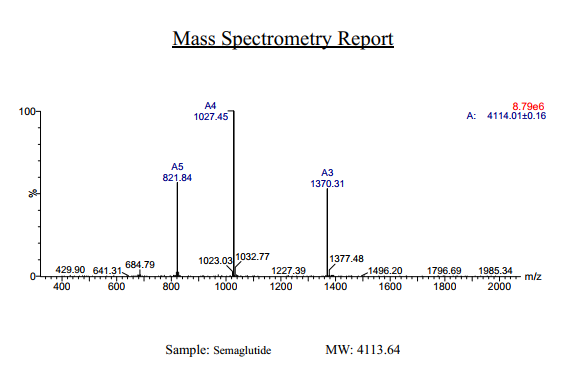
    Semaglutide Synthetic is a single, non-glycosylated polypeptide chain containing 31 amino acids, having a molecular mass of 4113 Dalton and a Molecular formula of C187H291N45O59.

    Formulation

    The protein was lyophilized with no additives.

    Purity

    Greater than 97.0% as determined by analysis by RP-HPLC.

    HPLC, MS

    Semaglutide hplc - Product image 1
    semaglutide mass spec - Product image 2

    Citations

    More Info

    • Physical Appearance

      Sterile Filtered White lyophilized (freeze-dried) powder.

    • Stability

      Lyophilized Semaglutide although stable at room temperature for 3 weeks, should be stored desiccated below -18°C. Upon reconstitution Semaglutide should be stored at 4°C between 2-7 days and for future use below -18°C. For long term storage it is recommended to add a carrier protein (0.1% HSA or BSA). Please prevent freeze-thaw cycles.

    • Solubility

      It is recommended to reconstitute the lyophilized Semaglutide in sterile 18MΩ-cm H2O not less than 100 µg/ml, which can then be further diluted to other aqueous solutions.

    • Amino Acid Sequence

      H-His-Aib-Glu-Gly-Thr-Phe-Thr-Ser-Asp-Val-Ser-Ser-Tyr-Leu-Glu-Gly-Gln-Ala-Ala-Lys(AEEAc-AEEAc-γ-Glu-17-carboxyheptadecanoyl)-Glu-Phe-Ile-Ala-Trp-Leu-Val-Arg-Gly-Arg-Gly-OH.

    • Background

      Semaglutide, a glucagon-like peptide-1 receptor agonist (GLP-1 RA), has emerged as a breakthrough in the field of diabetes management and metabolic disorders. It is recognized for its potent glucose-lowering effects, weight management properties, and cardiovascular benefits. Beyond diabetes, semaglutide is under investigation for its potential applications in obesity treatment and other related conditions. This research aims to comprehensively explore semaglutide, shedding light on its multifaceted mechanisms of action and its broader therapeutic implications.

      The primary objective of this research is to elucidate the mechanisms underlying the glucose-lowering and metabolic effects of semaglutide. In vitro and in vivo experiments will be conducted to investigate how semaglutide interacts with GLP-1 receptors, influences insulin secretion, and modulates glucose homeostasis. Understanding these mechanisms is crucial for harnessing the full therapeutic potential of semaglutide.

      The second objective is to assess the clinical relevance of semaglutide in diabetes management. Clinical trials involving individuals with type 2 diabetes will be conducted to evaluate the efficacy, safety, and long-term outcomes of semaglutide treatment. These investigations may provide valuable insights into its use as a monotherapy or adjunct therapy in diabetes care.

      The third objective is to explore the potential applications of semaglutide beyond diabetes. Research will investigate its role in obesity treatment, cardiovascular risk reduction, and non-alcoholic fatty liver disease (NAFLD) management. Understanding the multifaceted properties of semaglutide may open new avenues for therapeutic interventions in various metabolic and cardiovascular conditions.

      By delving into the diverse functions of semaglutide, this research aims to expand our understanding of its therapeutic potential and clinical applications. The findings may contribute to improved treatment strategies for individuals affected by diabetes, obesity, and related metabolic disorders.

    ProSpec's products are furnished for LABORATORY RESEARCH USE ONLY. The product may not be used as drugs, agricultural or pesticidal products, food additives or household chemicals.

    Semaglutide
  • View Data Sheet

    Name :

    GIP Human

    Description:

    Gastric Inhibitory Polypeptide Human Recombinant

    Gastric inhibitory polypeptide, GIP, Incretin hormone.

    Product # :

    PRO-1438

    Price :

    Quantity :

    Shipping Method :

    Ice Icon

    Shipped with Ice Packs

    Add To Cart

    More Info

    • description
    • source
    • formulation
    • purity
    • More Info
    • Citations

    Description

    GIP Human Recombinant produced in E. coli is a single polypeptide chain containing 155 amino acids (22-153) and having a molecular mass of 17.3kDa. GIP is fused to a 23 amino acid His-tag at N-terminus & purified by proprietary chromatographic techniques.

    Source

    E.coli.

    Formulation

    The GIP solution (0.25mg/ml) contains 20mM Tris-HCl buffer (pH8.0), 50% glycerol 0.1M NaCl and 2mM DTT.

    Purity

    Greater than 90% as determined by SDS-PAGE.

    Citations

    More Info

    • Introduction

      Gastric Inhibitory Polypeptide (GIP) which is a significant hormone of the enteroinsular axis has a functional profile of possible therapeutic value for type 2 diabetes. GIP is an important incretin hormone released into the circulation from endocrine K-cells of the duodenum and jejunum after ingestion of food1. GIP was evaluated for his ability to elevate cellular cAMP production. GIP promotes plasma triglyceride clearance in response to oral fat loading.

    • Synonyms

      Gastric inhibitory polypeptide, GIP, Incretin hormone.

    • Physical Appearance

      Sterile Filtered colorless solution.

    • Stability

      Store at 4°C if entire vial will be used within 2-4 weeks. Store, frozen at -20°C for longer periods of time. For long term storage it is recommended to add a carrier protein (0.1% HSA or BSA).Avoid multiple freeze-thaw cycles.

    • Amino Acid Sequence

      MGSSHHHHHH SSGLVPRGSH MGSEKKEGHF SALPSLPVGS HAKVSSPQPR GPRYAEGTFI SDYSIAMDKI HQQDFVNWLL AQKGKKNDWK HNITQREARA LELAGQANRK EEEAVEPQSS PAKNPSDEDL LRDLLIQELL ACLLDQTNLC RLRSR.

    ProSpec's products are furnished for LABORATORY RESEARCH USE ONLY. The product may not be used as drugs, agricultural or pesticidal products, food additives or household chemicals.

    Gip Human
  • View Data Sheet

    Name :

    GLP 2 Human

    Description:

    Human GLP-2

    GLP2, GLP-2, GLP 2.

    Product # :

    HOR-305

    Price :

    Quantity :

    Shipping Method :

    Room Temp Icon

    Shipped at Room temp

    Add To Cart

    More Info

    • description
    • formulation
    • purity
    • More Info
    • Citations

    Description

    GLP-2 contains 34 amino acids having a molecular mass of 3922.35 Dalton.

    Formulation

    The protein (1mg/ml) was lyophilized with no additives.

    Purity

    Greater than 98.0% as determined by RP-HPLC.

    Citations

    More Info

    • Introduction

      GLP-2 functions as an intestinal growth factor, which stimulates intestinal epithelial growth. GLP2 is involved in diabetes-associated bowel growth. GLP2 enhances cell differentiation, playing a role as a cytokine and in tissue regeneration, and mediating cytoprotection. GLP2 is invloded numerous therapeutic applications. GLP2 regulates signaling pathways coupled to cell proliferation and cell death by apoptosis.
      GLP-2 is produced by specific post-translational proteolytic cleavage of proGLP. GLP-2 is manufactured by the intestinal endocrine L cell and by several neurons in the central nervous system.

    • Synonyms

      GLP2, GLP-2, GLP 2, Glucagon Like Peptide-2.

    • Physical Appearance

      Sterile Filtered White lyophilized (freeze-dried) powder.

    • Stability

      Lyophilized GLP2 although stable at room temperature for 3 weeks, should be stored desiccated below -18°C. Upon reconstitution GLP2 should be stored at 4°C between 2-7 days and for future use below -18°C.For long term storage it is recommended to add a carrier protein (0.1% HSA or BSA).Please prevent freeze-thaw cycles.

    • Solubility

      It is recommended to reconstitute the lyophilized GLP-2 in sterile 18MΩ-cm H2O not less than 100 µg/ml, which can then be further diluted to other aqueous solutions.

    • Amino Acid Sequence

      His-Ala-Asp-Gly-Ser-Phe-Ser-Asp-Glu-Met-Asn-Thr-Ile-Leu-Asp-Asn-Leu-Ala-Ala-Arg-Asp-Phe-Ile-Asn-Trp-Leu-Ile-Gln-Thr-Lys-Ile-Thr-Asp-Arg.

    • Background

      What is the molecular weight/Mw of GLP 2 HUMAN Protein?
      GLP 2 HUMAN Protein has a total Mw of 3.92kDa.


      What is the Purity of GLP 2 HUMAN Protein?
      GLP 2 HUMAN Protein is >95% pure as determined by SDS-PAGE.

      What is the Biological Activity of GLP 2 HUMAN Protein?
      The biological functionality of GLP 2 HUMAN Protein will be determined in the future.

      What is the amino acid sequence of GLP 2 HUMAN Protein?
      His-Ala-Asp-Gly-Ser-Phe-Ser-Asp-Glu-Met-Asn-Thr-Ile-Leu-Asp-Asn-Leu-Ala-Ala-Arg-Asp-Phe-Ile-Asn-Trp-Leu-Ile-Gln-Thr-Lys-Ile-Thr-Asp-Arg.

      What applications can GLP 2 HUMAN Protein be used in?
      GLP 2 HUMAN Protein can probably be used in western blot, ELISA and Lateral Flow.

      What is the endotoxin level for GLP 2 HUMAN Protein?
      The endotoxin level is minimal, GLP 2 HUMAN Protein was purified using conventional chromatography techniques.


    ProSpec's products are furnished for LABORATORY RESEARCH USE ONLY. The product may not be used as drugs, agricultural or pesticidal products, food additives or household chemicals.

    Glp 2 Human
  • View Data Sheet

    Name :

    GYG1 Human

    Description:

    Glycogenin-1 Human Recombinant

    Glycogenin-1, GYG1, GYG.

    Product # :

    ENZ-431

    Price :

    Quantity :

    Shipping Method :

    Ice Icon

    Shipped with Ice Packs

    Add To Cart

    More Info

    • description
    • source
    • formulation
    • purity
    • More Info
    • Citations

    Description

    GYG1 Human Recombinant fused with a 32 amino acid His-T7 tag at N-terminus produced in E.Coli is a single, non-glycosylated, polypeptide chain containing 365 amino acids (1-333 a.a.) and having a molecular mass of 41.2kDa.The GYG1 is purified by proprietary chromatographic techniques.

    Source

    Escherichia Coli.

    Formulation

    The GYG1 solution contains 20mM Tris-HCl buffer (pH 8.0), 1mM DTT and 10% glycerol.

    Purity

    Greater than 90.0% as determined by SDS-PAGE.

    Citations

    More Info

    • Introduction

      Glycogenin-1 (GYG1) is an enzyme involved in glycogen biosynthesis. GYG1 is the chief enzyme involved in glycogen polymerisation. Glycogenin-1 is vital for the function of self-glucosylates, using an inter-subunit mechanism, to form an oligosaccharide primer which acts as substrate for glycogen synthase. In addition, GYG1 has a role in regulating glycogen metabolism and the achievement of maximal glycogen levels in skeletal muscle. GYG1 mRNA and protein content and activity increase in the muscle during recovery from prolonged and exhaustive exercise. GYG1 is inactivated with glycogen catabolism which concurs with an increase in glycogenin gene expression as exercise and glycogenolysis advance. Glycogenin will remain covalently attached to the reducing end of the glycogen molecule.

    • Synonyms

      Glycogenin-1, GYG1, GYG.

    • Physical Appearance

      Sterile Filtered colorless solution.

    • Stability

      Store at 4°C if entire vial will be used within 2-4 weeks. Store, frozen at -20°C for longer periods of time. For long term storage it is recommended to add a carrier protein (0.1% HSA or BSA).Avoid multiple freeze-thaw cycles.

    • Amino Acid Sequence

      MHHHHHHMAS MTGGQQMGRD LYDDDDKDRW GSMTDQAFVT LTTNDAYAKG ALVLGSSLKQ HRTTRRLVVL ATPQVSDSMR KVLETVFDEV IMVDVLDSGD SAHLTLMKRP ELGVTLTKLH CWSLTQYSKC VFMDADTLVL ANIDDLFDRE ELSAAPDPGW PDCFNSGVFV YQPSVETYNQ LLHLASEQGS FDGGDQGILN TFFSSWATTD IRKHLPFIYN LSSISIYSYL PAFKVFGASA KVVHFLGRVK PWNYTYDPKT KSVKSEAHDP NMTHPEFLIL WWNIFTTNVL PLLQQFGLVK DTCSYVNVED VSGAISHLSL GEIPAMAQPF VSSEERKERW EQGQADYMGA DSFDNIKRKL DTYLQ.

    ProSpec's products are furnished for LABORATORY RESEARCH USE ONLY. The product may not be used as drugs, agricultural or pesticidal products, food additives or household chemicals.

    Gyg1 Human
  • View Data Sheet

    Name :

    Insulin Human

    Description:

    Insulin Human Recombinant

    Product # :

    CYT-270

    Price :

    Quantity :

    Shipping Method :

    Room Temp Icon

    Shipped at Room temp

    Add To Cart

    More Info

    • description
    • source
    • formulation
    • purity
    • biological activity
    • More Info
    • Citations

    Description

    Insulin Human Recombinant produced in E.Coli is a two chain, non-glycosylated polypeptide chain containing 51 amino acids and having a molecular mass of 5807 Dalton. Insulin is purified by proprietary chromatographic techniques.

    Source

    Escherichia Coli.

    Formulation

    The protein was lyophilized from a concentrated (1mg/ml) solution with no additives.

    Purity

    Greater than 98.0% as determined by RP-HPLC analysis.

    Biological Activity

    The Biological Activity was determined to be 28 units/mg.

    Citations

    More Info

    • Introduction

      Insulin decreases blood glucose concentration. It increases cell permeability to monosaccharides, amino acids and fatty acids. It accelerates glycolysis, the pentose phosphate cycle, and glycogen synthesis in liver.

    • Physical Appearance

      Sterile Filtered White lyophilized (freeze-dried) powder.

    • Stability

      Lyophilized Insulin although stable at room temperature for 3 weeks, should be stored desiccated below -18°C. Upon reconstitution Insulin should be stored at 4°C between 2-7 days and for future use below -18°C.For long term storage it is recommended to add a carrier protein (0.1% HSA or BSA).Please prevent freeze-thaw cycles.

    • Solubility

      It is recommended to reconstitute the lyophilized Insulin in sterile 0.005N HCl not more than 1 mg/ml.

    ProSpec's products are furnished for LABORATORY RESEARCH USE ONLY. The product may not be used as drugs, agricultural or pesticidal products, food additives or household chemicals.

    Insulin Human
  • View Data Sheet

    Name :

    PMSG

    Description:

    Pregnant Mare Serum Gonadotropin

    Product # :

    HOR-272

    Price :

    Quantity :

    Shipping Method :

    Room Temp Icon

    Shipped at Room temp

    Add To Cart

    More Info

    • description
    • source
    • formulation
    • More Info
    • Citations

    Description

    PMSG is a complex glycoprotein obtained from the serum of pregnant mares. This 43-63 kda protein is capable of supplementing and being substituted for the follicle stimulating and interstitial cell-stimulating hormone of the anterior pituitary gland in both the male and female. Thus PMSG-Intervet stimulates development of the ovarian follicle in the female.

    Source

    Serum of pregnant mares.

    Formulation

    The PMSG was lyophilized with no additives.

    Citations

    More Info

    • Introduction

      PMSG Hormone is a well know used hormone together with progestogen to increase ovulation just before to artificial insemination. PMSG hormone is a placental glycoprotein produced from the serum of pregnant mares. PMSG comprises of an alfa subunit and a beta subunit. PMSG hormone is secreted from endometrial cups within the pregnant mare uterus aging from 40 to 130 days into their maturation, and once extracted, it can been used to promote artificially estrus in female animals. These assemblies produce PMSG hormone to induce mare's ovarian and repsouctive structures. PMSG can induce the growth of follicles by ovaries and results in ovulatation. PMSG hormone has an about a 4 day half-life of bioactivity in species other than horses. The extended biological activity can cause ovarian stimulation and ovulation. However, PMSG use alone often causes cystic ovarian disease because of the unrestrained ovarian stimulation and due to the sugar molecules which decrease clearance of the hormone. PMSG is more likely to be used than other pituitary hormones due to the extended circulatory half-life. PMSG solely exhibits luteinizing hormone like activity, however in other animal classes it has FSH & LH like activity.

    • Physical Appearance

      Sterile Filtered White lyophilized (freeze-dried) powder.

    • Stability

      Lyophilized PMSG although stable at room temperature for 3 weeks, should be stored between 2-8°C.

    • Solubility

      It is recommended to reconstitute the lyophilized PMSG in sterile 18M-cm H2O at a concentration of 1000 IU/ml, which can then be further diluted to other aqueous solutions.

    ProSpec's products are furnished for LABORATORY RESEARCH USE ONLY. The product may not be used as drugs, agricultural or pesticidal products, food additives or household chemicals.

    Pmsg
  • View Data Sheet

    Name :

    Gliadin Alpha Wheat

    Description:

    Gliadin Alpha Wheat Recombinant

    Product # :

    PRO-2147

    Price :

    Quantity :

    Shipping Method :

    Ice Icon

    Shipped with Ice Packs

    Add To Cart

    More Info

    • description
    • source
    • formulation
    • purity
    • More Info
    • Citations

    Description

    Recombinant Wheat Gliadin Alpha protein produced in E.Coli and fused to a 6 His Tag at C-terminus, having a theoretical Mw of 34557.64 Dalton, pI 7.70. Purified by proprietary chromatographic technique.

    Source

    Escherichia Coli.

    Formulation

    Gliadin Alpha protein solution in 10mM Tris-HCl pH 7.2.

    Purity

    Protein is >90% pure.

    Citations

    More Info

    • Introduction

      Wheat Gliadin and related gluten components from barley, rye and possibly oats can cause an abnormal immune response called Celiac disease which is a chronic gastrointestinal disorder. Celiac disease characteristics are flattening of the jejunal mucosa and intestinal lesions of variable severity in hereditarily inclined individuals. Even though Celiac disease is not a classic autoimmune disease it is related to anti-tissue transglutaminase antibodies and gliadin antibodies tests are most recommended in screening populations at risk for CD and other gluten-sensitive enteropathies. In the past, serologic tests for gliadin antibodies usually were not very precise and were not enough for accurate diagnosis due to missing deamidated epitopes within the authentic gliadin fraction traditionally used in diagnostic test kits. ProSpec's deamidated Gliadin isoform matches to the deamidated neo-epitopes, which in the natural antigen are formed by transglutaminase-mediated glutamine side chain deamidation.

    • Physical Appearance

      Sterile Filtered clear solution.

    • Stability

      Gliadin Alpha although stable at 4°C for 1 week, should be stored below -18°C. Please prevent freeze thaw cycles.

    • Amino Acid Sequence

      MVRVPVPQLQPQNPSQQQPQEQVPLVQQQQFPGQQQPFPPQQPYPQPQPFPSQQPYLQ
      LQPFPQPQLPYPQPQLPYPQPQLPYPQPQPFRPQQPYPQSQPQYSQPQQPISQQQQQQQQ
      QQQQKQQQQQQQQILQQILQQQLIPCRDVVLQQHSIAYGSSQVLQQSTYQLVQQLCCQQL
      WQIPEQSRCQAIHNVVHAIILHQQQQQQQQQQQQPLSQVSFQQPQQQYPSGQGSFQPSQ
      QNPQAQGSVQPQQLPQFEEIRNLALETLPAMCNVYIPPYCTIAPVGIFGTNYRHHHHHH.

    ProSpec's products are furnished for LABORATORY RESEARCH USE ONLY. The product may not be used as drugs, agricultural or pesticidal products, food additives or household chemicals.

    Gliadin Alpha Wheat
  • View Data Sheet

    Name :

    AGA Human

    Description:

    Aspartylglucosaminidase Human Recombinant

    Aspartylglucosaminidase, AGU, ASRG, GA.

    Product # :

    ENZ-854

    Price :

    Quantity :

    Shipping Method :

    Ice Icon

    Shipped with Ice Packs

    Add To Cart

    More Info

    • description
    • source
    • formulation
    • purity
    • More Info
    • Citations

    Description

    AGA Human Recombinant produced in E.Coli is a single, non-glycosylated polypeptide chain containing 346 amino acids (24-346 a.a.) and having a molecular mass of 37kDa.AGA is fused to a 23 amino acid His-tag at N-terminus & purified by proprietary chromatographic techniques.

    Source

    E.coli.

    Formulation

    AGA protein solution (0.5mg/ml) containing 20mM Tris-HCl buffer (pH 8.0) and 10% glycerol.

    Purity

    Greater than 90% as determined by SDS-PAGE.

    Citations

    More Info

    • Introduction

      Aspartylglucosaminidase, also known as AGA, takes part in the catabolism of Nlinked oligosaccharides of glycoproteins. AGA is a protein coding gene which cleaves asparagine from N-acetylglucosamines in the lysosomal breakdown of glycoproteins.

    • Synonyms

      Aspartylglucosaminidase, AGU, ASRG, GA.

    • Physical Appearance

      Sterile Filtered colorless solution.

    • Stability

      Store at 4°C if entire vial will be used within 2-4 weeks. Store, frozen at -20°C for longer periods of time. For long term storage it is recommended to add a carrier protein (0.1% HSA or BSA).Avoid multiple freeze-thaw cycles.

    • Amino Acid Sequence

      MGSSHHHHHH SSGLVPRGSH MGSSSPLPLV VNTWPFKNAT EAAWRALASG GSALDAVESG CAMCEREQCD GSVGFGGSPD ELGETTLDAM IMDGTTMDVG AVGDLRRIKN AIGVARKVLE HTTHTLLVGE SATTFAQSMG FINEDLSTTA SQALHSDWLA RNCQPNYWRN VIPDPSKYCG PYKPPGILKQ DIPIHKETED DRGHDTIGMV VIHKTGHIAA GTSTNGIKFK IHGRVGDSPI PGAGAYADDT AGAAAATGNG DILMRFLPSY QAVEYMRRGE DPTIACQKVI SRIQKHFPEF FGAVICANVT GSYGAACNKL STFTQFSFMV YNSEKNQPTE EKVDCI.

    ProSpec's products are furnished for LABORATORY RESEARCH USE ONLY. The product may not be used as drugs, agricultural or pesticidal products, food additives or household chemicals.

    Aga Human
  • View Data Sheet

    Name :

    GUSB Human

    Description:

    Glucuronidase Beta Human Recombinant

    GUSB, BG, MPS7, Glucuronidase Beta, EC 3.2.1.31, Beta-G1, Beta-D-Glucuronidase, Glucuronidase, Beta, Beta-Glucuronidasem.

    Product # :

    ENZ-1018

    Price :

    Quantity :

    Shipping Method :

    Ice Icon

    Shipped with Ice Packs

    Add To Cart

    More Info

    • description
    • source
    • formulation
    • purity
    • biological activity
    • More Info
    • Citations

    Description

    GUSB Human Recombinant produced in Sf9 Baculovirus cells is a single, glycosylated polypeptide chain containing 635 amino acids (23-651a.a) and having a molecular mass of 73.4kDa (Molecular size on SDS-PAGE will appear at approximately 70-100kDa). GUSB is fused to a 6 amino acid His-tag at C-terminus & purified by proprietary chromatographic techniques.

    Source

    Sf9, Baculovirus cells.

    Formulation

    GUSB protein solution (0.25mg/ml) containing Phosphate Buffered Saline (pH 7.4) and 10% glycerol.

    Purity

    Greater than 90.0% as determined by SDS-PAGE.

    Biological Activity

    Specific activity is > 1600 pmol/min/ug and is defined as the amount of enzyme that hydrolyze 1.0 pmole of 4-Methylumbelliferone to 4- Methylum-belliferyl-β-D-glucosiduronic acid per minute at 37C and pH6.0.

    Citations

    More Info

    • Introduction

      Glucuronidase Beta (GUSB) is a lysosomal hydrolase which is taking part in the stepwise degradation of glucuronic acid-containing glycosaminoglycans and plays a significant role in the degradation of dermatan and keratin sulfates. GUSB is comprised of heparin sulfate, chondroitin sulfate and hyaluronan.

    • Synonyms

      GUSB, BG, MPS7, Glucuronidase Beta, EC 3.2.1.31, Beta-G1, Beta-D-Glucuronidase, Glucuronidase, Beta, Beta-Glucuronidasem.

    • Physical Appearance

      Sterile Filtered colorless solution.

    • Stability

      Store at 4°C if entire vial will be used within 2-4 weeks. Store, frozen at -20°C for longer periods of time. For long term storage it is recommended to add a carrier protein (0.1% HSA or BSA).Avoid multiple freeze-thaw cycles.

    • Amino Acid Sequence

      LQGGMLYPQE SPSRECKELD GLWSFRADFS DNRRRGFEEQ WYRRPLWESG PTVDMPVPSS FNDISQDWRL RHFVGWVWYE REVILPERWT QDLRTRVVLR IGSAHSYAIV WVNGVDTLEH EGGYLPFEAD ISNLVQVGPL PSRLRITIAI NNTLTPTTLP PGTIQYLTDT SKYPKGYFVQ NTYFDFFNYA GLQRSVLLYT TPTTYIDDIT VTTSVEQDSG LVNYQISVKG SNLFKLEVRL LDAENKVVAN GTGTQGQLKV PGVSLWWPYL MHERPAYLYS LEVQLTAQTS LGPVSDFYTL PVGIRTVAVT KSQFLINGKP FYFHGVNKHE DADIRGKGFD WPLLVKDFNL LRWLGANAFR TSHYPYAEEV MQMCDRYGIV VIDECPGVGL ALPQFFNNVS LHHHMQVMEE VVRRDKNHPA VVMWSVANEP ASHLESAGYY LKMVIAHTKS LDPSRPVTFV SNSNYAADKG APYVDVICLN SYYSWYHDYG HLELIQLQLA TQFENWYKKY QKPIIQSEYG AETIAGFHQD PPLMFTEEYQ KSLLEQYHLG LDQKRRKYVV GELIWNFADF MTEQSPTRVL GNKKGIFTRQ RQPKSAAFLL RERYWKIANE TRYPHSVAKS QCLENSLFTH HHHHH.

    ProSpec's products are furnished for LABORATORY RESEARCH USE ONLY. The product may not be used as drugs, agricultural or pesticidal products, food additives or household chemicals.

    Gusb Human
  • View Data Sheet

    Name :

    GHRL

    Description:

    Ghrelin Human

    Appetite-regulating hormone precursor, Growth hormone secretagogue, Growth hormone-releasing peptide, GHRP, Motilin-related peptide, M46 protein, Ghrelin, Obestatin, MTLRP.

    Product # :

    HOR-297

    Price :

    Quantity :

    Shipping Method :

    Room Temp Icon

    Shipped at Room temp

    Add To Cart

    More Info

    • description
    • formulation
    • purity
    • More Info
    • Citations

    Description

    Ghrelin Human contains 28 amino acids and a total molecular mass of 3370.9 Dalton and a molecular formula of C149H249N47O42.The GHRL is purified by proprietary chromatographic techniques.

    Formulation

    GHRL was lyophilized without additives.

    Purity

    Greater than 98.0% as determined by:
    (a) Analysis by RP-HPLC.
    (b) Analysis by SDS-PAGE.

    Citations

    More Info

    • Introduction

      Obestatin is a hormone that is produced in the cells lining the stomach and small intestine of several mammals including humans; it drastically reduces appetite in mice and is expected to do the same in humans. Obestatin is a peptide hormone - a relatively small protein. It is encoded by the same gene that also encodes ghrelin, a peptide hormone that increases appetite. The protein produced by that gene breaks into two smaller peptides, ghrelin and obestatin. Ghrelin is an endogenous ligand for the growth hormone secretagogue receptor and is involved in regulating growth hormone release. Ghrelin is derived from a preprohormone called preproghrelin, which also generates a second peptide called obestatin. Ghrelin is an endogenous ligand for the orphan G protein-coupled receptor GPR39 and is involved in satiety and decreased food intake.

    • Synonyms

      Appetite-regulating hormone precursor, Growth hormone secretagogue, Growth hormone-releasing peptide, GHRP, Motilin-related peptide, M46 protein, Ghrelin, Obestatin, MTLRP.

    • Physical Appearance

      Sterile Filtered Yellowish lyophilized (freeze-dried) powder that may appear as a gel form.

    • Stability

      Store the lyophilized Ghrelin at -20°C. Aliquot the product after reconstitution to avoid repeated freezing/thawing cycles. Reconstituted GHRL can be stored at 4°C for a limited period of time; it does not show any change after two weeks at 4°C.

    • Solubility

      Add deionized water to a working concentration approximately 0.5mg/1ml and let the lyophilized pellet dissolve completely.

    • Amino Acid Sequence

      Gly-Ser-Ser(n-octanoyl)-Phe-Leu-Ser-Pro-Glu-His-Gln-Arg-Val-Gln-Gln-Arg-Lys-Glu-Ser-Lys-Lys-Pro-Pro-Ala-Lys-Leu-Gln-Pro-Arg-OH.

    • Background

      What is the molecular weight/Mw of GHRL Protein?
      GHRL Protein has a total Mw of 3.37kDa.

      What is the Purity of GHRL Protein?
      GHRL Protein is >98% pure as determined by SDS-PAGE.

      What is the Biological Activity of GHRL Protein?
      The biological functionality of GHRL Protein will be determined in the future.

      What is the amino acid sequence of GHRL Protein?
      Gly-Ser-Ser(n-octanoyl)-Phe-Leu-Ser-Pro-Glu-His-Gln-Arg-Val-Gln-Gln-Arg-Lys-Glu-Ser-Lys-Lys-Pro-Pro-Ala-Lys-Leu-Gln-Pro-Arg-OH.

      What applications can GHRL Protein be used in?
      GHRL Protein can probably be used in western blot, ELISA and Lateral Flow.

      What is the endotoxin level for GHRL Protein?
      The endotoxin level is minimal, GHRL Protein was purified using conventional chromatography techniques.

      Who supplies GHRL that is in stock and available to order?
      ProSpec has the protein in stock and available for immediate delivery.

      Where can I order bulk mg quantities of GHRL?
      ProSpec supplies bulk mg quantities at affordable prices that meets research and academic budgets.

    ProSpec's products are furnished for LABORATORY RESEARCH USE ONLY. The product may not be used as drugs, agricultural or pesticidal products, food additives or household chemicals.

    Ghrelin Human
  • View Data Sheet

    Name :

    S100A8 Human

    Description:

    S100 Calcium Binding Protein A8 Human Recombinant

    Calgranulin A, MRP8, CAGA, CGLA, CFAG, Protein S100-A8, S100 calcium-binding protein A8, Migration inhibitory factor-related protein 8, MRP-8, p8, Cystic fibrosis antigen, Leukocyte L1 complex light chain, Calprotectin L1L subunit, Urinary stone protein band A, S100A8, MIF, NIF, L1Ag, CP-10, MA387, 60B8AG.

    Product # :

    PRO-800

    Price :

    Quantity :

    Shipping Method :

    Ice Icon

    Shipped with Ice Packs

    Add To Cart

    More Info

    • description
    • source
    • formulation
    • purity
    • More Info
    • Citations

    Description

    S100A8 Human Recombinant produced in E.Coli is a single, non-glycosylated, polypeptide chain containing 93 amino acids (1-93 a.a.) and having a molecular mass of 10.8 kDa. The S100A8 is purified by proprietary chromatographic techniques.

    Source

    Escherichia Coli.

    Formulation

    The S100A8 solution (0.5mg/ml) contains 20mM Tris-HCl pH-8, 1mM DTT and 10% glycerol.

    Purity

    Greater than 90% as determined by SDS-PAGE.

    Citations

    More Info

    • Introduction

      S100A8 is a part of the S100 family of proteins containing 2 EF-hand calcium-binding motifs. S100 proteins are localized in the cytoplasm and/or nucleus of a broad range of cells, and participate in the regulation of cellular processes such as cell cycle progression and differentiation. S100A8 plays a role in the inhibition of casein kinase and as a cytokine. S100A8 altered expression is related with cystic fibrosis disease. S100A8 is a calcium-binding protein that has antimicrobial activity against bacteria and fungi.S100A8 is crucial for resistance towards invasion by pathogenic bacteria. S100A8 up-regulates transcription of genes that are under the control of NF-kappa-B. S100A8 plays a role in the development of endotoxic shock in response to bacterial lipopolysaccharide. S100A8 endorses tubulin polymerization and promotes phagocyte migration and infiltration of granulocytes at sites of wounding. S100A8 takes part as a pro-inflammatory mediator in acute and chronic inflammation and up-regulates the release of IL8 and cell-surface expression of ICAM1.

    • Synonyms

      Calgranulin A, MRP8, CAGA, CGLA, CFAG, Protein S100-A8, S100 calcium-binding protein A8, Migration inhibitory factor-related protein 8, MRP-8, p8, Cystic fibrosis antigen, Leukocyte L1 complex light chain, Calprotectin L1L subunit, Urinary stone protein band A, S100A8, MIF, NIF, L1Ag, CP-10, MA387, 60B8AG.

    • Physical Appearance

      Sterile Filtered clear colorless solution.

    • Stability

      Store at 4°C if entire vial will be used within 2-4 weeks.Store, frozen at -20°C for longer periods of time. For long term storage it is recommended to add a carrier protein (0.1% HSA or BSA).Avoid multiple freeze-thaw cycles.

    • Amino Acid Sequence

      MLTELEKALN SIIDVYHKYS LIKGNFHAVY RDDLKKLLET ECPQYIRKKG ADVWFKELDI NTDGAVNFQE FLILVIKMGV AAHKKSHEES HKE.

    ProSpec's products are furnished for LABORATORY RESEARCH USE ONLY. The product may not be used as drugs, agricultural or pesticidal products, food additives or household chemicals.

    S100A8 Human
  • View Data Sheet

    Name :

    ProInsulin Human

    Description:

    ProInsulin C-Peptide Analogue Human Recombinant

    Insulin, Insulin-Dependent Diabetes Mellitus 2, Preproinsulin, Proinsulin, MODY10, IDDM1, IDDM2, IDDM, ILPR, IRDN. 

    Product # :

    CYT-1120

    Price :

    Quantity :

    Shipping Method :

    Room Temp Icon

    Shipped at Room temp

    Add To Cart

    More Info

    • description
    • source
    • formulation
    • purity
    • More Info
    • Citations

    Description

    ProInsulin C-Peptide Analogue Human Recombinant produced in E.Coli is a non-glycosylated polypeptide chain containing 35 amino acid and having a molecular mass of approximately 3.6kDa.ProInsulin is purified by proprietary chromatographic techniques.

    Source

    Escherichia Coli.

    Formulation

    Lyophilized from a 0.2μm filtered concentrated solution in PBS, pH 7.4.

    Purity

    Greater than 95.0% as determined by:
    (a) Analysis by RP-HPLC.
    (b) Analysis by SDS-PAGE.

    Citations

    More Info

    • Introduction

      Insulin decreases blood glucose concentration. Insulin increases cell permeability to monosaccharides, amino acids and fatty acids. Insulin accelerates glycolysis, the pentose phosphate cycle, and glycogen synthesis in liver.

    • Synonyms

      Insulin, Insulin-Dependent Diabetes Mellitus 2, Preproinsulin, Proinsulin, MODY10, IDDM1, IDDM2, IDDM, ILPR, IRDN.

    • Physical Appearance

      Sterile Filtered White lyophilized (freeze-dried) powder.

    • Stability

      Lyophilized ProInsulin although stable at room temperature for 3 weeks, should be stored desiccated below -18°C. Upon reconstitution ProInsulin C-Peptide Analogue should be stored at 4°C between 2-7 days and for future use below -18°C.Please prevent freeze-thaw cycles.

    • Solubility

      It is recommended to reconstitute the lyophilized ProInsulin C-Peptide Analogue in sterile 18MΩ-cm H2O not less than 100µg/ml, which can then be further diluted to other aqueous solutions.

    • Amino Acid Sequence

      RREAEDLQVG QVELGGGPGA GSLQPLALEG SLQKR.

    ProSpec's products are furnished for LABORATORY RESEARCH USE ONLY. The product may not be used as drugs, agricultural or pesticidal products, food additives or household chemicals.

    Proinsulin C Peptide
  • View Data Sheet

    Name :

    Exenatide

    Description:

    Exenatide

    Exendin-4.

    Product # :

    HOR-246

    Price :

    Quantity :

    Shipping Method :

    Room Temp Icon

    Shipped at Room temp

    Add To Cart

    More Info

    • description
    • formulation
    • purity
    • More Info
    • Citations

    Description

    Exenatide is a single, non-glycosylated, peptide containing 39 amino acids and having a molecular mass of 4186.6 Dalton. Exenatide has the empirical formula C184H282N50O60S.

    Formulation

    The Exenatide peptide was lyophilized from a concentrated solution with no additives.

    Purity

    Greater than 99.0% as determined by:
    (a) Analysis by RP-HPLC.
    (b) Analysis by SDS-PAGE.

    Citations

    More Info

    • Introduction

      Exenatide Derived from the saliva of the gila monster, is a 39 amino acid peptide that mimics the GLP-1 incretin, an insulin secretagogue with glucoregulatory effects. Typical responses to exenatide include improvements in the initial rapid release of endogenous insulin, suppression of glucagon release by the pancreas, regulation of gastric empyting, and reduced appetite - all of which function to lower blood glucose. Exenatide is self-regulating in that it lowers blood sugar when levels are elevated but does not continue to lower blood sugar when levels return to normal, unlike with sulfonylureas or insulins.

    • Synonyms

      Exendin-4.

    • Physical Appearance

      Sterile Filtered White lyophilized (freeze-dried) powder.

    • Stability

      Lyophilized Exenatide although stable at room temperature for 3 weeks, should be stored desiccated below -18°C. Upon reconstitution Exenatide should be stored at 4°C between 2-7 days and for future use below -18°C. For long term storage it is recommended to add a carrier protein (0.1% HSA or BSA).Please prevent freeze-thaw cycles.

    • Solubility

      It is recommended to reconstitute the lyophilized Exenatide in sterile 18MΩ-cm H2O not less than 100 µg/ml, which can then be further diluted to other aqueous solutions.

    • Amino Acid Sequence

      H-His-Gly-Glu-Gly-Thr-Phe-Thr-Ser-Asp-Leu-Ser-Lys-Gln-Met-Glu-Glu-Glu-Ala-Val-Arg-Leu-Phe-Ile-Glu-Trp-Leu-Lys-Asn-Gly-Gly-Pro-Ser-Ser-Gly-Ala-Pro-Pro-Pro-Ser-NH2.

    ProSpec's products are furnished for LABORATORY RESEARCH USE ONLY. The product may not be used as drugs, agricultural or pesticidal products, food additives or household chemicals.

    Exenatide
  • View Data Sheet

    Name :

    Globular Adiponectin Human, His

    Description:

    Adiponectin Globular Recombinant, His Tag

    Acrp30, AdipoQ, GBP-28, APM-1, ACDC.

    Product # :

    CYT-277

    Price :

    Quantity :

    Shipping Method :

    Room Temp Icon

    Shipped at Room temp

    Add To Cart

    More Info

    • description
    • source
    • formulation
    • purity
    • More Info
    • Citations

    Description

    Acrp30 Human has a total of 171 amino acids. N-terminal underlined amino acids are His-tag and the protease cleavage site (31AA-Underlined). The AA sequence of Acrp30 Human is homologous to the 105-244 amino acid sequence of the Human full-length Adiponectin (Swiss-prot entry Q15848).

    Source

    Escherichia Coli.

    Formulation

    Acrp30 Human is a filtered powder, lyophilized from 0.6mg/ml in PBS buffer.

    Purity

    Purity of Acrp30 Human is greater than 95% as determined by SDS PAGE.

    Citations

    More Info

    • Introduction

      Adiponectin is a protein exclusively secreted from adipose tissue. In the circulation, adiponectin is present as three different oligomeric complexes, including the high molecular weight (HMW), the middle molecular weight (MMW, also called hexamer) and low molecular weigh (LMW, also called trimer) forms. Different oligomeric complex of adiponectin activates different signaling pathways and exerts distinct functions.

    • Synonyms

      Acrp30, AdipoQ, GBP-28, APM-1, ACDC.

    • Stability

      For long term, store lyophilized Acrp30 Human at -20°C. Aliquot the product after reconstitution to avoid repeated freezing/thawing cycles. Reconstituted Acrp30 Human can be stored at 4°C for a limited period of time; it does not show any change after two weeks at 4°C. The lyophilized Acrp30 Human remains stable for 24 months when stored at -20°C.

    • Solubility

      Add deionized water and let the lyophilized pellet of Acrp30 Human dissolve completely.

    • Amino Acid Sequence

      MSWWHHHHHH NWNIPTTQDT TQDLWFEGAM GGEGAYVYRS FSVGLETYV TIPNMPIRFT KIFYNQQNHYDGSTGKFHCN IPGLYYFAYH ITVYMKDVKV SLFKKDKAML FTYDQYQENN VDQASGSVLL HEVGDQVWLQVYGEGERNGL YADNDNDSTF TGFLLYHDTN.

    • Background

      What is the molecular weight/Mw of ADIPONECTIN Protein?
      ADIPONECTIN Protein has a total Mw of 16.7kDa.

      What is the source or expression system of ADIPONECTIN Protein?
      Escherichia Coli.

      What is the Purity of ADIPONECTIN Protein?
      ADIPONECTIN Protein is >95% pure as determined by SDS-PAGE.

      What is the Biological Activity of ADIPONECTIN Protein?
      The biological functionality of ADIPONECTIN Protein will be determined in the future.

      What is the amino acid sequence of ADIPONECTIN Protein?
      MSWWHHHHHH NWNIPTTQDT TQDLWFEGAM GGEGAYVYRS FSVGLETYV TIPNMPIRFT KIFYNQQNHYDGSTGKFHCN IPGLYYFAYH ITVYMKDVKV SLFKKDKAML FTYDQYQENN VDQASGSVLL HEVGDQVWLQVYGEGERNGL YADNDNDSTF TGFLLYHDTN.

      What applications can ADIPONECTIN Protein be used in?
      ADIPONECTIN Protein can probably be used in western blot, ELISA and Lateral Flow.

      What is the endotoxin level for ADIPONECTIN Protein?
      The endotoxin level is minimal, ADIPONECTIN Protein was purified using conventional chromatography techniques

    ProSpec's products are furnished for LABORATORY RESEARCH USE ONLY. The product may not be used as drugs, agricultural or pesticidal products, food additives or household chemicals.

    Gacrp30 Human His
  • View Data Sheet

    Name :

    PGC Human

    Description:

    Progastricsin-C Human Recombinant

    Progastricsin (Pepsinogen C), Pepsinogen C, EC 3.4.23.3, Pepsinogen Group II, Preprogastricsin, EC 3.4.23, Pepsin C, PGII, PEPC.

    Product # :

    ENZ-966

    Price :

    Quantity :

    Shipping Method :

    Ice Icon

    Shipped with Ice Packs

    Add To Cart

    More Info

    • description
    • source
    • formulation
    • purity
    • More Info
    • Citations

    Description

    PGC produced in Sf9 Baculovirus cells is a single, glycosylated polypeptide chain containing 380 amino acids (17-388 a.a.) and having a molecular mass of 41.6kDa (Molecular size on SDS-PAGE will appear at approximately 40-57kDa). PGC is expressed with an 8 amino acid His tag at C-Terminus and purified by proprietary chromatographic techniques.

    Source

    Sf9, Baculovirus cells.

    Formulation

    PGC protein solution (0.25mg/ml) contains Phosphate Buffered Saline (pH 7.4) and 10% glycerol.

    Purity

    Greater than 95.0% as determined by SDS-PAGE.

    Citations

    More Info

    • Introduction

      Progastricsin-C (PGC) is an aspartic proteinase which is synthesized in the gastric mucosa as inactive precursors. PGC is a part of the peptidase family A1 and contains a prosegment which is responsible for stabilizing the inactive form and preventing the entrance of the substrate to the active site. PGC is used as a biomarker for various gastric diseases including Helicobacter pylori related gastritis. PGC is also hydrolyzes various proteins.

    • Synonyms

      Progastricsin (Pepsinogen C), Pepsinogen C, EC 3.4.23.3, Pepsinogen Group II, Preprogastricsin, EC 3.4.23, Pepsin C, PGII, PEPC.

    • Physical Appearance

      Sterile Filtered colorless solution.

    • Stability

      Store at 4°C if entire vial will be used within 2-4 weeks. Store, frozen at -20°C for longer periods of time. For long term storage it is recommended to add a carrier protein (0.1% HSA or BSA). Avoid multiple freeze-thaw cycles.

    • Amino Acid Sequence

      AVVKVPLKKF KSIRETMKEK GLLGEFLRTH KYDPAWKYRF GDLSVTYEPM AYMDAAYFGE ISIGTPPQNF LVLFDTGSSN LWVPSVYCQS QACTSHSRFN PSESSTYSTN GQTFSLQYGS GSLTGFFGYD TLTVQSIQVP NQEFGLSENE PGTNFVYAQF DGIMGLAYPA LSVDEATTAM QGMVQEGALT SPVFSVYLSN QQGSSGGAVV FGGVDSSLYT GQIYWAPVTQ ELYWQIGIEE FLIGGQASGW CSEGCQAIVD TGTSLLTVPQ QYMSALLQAT GAQEDEYGQF LVNCNSIQNL PSLTFIINGV EFPLPPSSYI LSNNGYCTVG VEPTYLSSQN GQPLWILGDV FLRSYYSVYD LGNNRVGFAT AALEHHHHHH.

    ProSpec's products are furnished for LABORATORY RESEARCH USE ONLY. The product may not be used as drugs, agricultural or pesticidal products, food additives or household chemicals.

    Pgc Human
  • 1
  • 2
  • 3
  • …
  • 42
Your browser does not support the video tag.

Products

  • Cytokines
  • Growth Factors
  • Chemokines
  • CD Antigens
  • Neurotrophins
  • Hormones
  • Enzymes
  • Viral Antigens
  • Recombinant Proteins
  • Natural Proteins
  • Monoclonal Antibodies
  • Polyclonal Antibodies
  • Thermal Packaging

About

  • Company
  • Founder
  • Contribution
  • Contact Us
  • My Account

Ordering

  • Ordering Method
  • Ordering - Credit Card
  • Ordering PO
  • Shipping Fees
  • FAQ's

Legal

  • Terms & Conditions
  • Privacy
  • Site Map
  • info@prospecbio.com
  • Facebook
  • Instagram
  • Linkedin Profile

© 2026 ProSpec-Tany TechnoGene Ltd. All Rights Reserved.

  • Choosing a selection results in a full page refresh.
  • Opens in a new window.