Skip to content

High-quality research proteins.

  • 1-800-805-6531

  • Mon - Sat 8.00-18.00, Sun - Closed

  • info@prospecbio.com

  • PO Box 6591 East Brunswick NJ 08816

  • Products
    • Cytokines
    • Growth factors
    • Chemokines
    • Cd antigens
    • Neurotrophins
    • Hormones
    • Enzymes
    • Viral antigens
    • Recombinant proteins
    • Natural proteins
    • Monoclonal antibodies
    • Polyclonal antibodies
    • Thermal Packaging
  • About
    • Company
    • Founder
    • Contribution
  • Customers
    • Eastern Asia
    • Eastern Europe
    • North America
    • South America
    • South East Asia
    • Southern Asia
    • Western Europe
  • Ordering
    • Ordering Method
    • Ordering - Credit Card
    • Ordering - PO
    • Shipping Fees
    • FAQs
  • Services
    • DNA Cloning
    • Protein Expression
    • Monoclonal Antibody
    • Fermentation
    • Technology License
  • Contact us
Log in

Country/region

  • USD $ | Albania
  • USD $ | Andorra
  • USD $ | Argentina
  • USD $ | Armenia
  • USD $ | Australia
  • USD $ | Austria
  • USD $ | Azerbaijan
  • USD $ | Belarus
  • USD $ | Belgium
  • USD $ | Bolivia
  • USD $ | Brazil
  • USD $ | Bulgaria
  • USD $ | Cambodia
  • USD $ | Canada
  • USD $ | Chile
  • USD $ | China
  • USD $ | Colombia
  • USD $ | Costa Rica
  • USD $ | Croatia
  • USD $ | Cyprus
  • USD $ | Czechia
  • USD $ | Denmark
  • USD $ | Estonia
  • USD $ | Finland
  • USD $ | France
  • USD $ | Georgia
  • USD $ | Germany
  • USD $ | Greece
  • USD $ | Hong Kong SAR
  • USD $ | Hungary
  • USD $ | Iceland
  • USD $ | India
  • USD $ | Ireland
  • USD $ | Israel
  • USD $ | Italy
  • USD $ | Japan
  • USD $ | Kazakhstan
  • USD $ | Latvia
  • USD $ | Liechtenstein
  • USD $ | Lithuania
  • USD $ | Madagascar
  • USD $ | Malta
  • USD $ | Mexico
  • USD $ | Moldova
  • USD $ | Monaco
  • USD $ | Netherlands
  • USD $ | New Zealand
  • USD $ | North Macedonia
  • USD $ | Norway
  • USD $ | Panama
  • USD $ | Paraguay
  • USD $ | Peru
  • USD $ | Philippines
  • USD $ | Poland
  • USD $ | Portugal
  • USD $ | Romania
  • USD $ | Singapore
  • USD $ | Slovakia
  • USD $ | Slovenia
  • USD $ | South Africa
  • USD $ | South Korea
  • USD $ | Spain
  • USD $ | Sri Lanka
  • USD $ | Sweden
  • USD $ | Switzerland
  • USD $ | Taiwan
  • USD $ | Thailand
  • USD $ | Türkiye
  • USD $ | Ukraine
  • USD $ | United Kingdom
  • USD $ | United States
  • USD $ | Uruguay
  • USD $ | Vatican City
  • USD $ | Venezuela
  • USD $ | Vietnam
  • Facebook
  • Instagram
logoProSpec - Recombinant Protein Manufacturer for academic and R&D industry
Become a distributor
Account Log in
Wishlist
Cart Cart(0)
  • Products
    +
    • Cytokines
    • Growth factors
    • Chemokines
    • Cd antigens
    • Neurotrophins
    • Hormones
    • Enzymes
    • Viral antigens
    • Recombinant proteins
    • Natural proteins
    • Monoclonal antibodies
    • Polyclonal antibodies
    • Thermal Packaging
  • About
    +
    • Company
    • Founder
    • Contribution
  • Customers
    +
    • Eastern Asia
    • Eastern Europe
    • North America
    • South America
    • South East Asia
    • Southern Asia
    • Western Europe
  • Ordering
    +
    • Ordering Method
    • Ordering - Credit Card
    • Ordering - PO
    • Shipping Fees
    • FAQs
  • Services
    +
    • DNA Cloning
    • Protein Expression
    • Monoclonal Antibody
    • Fermentation
    • Technology License
  • Contact us

Item added to your cart

View cart
View All
  • Cytokines
  • Growth factors
  • Chemokines
  • Cd antigens
  • Neurotrophins
  • Hormones
  • Enzymes
  • Viral antigens
  • Recombinant proteins
  • Natural proteins
  • Monoclonal antibodies
  • Polyclonal antibodies
  • Thermal Packaging
  • Tumor Necrosis Factor

    Tumor Necrosis Factor

    View All
  • 4-1BB

    4-1BB

    View All
  • Adiponectin

    Adiponectin

    View All
  • AIF1

    AIF1

    View All
  • Other Cytokines

    Other Cytokines

    View All
  • AITRL

    AITRL

    View All
  • Angiopoietin

    Angiopoietin

    View All
  • Apolipoprotein

    Apolipoprotein

    View All
  • B-Cell Activating Factor

    B-Cell Activating Factor

    View All
  • Beta Defensin

    Beta Defensin

    View All
  • Bone Morphogenetic Protein

    Bone Morphogenetic Protein

    View All
  • B type Natriuretic Peptide

    B type Natriuretic Peptide

    View All
  • BST

    BST

    View All
  • Betacellulin

    Betacellulin

    View All
  • Cardiotrophin

    Cardiotrophin

    View All
  • Activin

    Activin

    View All
  • Fibroblast Growth Factor

    Fibroblast Growth Factor

    View All
  • Other Growth Factors

    Other Growth Factors

    View All
  • CSF

    CSF

    View All
  • CTGF

    CTGF

    View All
  • IGFBP

    IGFBP

    View All
  • VEGF Protein

    VEGF Protein

    View All
  • EGF

    EGF

    View All
  • Epigen

    Epigen

    View All
  • Erythropoietin

    Erythropoietin

    View All
  • Insulin-Like Growth Factor

    Insulin-Like Growth Factor

    View All
  • Growth Hormone

    Growth Hormone

    View All
  • HDGF

    HDGF

    View All
  • Hepatocyte Growth Factor

    Hepatocyte Growth Factor

    View All
  • Insulin

    Insulin

    View All
  • BCA-1/ BLC (CXCL13)

    BCA-1/ BLC (CXCL13)

    View All
  • BRAK (CXCL14)

    BRAK (CXCL14)

    View All
  • C-10 (CCL6)

    C-10 (CCL6)

    View All
  • Other Chemokines

    Other Chemokines

    View All
  • MEC (CCL28)

    MEC (CCL28)

    View All
  • LD78-beta (CCL3L1)

    LD78-beta (CCL3L1)

    View All
  • CTACK (CCL27)

    CTACK (CCL27)

    View All
  • CXCL16

    CXCL16

    View All
  • CXCL17

    CXCL17

    View All
  • Platelet Factor-4 (CXCL4)

    Platelet Factor-4 (CXCL4)

    View All
  • ENA-78 (CXCL5)

    ENA-78 (CXCL5)

    View All
  • Eotaxin (CCL11,24,26)

    Eotaxin (CCL11,24,26)

    View All
  • Exodus-2 (CCL21)

    Exodus-2 (CCL21)

    View All
  • Fractalkine (CX3CL1)

    Fractalkine (CX3CL1)

    View All
  • CXCL6

    CXCL6

    View All
  • Other CD Antigens

    Other CD Antigens

    View All
  • CD14

    CD14

    View All
  • CD164

    CD164

    View All
  • CD1

    CD1

    View All
  • CD2

    CD2

    View All
  • CD200

    CD200

    View All
  • CD207

    CD207

    View All
  • CD226

    CD226

    View All
  • CD23

    CD23

    View All
  • CD244

    CD244

    View All
  • CD247

    CD247

    View All
  • CD27

    CD27

    View All
  • CD274

    CD274

    View All
  • CD300

    CD300

    View All
  • CD33

    CD33

    View All
  • Other Neurotrophins

    Other Neurotrophins

    View All
  • Beta-NGF

    Beta-NGF

    View All
  • BDNF

    BDNF

    View All
  • CDNF

    CDNF

    View All
  • CNTF

    CNTF

    View All
  • GDNF

    GDNF

    View All
  • Glia Maturation Factor

    Glia Maturation Factor

    View All
  • MANF

    MANF

    View All
  • Midkine

    Midkine

    View All
  • Neuroglobin

    Neuroglobin

    View All
  • Neurotrophic factors

    Neurotrophic factors

    View All
  • Neuregulin

    Neuregulin

    View All
  • Neuropilin

    Neuropilin

    View All
  • Pigment Epithelium-Derived Factor

    Pigment Epithelium-Derived Factor

    View All
  • Pleiotrophin

    Pleiotrophin

    View All
  • Peptide Hormones

    Peptide Hormones

    View All
  • Other Hormones

    Other Hormones

    View All
  • HCG

    HCG

    View All
  • Endothelin

    Endothelin

    View All
  • Exendin

    Exendin

    View All
  • FSH

    FSH

    View All
  • Glucagon

    Glucagon

    View All
  • GHRP

    GHRP

    View All
  • GLP

    GLP

    View All
  • Thyrostimulin

    Thyrostimulin

    View All
  • Inhibin A

    Inhibin A

    View All
  • LHRH

    LHRH

    View All
  • Melanotan

    Melanotan

    View All
  • Procalcitonin

    Procalcitonin

    View All
  • PTH

    PTH

    View All
  • Peroxiredoxin

    Peroxiredoxin

    View All
  • Peptidase

    Peptidase

    View All
  • Synthetase

    Synthetase

    View All
  • Transferase

    Transferase

    View All
  • Hydrolase

    Hydrolase

    View All
  • Dehydrogenase

    Dehydrogenase

    View All
  • ACE2

    ACE2

    View All
  • Esterase

    Esterase

    View All
  • Protein Kinases

    Protein Kinases

    View All
  • Other Enzymes

    Other Enzymes

    View All
  • Phosphatase

    Phosphatase

    View All
  • Deaminase

    Deaminase

    View All
  • Oxygenase

    Oxygenase

    View All
  • Adenylate Kinase

    Adenylate Kinase

    View All
  • Lyase

    Lyase

    View All
  • Chagas

    Chagas

    View All
  • SARS

    SARS

    View All
  • Influenza

    Influenza

    View All
  • ASFV

    ASFV

    View All
  • Astrovirus

    Astrovirus

    View All
  • Borrelia

    Borrelia

    View All
  • Helicobacter Pylori

    Helicobacter Pylori

    View All
  • Chikungunya

    Chikungunya

    View All
  • Chlamydia

    Chlamydia

    View All
  • Cytomegalo

    Cytomegalo

    View All
  • Dengue

    Dengue

    View All
  • EBV

    EBV

    View All
  • Ebola

    Ebola

    View All
  • Feline Leukemia Virus

    Feline Leukemia Virus

    View All
  • Hepatitis A

    Hepatitis A

    View All
  • Other

    Other

    View All
  • Actin

    Actin

    View All
  • ADAM

    ADAM

    View All
  • Complement Component

    Complement Component

    View All
  • Ag85

    Ag85

    View All
  • Eukaryotic Translation Initiation Factor

    Eukaryotic Translation Initiation Factor

    View All
  • Anterior Gradient Protein

    Anterior Gradient Protein

    View All
  • Heat Shock Protein

    Heat Shock Protein

    View All
  • Alpha-2-HS-Glycoprotein

    Alpha-2-HS-Glycoprotein

    View All
  • Hemoglobin

    Hemoglobin

    View All
  • Allergy

    Allergy

    View All
  • Anaplasma

    Anaplasma

    View All
  • Angiogenin

    Angiogenin

    View All
  • Ankyrin Repeat Domain

    Ankyrin Repeat Domain

    View All
  • Annexin

    Annexin

    View All
  • Other Natural Proteins

    Other Natural Proteins

    View All
  • Aprotinin

    Aprotinin

    View All
  • Transferrin

    Transferrin

    View All
  • Avidin

    Avidin

    View All
  • Anti Coagulation Factors

    Anti Coagulation Factors

    View All
  • Natural Albumin

    Natural Albumin

    View All
  • Natural Coagulation Factors

    Natural Coagulation Factors

    View All
  • Fibronectin

    Fibronectin

    View All
  • Thrombin

    Thrombin

    View All
  • Anti Human Enzyme

    Anti Human Enzyme

    View All
  • Other Monoclonal Antibodies

    Other Monoclonal Antibodies

    View All
  • Anti Human Cytokine

    Anti Human Cytokine

    View All
  • Anti Human Heat Shock Protein

    Anti Human Heat Shock Protein

    View All
  • Anti Mouse Lymphocyte

    Anti Mouse Lymphocyte

    View All
  • Anti Human Chemokine

    Anti Human Chemokine

    View All
  • Anti Human Lymphocyte

    Anti Human Lymphocyte

    View All
  • Anti Viral Monoclonal

    Anti Viral Monoclonal

    View All
  • Anti Mouse Cytokine

    Anti Mouse Cytokine

    View All
  • Anti-GST Monoclonal

    Anti-GST Monoclonal

    View All
  • Other Polyclonal Antibodies

    Other Polyclonal Antibodies

    View All
  • Anti Viral

    Anti Viral

    View All
  • Anti-GST Monoclonal

    Anti-GST Monoclonal

    View All
Back

Search results

1000 results found for “BID”

Name

Description

Product #

Price

Quantity

Shipping Method

  • View Data Sheet

    Name :

    BID Human

    Description:

    BH3 Interacting Domain Death Agonist Human Recombinant

    BH3-interacting domain death agonist, p22 BID, BID, FP497, MGC15319, MGC42355.

    Product # :

    PRO-627

    Price :

    Quantity :

    Shipping Method :

    Ice Icon

    Shipped with Ice Packs

    Add To Cart

    More Info

    • description
    • source
    • formulation
    • purity
    • More Info
    • Citations

    Description

    BID Human Recombinant produced in E.Coli is a single, non-glycosylated polypeptide chain containing 195 amino acids and having a molecular mass of 21.9 kDa.

    Source

    Escherichia Coli.

    Formulation

    The protein solution contains 20mM Tris-HCl pH-8 & 20% NaCl.

    Purity

    Greater than 95.0% as determined by:
    (a) Analysis by RP-HPLC.
    (b) Analysis by SDS-PAGE.

    Citations

    More Info

    • Introduction

      BID accession number NP_001187 is a pro-apoptotic Bcl-2 protein having only the BH3 domain. In reaction to apoptotic signaling, BID interacts with another Bcl-2 family of cell death regulators, called Bax, they form a heterodimer resulting to the insertion of Bax into the outer mitochondrial membrane. Bax induces the opening of the mitochondrial voltage-dependent anion channel which lead to the release of cytochrome c and other pro-apoptotic factors from the mitochondria resulting in activation of caspases. BID is a mediator of mitochondrial damage induced by caspase-8 (CASP8). CASP8 cleaves BID, and the COOH-terminal part translocates to mitochondria where it triggers cytochrome c release. The major proteolytic product p15 BID releasea cytochrome c. Isoform 1, Isoform 2 and Isoform 4 induce ice-like proteases and apoptosis while Isoform 3 does not induce apoptosis.

    • Synonyms

      BH3-interacting domain death agonist, p22 BID, BID, FP497, MGC15319, MGC42355.

    • Physical Appearance

      Sterile Filtered colorless solution.

    • Stability

      Store at 4°C if entire vial will be used within 2-4 weeks. Store, frozen at -20°C for longer periods of time. For long term storage it is recommended to add a carrier protein (0.1% HSA or BSA).Avoid multiple freeze-thaw cycles.

    • Amino Acid Sequence

      MDCEVNNGSS LRDECITNLL VFGFLQSCSD NSFRRELDAL GHELPVLAPQ WEGYDELQTD GNRSSHSRLG RIEADSESQE
      DIIRNIARHL AQVGDSMDRS IPPGLVNGLA LQLRNTSRSE EDRNRDLATA LEQLLQAYPR DMEKEKTMLV LALLLAKKVA SHTPSLLRDV FHTTVNFINQ NLRTYVRSLA RNGMD.

    ProSpec's products are furnished for LABORATORY RESEARCH USE ONLY. The product may not be used as drugs, agricultural or pesticidal products, food additives or household chemicals.

    Bid Human
  • View Data Sheet

    Name :

    BID Mouse

    Description:

    BH3 Interacting Domain Death Agonist Mouse Recombinant

    BH3-interacting domain death agonist, p22 BID, BID, FP497, MGC15319, MGC42355.

    Product # :

    PRO-642

    Price :

    Quantity :

    Shipping Method :

    Ice Icon

    Shipped with Ice Packs

    Add To Cart

    More Info

    • description
    • source
    • formulation
    • purity
    • More Info
    • Citations

    Description

    BID Mouse Recombinant produced in E.Coli is a single, non-glycosylated polypeptide chain containing 1-195 amino acids and having a molecular mass of 22 kDa.

    Source

    Escherichia Coli.

    Formulation

    The Mouse BID protein solution contains 10mM Tris-HCl pH-8, 1mM EDTA and 250mM NaCl.

    Purity

    Greater than 95.0% as determined by: (a) Analysis by RP-HPLC. (b) Analysis by SDS-PAGE.

    Citations

    More Info

    • Introduction

      BID is a pro-apoptotic Bcl-2 protein having only the BH3 domain. In reaction to apoptotic signaling, BID interacts with another Bcl-2 family of cell death regulators, called Bax, they form a heterodimer resulting to the insertion of Bax into the outer mitochondrial membrane. Bax induces the opening of the mitochondrial voltage-dependent anion channel which lead to the release of cytochrome c and other pro-apoptotic factors from the mitochondria resulting in activation of caspases. BID is a mediator of mitochondrial damage induced by caspase-8 (CASP8). CASP8 cleaves BID, and the COOH-terminal part translocates to mitochondria where it triggers cytochrome c release. The major proteolytic product p15 BID releasea cytochrome c. Isoform 1, Isoform 2 and Isoform 4 induce ice-like proteases and apoptosis while Isoform 3 does not induce apoptosis.

    • Synonyms

      BH3-interacting domain death agonist, p22 BID, BID, FP497, MGC15319, MGC42355.

    • Physical Appearance

      Sterile Filtered colorless liquid formulation.

    • Stability

      Store at 4°C if entire vial will be used within 2-4 weeks. Store, frozen at -20°C for longer periods of time. For long term storage it is recommended to add a carrier protein (0.1% HSA or BSA).Avoid multiple freeze-thaw cycles.

    ProSpec's products are furnished for LABORATORY RESEARCH USE ONLY. The product may not be used as drugs, agricultural or pesticidal products, food additives or household chemicals.

    Bid Mouse
  • View Data Sheet

    Name :

    BID Antibody

    Description:

    BH3 Interacting Domain Death Agonist , Mouse Anti Human

    BH3-interacting domain death agonist, p22 BID, BID, FP497, MGC15319, MGC42355.

    Product # :

    ANT-353

    Price :

    Quantity :

    Shipping Method :

    Ice Icon

    Shipped with Ice Packs

    Add To Cart

    More Info

    • formulation
    • More Info
    • Citations

    Formulation

    1mg/ml containing PBS, pH-7.4, & 0.1% Sodium Azide.

    Citations

    More Info

    • Introduction

      BID accession number NP_001187 is a pro-apoptotic Bcl-2 protein having only the BH3 domain. In reaction to apoptotic signaling, BID interacts with another Bcl-2 family of cell death regulators, called Bax, they form a heterodimer resulting to the insertion of Bax into the outer mitochondrial membrane. Bax induces the opening of the mitochondrial voltage-dependent anion channel which leads to the release of cytochrome c and other pro-apoptotic factors from the mitochondria resulting in activation of caspases. BID is a mediator of mitochondrial damage induced by caspase-8 (CASP8). CASP8 cleaves BID, and the COOH-terminal part translocates to mitochondria where it triggers cytochrome c release. The major proteolytic product p15 BID releasea cytochrome c. Isoform 1, Isoform 2 and Isoform 4 induce ice-like proteases and apoptosis while Isoform 3 does not induce apoptosis.

    • Synonyms

      BH3-interacting domain death agonist, p22 BID, BID, FP497, MGC15319, MGC42355.

    • Immunogen

      Anti-human BID mAb is derived from hybridization of mouse F0 myeloma cells with spleen cells from BALB/c mice immunized with recombinant human BID amino acids 1-195 purified from E. coli.

    • Ig Subclass

      Mouse IgG1 heavy chain and κ light chain.

    • Clone

      P4D3AT.

    • Applications

      BID antibody has been tested by ELISA and Western blot analysis to assure specificity and reactivity. Since application varies, however, each investigation should be titrated by the reagent to obtain optimal results. Recommended dilution range for Western blot analysis is 1:1,000 ~ 2,000.Recommended starting dilution is 1:1,000.

    • Type

      Mouse Anti Human Monoclonal.

    • Storage Procedures

      For periods up to 1 month store at 4°C, for longer periods of time, store at -20°C. Prevent freeze thaw cycles.

    • Purification Method

      BID antibody was purified from mouse ascitic fluids by protein-G affinity chromatography.

    ProSpec's products are furnished for LABORATORY RESEARCH USE ONLY. The product may not be used as drugs, agricultural or pesticidal products, food additives or household chemicals.

    Bid Antibody
  • View Data Sheet

    Name :

    BID Mouse, GST

    Description:

    BH3 Interacting Domain Death Agonist Mouse Recombinant, GST

    BH3-interacting domain death agonist, p22 BID, BID, FP497, MGC15319, MGC42355.

    Product # :

    PRO-643

    Price :

    Quantity :

    Shipping Method :

    Ice Icon

    Shipped with Ice Packs

    Add To Cart

    More Info

    • description
    • source
    • formulation
    • purity
    • More Info
    • Citations

    Description

    BID Mouse Recombinant produced in E.Coli is a single, non-glycosylated polypeptide chain containing 1-195 amino acids and having a molecular mass of 48 kDa.The Mouse BID is expressed as GST-Tag fusion protein and purified by proprietary chromatographic technique.

    Source

    Escherichia Coli.

    Formulation

    The Mouse GST tag BID protein solution contains 10mM Tris-HCl pH-8, 1mM EDTA and 250mM NaCl.

    Purity

    Greater than 95.0% as determined by: (a) Analysis by RP-HPLC.
    (b) Analysis by SDS-PAGE.

    Citations

    More Info

    • Introduction

      BID is a pro-apoptotic Bcl-2 protein having only the BH3 domain. In reaction to apoptotic signaling, BID interacts with another Bcl-2 family of cell death regulators, called Bax, they form a heterodimer resulting to the insertion of Bax into the outer mitochondrial membrane. Bax induces the opening of the mitochondrial voltage-dependent anion channel which lead to the release of cytochrome c and other pro-apoptotic factors from the mitochondria resulting in activation of caspases. BID is a mediator of mitochondrial damage induced by caspase-8 (CASP8). CASP8 cleaves BID, and the COOH-terminal part translocates to mitochondria where it triggers cytochrome c release. The major proteolytic product p15 BID releasea cytochrome c. Isoform 1, Isoform 2 and Isoform 4 induce ice-like proteases and apoptosis while Isoform 3 does not induce apoptosis.

    • Synonyms

      BH3-interacting domain death agonist, p22 BID, BID, FP497, MGC15319, MGC42355.

    • Physical Appearance

      Sterile Filtered colorless liquid formulation.

    • Stability

      Store at 4°C if entire vial will be used within 2-4 weeks. Store, frozen at -20°C for longer periods of time. For long term storage it is recommended to add a carrier protein (0.1% HSA or BSA).Avoid multiple freeze-thaw cycles.

    ProSpec's products are furnished for LABORATORY RESEARCH USE ONLY. The product may not be used as drugs, agricultural or pesticidal products, food additives or household chemicals.

    Bid Mouse Gst
  • View Data Sheet

    Name :

    tBID Mouse

    Description:

    Truncated BH3 Interacting Domain Death Agonist Mouse Recombinant

    Truncated BH3-interacting domain death agonist, p22 BID, BID, FP497, MGC15319, MGC42355, tBID.

    Product # :

    PRO-644

    Price :

    Quantity :

    Shipping Method :

    Ice Icon

    Shipped with Ice Packs

    Add To Cart

    More Info

    • description
    • source
    • formulation
    • purity
    • More Info
    • Citations

    Description

    Truncated BID Mouse Recombinant also called BH3-interacting domain death agonist p15 produced in E.Coli is a single, non-glycosylated polypeptide chain containing 61-195 amino acids (135 a.a.) and having a molecular mass of 15.4 kDa.

    Source

    Escherichia Coli.

    Formulation

    The Mouse Truncated BID protein solution contains 10mM Tris-HCl pH-8, 1mM EDTA and 250mM NaCl.

    Purity

    Greater than 95.0% as determined by:
    (a) Analysis by RP-HPLC.
    (b) Analysis by SDS-PAGE.

    Citations

    More Info

    • Introduction

      Truncated BH3 interacting domain death agonist is a truncated form of the pro-apoptotic full-length BID. Truncated BH3 interacting domain death agonist is generated by Caspase-8 cleavage of BID. The truncated form of the protein translocates from the cytosol to mitochondria and transduces apoptotic signals.
      BID is a pro-apoptotic Bcl-2 protein having only the BH3 domain. In reaction to apoptotic signaling, BID interacts with another Bcl-2 family of cell death regulators, called Bax, they form a heterodimer resulting to the insertion of Bax into the outer mitochondrial membrane. Bax induces the opening of the mitochondrial voltage-dependent anion channel which lead to the release of cytochrome c and other pro-apoptotic factors from the mitochondria resulting in activation of caspases. BID is a mediator of mitochondrial damage induced by caspase-8 (CASP8). CASP8 cleaves BID, and the COOH-terminal part translocates to mitochondria where it triggers cytochrome c release. The major proteolytic product p15 BID releasea cytochrome c. Isoform 1, Isoform 2 and Isoform 4 induce ice-like proteases and apoptosis while Isoform 3 does not induce apoptosis.

    • Synonyms

      Truncated BH3-interacting domain death agonist, p22 BID, BID, FP497, MGC15319, MGC42355, tBID.

    • Physical Appearance

      Sterile Filtered colorless liquid formulation.

    • Stability

      Store at 4°C if entire vial will be used within 2-4 weeks. Store, frozen at -20°C for longer periods of time. For long term storage it is recommended to add a carrier protein (0.1% HSA or BSA).Avoid multiple freeze-thaw cycles.

    ProSpec's products are furnished for LABORATORY RESEARCH USE ONLY. The product may not be used as drugs, agricultural or pesticidal products, food additives or household chemicals.

    Tbid Mouse
  • View Data Sheet

    Name :

    NFKBID Human

    Description:

    NF-kappa-B Inhibitor Delta Human Recombinant

    NF-kappa-B inhibitor delta, I-kappa-B-delta, IkB-delta, IkappaBdelta, IkappaBNS, T-cell activation NFKB-like protein, TA-NFKBH, NFKBID, IKBNS.

    Product # :

    PRO-1684

    Price :

    Quantity :

    Shipping Method :

    Ice Icon

    Shipped with Ice Packs

    Add To Cart

    More Info

    • description
    • source
    • formulation
    • purity
    • More Info
    • Citations

    Description

    NFKBID Human Recombinant produced in E.coli is a single, non-glycosylated polypeptide chain containing 336 amino acids (1-313) and having a molecular mass of 35.9 kDa.NFKBID is fused to a 23 amino acid His-tag at N-terminus & purified by proprietary chromatographic techniques.

    Source

    Escherichia Coli.

    Formulation

    The NFKBID solution (0.5mg/ml) contains 20mM Tris-HCl buffer (pH 8.0), 0.15M NaCl, 10% glycerol and 1mM DTT.

    Purity

    Greater than 95.0% as determined by SDS-PAGE.

    Citations

    More Info

    • Introduction

      NFKBID belongs to the IkB family of proteins which contains four groups (IkB-alpha, IkB-beta, IkB-gamma, IkB-epsilon). NFKBID takes part in regulating inflammatory responses and cytokine, IL-2 and IL-6 expression through NFkB activity. NFKBID has 3 known alternative spliced isoforms, and is associated with RelB, NF?B p50 and NFkB p65 in nucleus. NFKBID is involeved in thymocyte selection in response to TCR induction.

    • Synonyms

      NF-kappa-B inhibitor delta, I-kappa-B-delta, IkB-delta, IkappaBdelta, IkappaBNS, T-cell activation NFKB-like protein, TA-NFKBH, NFKBID, IKBNS.

    • Physical Appearance

      Sterile Filtered colorless solution.

    • Stability

      Store at 4°C if entire vial will be used within 2-4 weeks. Store, frozen at -20°C for longer periods of time. For long term storage it is recommended to add a carrier protein (0.1% HSA or BSA).Avoid multiple freeze-thaw cycles.

    • Amino Acid Sequence

      MGSSHHHHHH SSGLVPRGSH MGSMEAGPWR VSAPPSGPPQ FPAVVPGPSL EVARAHMLAL GPQQLLAQDE EGDTLLHLFA ARGLRWAAYA AAEVLQVYRR LDIREHKGKT PLLVAAAANQ PLIVEDLLNL GAEPNAADHQ GRSVLHVAAT YGLPGVLLAV LNSGVQVDLE ARDFEGLTPL HTAILALNVA MRPSDLCPRV LSTQARDRLD CVHMLLQMGA NHTSQEIKSN KTVLHLAVQA ANPTLVQLLL ELPRGDLRTF VNMKAHGNTA LHMAAALPPG PAQEAIVRHL LAAGADPTLR NLENEQPVHL LRPGPGPEGL RQLLKRSRVA PPGLSS.

    ProSpec's products are furnished for LABORATORY RESEARCH USE ONLY. The product may not be used as drugs, agricultural or pesticidal products, food additives or household chemicals.

    Nfkbid Human
  • View Data Sheet

    Name :

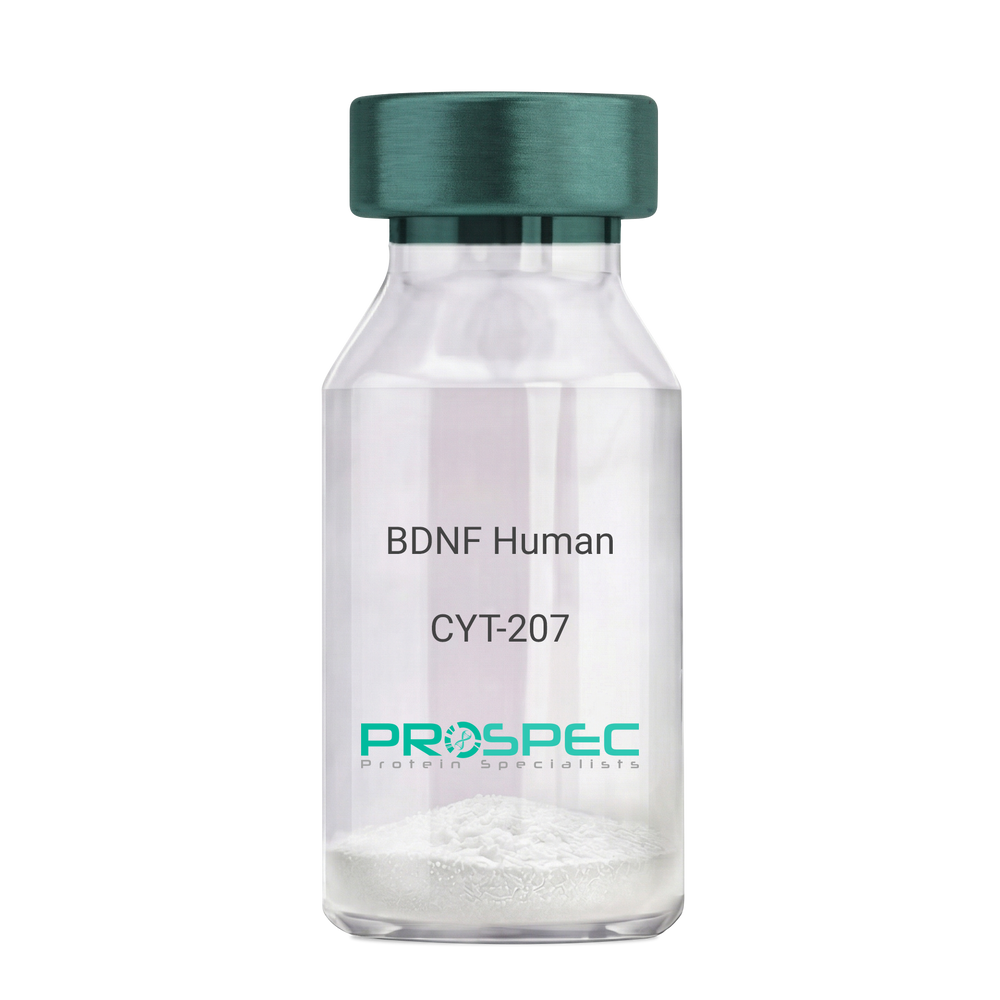
    BDNF Human

    Description:

    Brain-Derived Neurotrophic Factor Human Recombinant

    Brain-Derived Neurotrophic Factor, BDNF, MGC34632.

    Product # :

    CYT-207

    Price :

    Quantity :

    Shipping Method :

    Room Temp Icon

    Shipped at Room temp

    Add To Cart

    More Info

    • description
    • source
    • formulation
    • purity
    • biological activity
    • More Info
    • Activity
    • Citations

    Description

    BDNF Human Recombinant produced in E.Coli is a homodimer, non-glycosylated, polypeptide chain containing 2 x 119 amino acids (and an N-terminal Met) and having a total molecular mass of 28kDa. BDNF Human Recombinant is purified by proprietary chromatographic techniques.

    Source

    Escherichia Coli.

    Formulation

    The protein was lyophilized with 20mM PB and 400mM NaCl, pH 7.2.

    Purity

    BDNF is greater than 950% as determined SDS-PAGE.

    Biological Activity

    The activity was determined using Immobilized Human TrkB-His tag protein 2ug/ml (100 μl/well) for its binding to NHS-Biotin BDNF. The ED50 of was found to be ≤20ng/mL

    Activity

    bdnf activity - Product image 1

    Citations

    More Info

    • Introduction

      BDNF promotes the survival of neuronal populations that are all located either in the central nervous system or directly connected to it. BDNF is a major regulator of synaptic transmission and plasticity at adult synapses in many regions of the cns. The versatility of BDNF is emphasized by its contribution to a range of adaptive neuronal responses including long-term potentiation (ltp), long-term depression (ltd), certain forms of short-term synaptic plasticity, as well as homeostatic regulation of intrinsic neuronal excitability.

    • Synonyms

      Brain-Derived Neurotrophic Factor, BDNF, MGC34632.

    • Physical Appearance

      Sterile Filtered White lyophilized (freeze-dried) powder.

    • Stability

      Lyophilized BDNF although stable at room temperature for 3 weeks, should be stored desiccated below -18°C. Upon reconstitution BDNF should be stored at 4°C between 2-7 days and for future use below -18°C.For long term storage it is recommended to add a carrier protein (0.1% HSA or BSA).Please prevent freeze-thaw cycles.

    • Solubility

      It is recommended to reconstitute the lyophilized BDNF in sterile 18M-cm H2O not less than 100µg/ml, which can then be further diluted to other aqueous solutions.

    • Amino Acid Sequence

      HSDPARRGE LSVCDSISEW VTAADKKTAV DMSGGTVTVL EKVPVSKGQL KQYFYETKCN PMGYTKEGCR GIDKRHWNSQ CRTTQSYVRA LTMDSKKRIG WRFIRIDTSC VCTLTIKRGR.

    • Background

      Final Thoughts

      Although more research is needed on the safety and effectiveness of BDNF human recombinant, trials suggest that this laboratory-produced protein may be effective in managing and treating several neurological and psychiatric disorders. It's important for experts to stay up to date on the latest developments and research to learn more about potential risks and benefits.

      What is the molecular weight/Mw of BDNF Protein?
      BDNF Protein has a total Mw of 27kDa.

      What is the source or expression system of BDNF Protein?
      Escherichia Coli.

      What is the Purity of BDNF Protein?
      BDNF Protein is >97% pure as determined by SDS-PAGE.

      What is the Biological Activity of BDNF Protein?
      The ED50, as determined by the dose-dependent induction of C6 cells proliferation, is 1.3-2µg/ml.

      What is the amino acid sequence of BDNF Protein?
      MHSDPARRGE LSVCDSISEW VTAADKKTAV DMSGGTVTVL EKVPVSKGQL KQYFYETKCN PMGYTKEGCR GIDKRHWNSQ CRTTQSYVRA LTMDSKKRIG WRFIRIDTSC VCTLTIKRGR.

      What applications can BDNF Protein be used in?
      BDNF Protein can probably be used in western blot, ELISA and Lateral Flow.

      What is the endotoxin level for BDNF Protein?
      The endotoxin level is minimal, BDNF Protein was purified using conventional chromatography techniques.

    • Protein content

      BDNF quantitation was carried out by two independent methods:1. UV spectroscopy at 280 nm using the absorbency value of 1.6 as the extinction coefficient for a 0.1% (1mg/ml) solution. This value is calculated by the PC GENE computer analysis program of protein sequences (IntelliGenetics). 2. Analysis by RP-HPLC, using a standard solution of Brain-derived Neurotrophic Factor as a Reference Standard.

    ProSpec's products are furnished for LABORATORY RESEARCH USE ONLY. The product may not be used as drugs, agricultural or pesticidal products, food additives or household chemicals.

    Bdnf Human
  • View Data Sheet

    Name :

    HBsAg adw

    Description:

    Hepatitis B Surface Antigen, adw Recombinant

    Product # :

    HBS-872

    Price :

    Quantity :

    Shipping Method :

    Ice Icon

    Shipped with Ice Packs

    Add To Cart

    More Info

    • description
    • source
    • formulation
    • purity
    • More Info
    • Citations

    Description

    HbsAg adw produced Pichia Pastoris, having a molecular weight of approximately 24.0 kDa as shown on SDS-PAGE.

    Source

    Pichia Pastoris.

    Formulation

    Sterile Filtered solution containing 20mM Phosphate Buffer, 154mM sodium chloride, pH 7.1.

    Purity

    Greater than 95.0% as determined by SDS-PAGE.

    Citations

    More Info

    • Introduction

      HBsAg is the surface antigenof the Hepatitis-B-Virus (HBV). The capsidof a virus has different surface proteins from the rest of the virus. The antigen is a protein that binds specifically on one of these surface proteins. It is commonly referred to as the Australian Antigen.

    • Physical Appearance

      Sterile Filtered pale solution.

    • Stability

      HBsAg Should be stored at 4°C.DO NOT FREEZE.

    ProSpec's products are furnished for LABORATORY RESEARCH USE ONLY. The product may not be used as drugs, agricultural or pesticidal products, food additives or household chemicals.

    Hbsag Adw
  • View Data Sheet

    Name :

    CD11b Antibody, Biotin

    Description:

    CD11b, Mouse Anti-Human, Biotin

    Integrin alpha-M, Cell surface glycoprotein MAC-1 subunit alpha, CR-3 alpha chain, Leukocyte adhesion receptor MO1, Neutrophil adherence receptor, CD11b antigen, ITGAM, CR3A, MO1A, CD11B, MAC-1, MAC1A, MGC117044.

    Product # :

    ANT-275

    Price :

    Quantity :

    Shipping Method :

    Room Temp Icon

    Shipped at Room temp

    Add To Cart

    More Info

    • formulation
    • More Info
    • Citations

    Formulation

    1mg/ml in PBS (after reconstitution).

    Citations

    More Info

    • Introduction

      Integrins are heterodimeric integral membrane proteins consisting of an ? chain and a ? chain. CD11b is an I-domain including ? integrin combines with the ? 2 chain (ITGB2) to form a leukocyte-specific integrin referred to as macrophage receptor also called MAC1. The ? M beta 2 integrin is crucial in the adherence of neutrophils and monocytes to stimulated endothelium, and also in the phagocytosis of complement coated particles. Multiple transcript variants encoding different isoforms have been found for this gene.

    • Synonyms

      Integrin alpha-M, Cell surface glycoprotein MAC-1 subunit alpha, CR-3 alpha chain, Leukocyte adhesion receptor MO1, Neutrophil adherence receptor, CD11b antigen, ITGAM, CR3A, MO1A, CD11B, MAC-1, MAC1A, MGC117044.

    • Solubility

      Reconstitute with of H20. Mix gently, wash the sides of the vial and wait 30-60 seconds before use.

    • Immunogen

      Purified human PBL Monocytes.

    • Ig Subclass

      Mouse IgG1.

    • Clone

      hCD11b.

    • Applications

      Blocking and staining antibody. For staining, use 10µl/1,000,000 cells. Titer for blocking LPS binding should be determined by the investigator.

    • Available Conjugates

      This antibody is also available unconjugated and conjugated to FITC. For staining with biotin or FITC-conjugated antibody use 5-10µl/1,000,000 cells.

    • Type

      Mouse Anti Human Monoclonal.

    • Storage Procedures

      Lyophilized: store at 4°C. After reconstitution, if not intended for use within a month, aliquot and store at -20°C.

    • Purification Method

      Ion exchange column.

    ProSpec's products are furnished for LABORATORY RESEARCH USE ONLY. The product may not be used as drugs, agricultural or pesticidal products, food additives or household chemicals.

    Cd11B Antibody Biotin
  • View Data Sheet

    Name :

    CD4 biotin Antibody

    Description:

    CD4-Biotinylated, Mouse Anti-Human

    gp55, HLA-2, L3 / T4, Ly-4, T cell antigen T4/LEU3, T4, sCD4, CD4mut.

    Product # :

    ANT-167

    Price :

    Quantity :

    Shipping Method :

    Room Temp Icon

    Shipped at Room temp

    Add To Cart

    More Info

    • formulation
    • More Info
    • Citations

    Formulation

    1mg/ml in PBS (after reconstitution).

    Citations

    More Info

    • Introduction

      CD4 is a cell-surface glycoprotein found on the mature helper T cells and immature thymocytes, as well as on monocytes and macrophages. (Some cytotoxic T cells have CD4 protein as well.) Normally, about 65% of T cells in the blood are CD4+ (have CD4 protein protruding from their membrane). A mature T cell with either have CD4 or CD8, but not both. During one stage of development T cells develop CD4 and CD8 receptors, but they eventually are differentiated in the thymus and become more specialized.

    • Synonyms

      gp55, HLA-2, L3 / T4, Ly-4, T cell antigen T4/LEU3, T4, sCD4, CD4mut.

    • Solubility

      Reconstitute with of H20. Mix gently, wash the sides of the vial and wait 30-60 seconds before use.

    • Immunogen

      Purified human PBL CD4+ T cells.

    • Ig Subclass

      Mouse IgG2b.

    • Clone

      hCD4.

    • Applications

      Blocking and staining antibody. Blocks blinding of HIV to CD4. For staining, use 10 ml/1,000,000 cells. Titer for blocking T cell activation should be determined by the investigator.

    • Available Conjugates

      This antibody is also available conjugated to FITC.

    • Type

      Mouse Anti Human Monoclonal.

    • Storage Procedures

      Lyophilized: store at 4oC. After reconstitution, if not intended for use within a month, aliquot and store at -20oC.

    • Purification Method

      Ion exchange column.

    ProSpec's products are furnished for LABORATORY RESEARCH USE ONLY. The product may not be used as drugs, agricultural or pesticidal products, food additives or household chemicals.

    Cd4 Biotin Antibody
  • View Data Sheet

    Name :

    BD 4 Human

    Description:

    Beta Defensin-4 Human Recombinant

    HBD-4, DEFB-4, HBD4, DEFB104B, Beta-defensin 4, BD-4.

    Product # :

    CYT-599

    Price :

    Quantity :

    Shipping Method :

    Room Temp Icon

    Shipped at Room temp

    Add To Cart

    More Info

    • description
    • source
    • formulation
    • purity
    • biological activity
    • More Info
    • Citations

    Description

    Beta Defensin-4 Human Recombinant produced in E.Coli is a single, non-glycosylated polypeptide chain containing 50 amino acids and having a molecular mass of 6 kDa. The BD-4 is purified by proprietary chromatographic techniques.

    Source

    Escherichia Coli.

    Formulation

    The DEFB4 (1mg/ml) was lyophilized with 20mM sodium Phosphate buffer pH-7.4 and 130mM NaCl.

    Purity

    Greater than 98.0% as determined by:
    (a) Analysis by RP-HPLC.
    (b) Analysis by SDS-PAGE.

    Biological Activity

    Determined by its ability to chemoattract human monocytes using a concentration range of 0.1-50 ng/ml, corresponding to a specific activity of 20,000-10,000,000 units/mg.

    Citations

    More Info

    • Introduction

      Defensins are cationic peptides with a large spectrum of antimicrobial activity that comprise an important arm of the innate immune system. The Alpha defensins are differentiated from the Beta-defensins by the pairing of their 3 disulfide bonds.
      4 human Beta-defensins have been identified to date; BD-1, BD-2, BD-3 and BD-4.
      Beta-defensins are expressed on some leukocytes and at epithelial surfaces.
      In addition to their direct antimicrobial activities, they are chemoattractant towards immature dendritic cells and memory T cells. The beta-defensin proteins are expressed as the C-terminal portion of precursors and are released by proteolytic cleavage of a signal sequence and, in the case of BD-1 (36 a.a.), a propeptide region. Beta-defensins contain a six-cysteine motif that forms three intra-molecular disulfide bonds. Beta-Defensins are 3-5 kDa peptides ranging in size from 33-47 amino acid residues.

    • Synonyms

      HBD-4, DEFB-4, HBD4, DEFB104B, Beta-defensin 4, BD-4.

    • Physical Appearance

      Sterile Filtered White lyophilized (freeze-dried) powder.

    • Stability

      Lyophilized Beta Defensin-4 Recombinant although stable at room temperature for 3 weeks, should be stored desiccated below -18°C. Upon reconstitution BD-3 should be stored at 4°C between 2-7 days and for future use below -18°C.Please prevent freeze-thaw cycles.

    • Solubility

      It is recommended to reconstitute the lyophilized Beta Defensin-4 in sterile 18MΩ-cm H2O not less than 100µg/ml, which can then be further diluted to other aqueous solutions.

    • Amino Acid Sequence

      EFELDRICGY GTARCRKKCR SQEYRIGRCP NTYACCLRKW DESLLNRTKP.

    • Background

      Beta Defensin-4 Human Recombinant: Exploring the Potential of a Novel Antimicrobial Peptide

      Abstract:

      Beta Defensin-4 (hBD-4) human recombinant is a promising antimicrobial peptide with unique properties and potential therapeutic applications. This research paper provides an in-depth analysis of hBD-4, including its characteristics, mode of action, and potential uses. Furthermore, novel methodologies for the production and optimization of hBD-4 human recombinant are proposed, shedding light on its future implications in the field of infectious disease management.

      Introduction:

      In the face of increasing drug-resistant infections, alternative therapeutic strategies are crucial. Antimicrobial peptides, such as hBD-4, have gained attention due to their broad-spectrum activity against pathogens. This paper aims to explore the distinctive features of hBD-4 and propose innovative approaches for its production and optimization.

      Characteristics and Mode of Action:

      hBD-4 is a cationic peptide comprising 50 amino acids and is characterized by a unique structure that contributes to its antimicrobial properties. The mechanism of action involves the disruption of microbial membranes and subsequent cell death. Additionally, hBD-4 exhibits immunomodulatory effects, including the stimulation of chemotaxis and modulation of the inflammatory response.

      Production of hBD-4 Human Recombinant:

      Efficient production methodologies for hBD-4 human recombinant are essential for its therapeutic applications. Various expression systems, such as bacterial, yeast, and mammalian cell-based platforms, have been explored. Each system presents advantages and challenges, necessitating careful selection for high yields and protein quality. Optimization strategies, including codon optimization, fusion protein tags, and growth conditions, have been employed to enhance production efficiency. Purification techniques, such as chromatography and ultrafiltration, have been optimized to isolate high-quality hBD-4 recombinant.

      Potential Applications:

      hBD-4 human recombinant demonstrates potential therapeutic applications in combating drug-resistant pathogens. Its broad-spectrum antimicrobial activity against bacteria, viruses, and fungi positions it as a promising candidate for infectious disease management. Moreover, hBD-4 shows promise in wound healing and tissue regeneration due to its ability to promote angiogenesis and stimulate cell migration. Exploring its potential in combination with drug delivery systems for targeted therapy is an exciting avenue for future research.

      Conclusion:

      hBD-4 human recombinant represents a novel antimicrobial peptide with diverse potential applications. Optimizing production methodologies and elucidating its mechanisms of action will further enhance its clinical utility. With its broad-spectrum antimicrobial activity and potential implications in wound healing and targeted therapy, hBD-4 human recombinant holds promise as an innovative therapeutic agent.

      What is the molecular weight/Mw of BD4 Protein?
      BD4 Protein has a total Mw of 6kDa.

      What is the source or expression system of BD4 Protein?
      Escherichia Coli.

      What is the Purity of BD4 Protein?
      BD4 Protein is >98% pure as determined by SDS-PAGE.

      What is the Biological Activity of BD4 Protein?
      Determined by its ability to chemoattract human monocytes using a concentration range of 0.1-50 ng/ml, corresponding to a specific activity of 20,000-10,000,000 units/mg.

      What is the amino acid sequence of BD4 Protein?
      EFELDRICGY GTARCRKKCR SQEYRIGRCP NTYACCLRKW DESLLNRTKP.

      What applications can BD4 Protein be used in?
      BD4 Protein can probably be used in western blot, ELISA and Lateral Flow.

      What is the endotoxin level for BD4 Protein?
      The endotoxin level is minimal, BD4 Protein was purified using conventional chromatography techniques.

    ProSpec's products are furnished for LABORATORY RESEARCH USE ONLY. The product may not be used as drugs, agricultural or pesticidal products, food additives or household chemicals.

    Defb 4 Human
  • View Data Sheet

    Name :

    BD 4 Rat

    Description:

    BD 4 Rat

    Beta-defensin 4, BD-4, BD-2, Defensin, beta 4, RBD-2, RBD-4, Defb4, Defb2, Defb3.

    Product # :

    CYT-066

    Price :

    Quantity :

    Shipping Method :

    Room Temp Icon

    Shipped at Room temp

    Add To Cart

    More Info

    • description
    • source
    • formulation
    • purity
    • biological activity
    • More Info
    • Citations

    Description

    BD-4 Rat Recombinant produced in E.coli is a single, non-glycosylated polypeptide chain containing 41 amino acids and having a molecular mass of 4.4kDa.The BD-4 is purified by proprietary chromatographic techniques.

    Source

    Escherichia Coli.

    Formulation

    BD-4 protein was lyophilized from a 0.2µm filtered concentrated solution in PBS, pH 7.4.

    Purity

    Greater than 97.0% as determined by SDS-PAGE.

    Biological Activity

    Measured by its antimicrobial activity against E. coli. The ED50 for this effect is typically 5-50µg/ml.

    Citations

    More Info

    • Introduction

      Defensins are cationic peptides with a large spectrum of antimicrobial activity that comprise an important arm of the innate immune system. The Alpha defensins are differentiated from the Beta-defensins by the pairing of their 3 disulfide bonds.
      4 human Beta-defensins have been identified to date; BD-1, BD-2, BD-3 and BD-4.
      Beta-defensins are expressed on some leukocytes and at epithelial surfaces.
      In addition to their direct antimicrobial activities, they are chemoattractant towards immature dendritic cells and memory T cells. The beta-defensin proteins are expressed as the C-terminal portion of precursors and are released by proteolytic cleavage of a signal sequence and, in the case of BD-1 (36 a.a.), a propeptide region. Beta-defensins contain a six-cysteine motif that forms three intra-molecular disulfide bonds. Beta-Defensins are 3-5 kDa peptides ranging in size from 33-47 amino acid residues.

    • Synonyms

      Beta-defensin 4, BD-4, BD-2, Defensin, beta 4, RBD-2, RBD-4, Defb4, Defb2, Defb3.

    • Physical Appearance

      Sterile Filtered White lyophilized (freeze-dried) powder.

    • Stability

      Lyophilized BD-4 although stable at room temperature for 3 weeks, should be stored desiccated below -18°C. Upon reconstitution BD-4 should be stored at 4°C between 2-7 days and for future use below -18°C. For long term storage it is recommended to add a carrier protein (0.1% HSA or BSA). Please prevent freeze-thaw cycles.

    • Solubility

      It is recommended to reconstitute the lyophilized BD-4 in sterile 18M-cm H2O not less than 100µg/ml, which can then be further diluted to other aqueous solutions.

    • Amino Acid Sequence

      QSINNPITCL TKGGVCWGPC TGGFRQIGTC GLPRVRCCKK K.

    • Background

      What is the molecular weight/Mw of BD4 Protein?
      BD4 Protein has a total Mw of 4.4kDa.

      What is the source or expression system of BD4 Protein?
      Escherichia Coli.

      What is the Purity of BD4 Protein?
      BD4 Protein is >97% pure as determined by SDS-PAGE.

      What is the Biological Activity of BD4 Protein?
      Measured by its antimicrobial activity against E. coli. The ED50 for this effect is typically 5-50µg/ml.

      What is the amino acid sequence of BD4 Protein?
      QSINNPITCL TKGGVCWGPC TGGFRQIGTC GLPRVRCCKK K.

      What applications can BD4 Protein be used in?
      BD4 Protein can probably be used in western blot, ELISA and Lateral Flow.

      What is the endotoxin level for BD4 Protein?
      The endotoxin level is minimal, BD4 Protein was purified using conventional chromatography techniques.

    ProSpec's products are furnished for LABORATORY RESEARCH USE ONLY. The product may not be used as drugs, agricultural or pesticidal products, food additives or household chemicals.

    Bd 4 Rat
  • View Data Sheet

    Name :

    CD31 Biotin Antibody

    Description:

    CD31-Biotinylated, Mouse Anti Human

    Platelet endothelial cell adhesion molecule, PECAM-1, EndoCAM, GPIIA', CD31 antigen, PECAM1, CD31.

    Product # :

    ANT-053

    Price :

    Quantity :

    Shipping Method :

    Room Temp Icon

    Shipped at Room temp

    Add To Cart

    More Info

    • formulation
    • More Info
    • Citations

    Formulation

    1mg/ml in PBS (after reconstitution).

    Citations

    More Info

    • Introduction

      CD31 is a glycoprotein expressed on endothelial cells, platelets, macrophages and Kupffer cells, granulocytes, T / NK cells, lymphocytes, megakaryocytes, fibroblasts, osteoclasts, neutrophils. In humans, the gene encoding CD31 is found on chromosome 17.
      CD31 is a cluster of differentiation molecule. It is also called PECAM-1 for platelet endothelial cell adhesion molecule. It plays a key role in removing aged neutrophils from the body. Both the neutrophil and the macrophage express CD31 on their membranes, and during the testing process, these CD31 molecules bind the two cells together. If the neutrophil is healthy, it will send a signal to the macrophage, and the CD31 molecules will detach.
      CD31 is also expressed in certain tumors, including epithelioid hemangioendothelioma, epithelioid sarcoma-like hemangioendothelioma, other vascular tumors, histiocytic malignancies, and plasmacytomas. It is rarely found in some sarcomas and carcinomas.

    • Synonyms

      Platelet endothelial cell adhesion molecule, PECAM-1, EndoCAM, GPIIA', CD31 antigen, PECAM1, CD31.

    • Solubility

      Reconstitute with H20. Mix gently, wash the sides of the vial and wait 30-60 seconds before use.

    • Immunogen

      Enriched human platelets

    • Ig Subclass

      mouse IgG1

    • Clone

      hCD31

    • Applications

      Flow cytometry, immunohistochemistry. For staining, use 10µl/106 cells.

    • Note

      CD31 is expressed in high levels on endothelial cells and in lower levels on monocytes, granulocytes and platelets.

    • Shipping Conditions

      Antibody is shipped lyophilized at ambient temperature.

    • Available Conjugates

      This antibody is also available conjugated to FITC and biotin. For flow cytometry use 5-10µl/106 cells.

    • Type

      Mouse Anti Human Monoclonal.

    • Storage Procedures

      In lyophilized form, for long periods, store at 4°C in a dry environment. After reconstitution, if not intended for use within a month, aliquot and store at -20°C.

    • Purification Method

      Protein A

    ProSpec's products are furnished for LABORATORY RESEARCH USE ONLY. The product may not be used as drugs, agricultural or pesticidal products, food additives or household chemicals.

    Cd31 Biotin Antibody
  • View Data Sheet

    Name :

    HIV-1 gp41, Biotin

    Description:

    HIV-1 gp41 Recombinant, Biotin labeled

    Product # :

    HIV-117

    Price :

    Quantity :

    Shipping Method :

    Ice Icon

    Shipped with Ice Packs

    Add To Cart

    More Info

    • description
    • source
    • formulation
    • purity
    • More Info
    • Citations

    Description

    HIV-1 gp41 Biotin labeled is a non-glycosylated polypeptide chain, containing 288 amino acids (466-753 a.a.) and having an Mw of 32kDa. HIV1 gp41 biotin labeled is fused to an 114kDa beta-galactosidase tag at N-terminus having a total Mw of 146kDa.

    Source

    Escherichia Coli.

    Formulation

    1mg/ml in 20mM Tris-HCl pH-8, 10mM B-ME and 8M urea.

    Purity

    Greater than 95.0% as determined by SDS-PAGE.

    Citations

    More Info

    • Introduction

      Human immunodeficiency virus (HIV) is a retrovirusthat can lead to a condition in which the immune systembegins to fail, leading to opportunistic infections. HIV primarily infects vital cells in the humanimmune systemsuch as helper T cells(specifically CD4+ T cells), macrophagesand dendritic cells. HIV infection leads to low levels of CD4+ T cells through three main mechanisms: firstly, direct viral killing of infected cells; secondly, increased rates of apoptosisin infected cells; and thirdly, killing of infected CD4+ T cells by CD8 cytotoxic lymphocytesthat recognize infected cells. When CD4+ T cell numbers decline below a critical level, cell-mediated immunityis lost, and the body becomes progressively more susceptible to opportunistic infections. HIV was classified as a member of the genus Lentivirus, part of the family of Retroviridae. Lentiviruses have many common morphologies and biological properties. Many species are infected by lentiviruses, which are characteristically responsible for long-duration illnesses with a long incubation period. Lentiviruses are transmitted as single-stranded, positive-sense, enveloped RNA viruses. Upon entry of the target cell, the viral RNA genomeis converted to double-stranded DNAby a virally encoded reverse transcriptasethat is present in the virus particle. This viral DNA is then integrated into the cellular DNA by a virally encoded integraseso that the genome can be transcribed. Once the virus has infected the cell, two pathways are possible: either the virus becomes latentand the infected cell continues to function, or the virus becomes active and replicates, and a large number of virus particles are liberated that can then infect other cells.

    • Physical Appearance

      Sterile filtered colorless clear solution.

    • Stability

      HIV-1 gp41 Biotin although stable at 4°C for 1 week, should be stored below -18°C. Please prevent freeze thaw cycles.

    • Specificity

      Reacts with Human HIV positive serum.

    ProSpec's products are furnished for LABORATORY RESEARCH USE ONLY. The product may not be used as drugs, agricultural or pesticidal products, food additives or household chemicals.

    Hiv 1 Gp41 Biotin
  • View Data Sheet

    Name :

    CD58 Antibody, Biotin

    Description:

    CD58, Mouse Anti-Human, Biotin

    CD58, LFA-3, Ag3, Surface glycoprotein LFA-3.

    Product # :

    ANT-278

    Price :

    Quantity :

    Shipping Method :

    Room Temp Icon

    Shipped at Room temp

    Add To Cart

    More Info

    • More Info
    • Citations

    Citations

    More Info

    • Introduction

      CD58 is part of the immunoglobulin superfamily. CD58 is a ligand of the T lymphocyte CD2 protein, and is invloved in adhesion and activation of T lymphocytes. CD58 is localized to the plasma membrane.

    • Synonyms

      CD58, LFA-3, Ag3, Surface glycoprotein LFA-3.

    • Solubility

      Reconstitute with of H20. Mix gently, wash the sides of the vial and wait 30-60 seconds before use.

    • Immunogen

      Human Erythrocytes.

    • Ig Subclass

      Mouse IgG1.

    • Clone

      hCD58.

    • Applications

      Staining antibody. For staining, use 10µl/1,000,000 cells.

    • Available Conjugates

      This antibody is also available unconjugated to and conjugated to FITC. For staining with biotin or FITC-conjugated antibody use 5-10µl/1,000,000 cells.

    • Type

      Mouse Anti Human Monoclonal.

    • Storage Procedures

      Lyophilized: store at 4°C. After reconstitution, if not intended for use within a month, aliquot and store at -20°C.

    • Purification Method

      Ion-Exchange Column Protein concentration1mg/ml in PBS (after reconstitution).

    ProSpec's products are furnished for LABORATORY RESEARCH USE ONLY. The product may not be used as drugs, agricultural or pesticidal products, food additives or household chemicals.

    Cd58 Antibody Biotin
  • View Data Sheet

    Name :

    CD8 Biotin Antibody

    Description:

    CD8, Rat Anti-Mouse, Biotin

    CD8, MAL, p32.

    Product # :

    ANT-281

    Price :

    Quantity :

    Shipping Method :

    Room Temp Icon

    Shipped at Room temp

    Add To Cart

    More Info

    • formulation
    • More Info
    • Citations

    Formulation

    1mg/ml in PBS (after reconstitution).

    Citations

    More Info

    • Introduction

      CD8 is a cell surface glycoprotein found on most cytotoxic T lymphocytes that mediates efficient cell-cell interactions within the immune system. CD8 acts as a co-receptor, and the T-cell receptor on the T lymphocyte recognize antigen displayed by an antigen presenting cell (APC) in the context of class I MHC molecules. The functional CD8 is either a homodimer composed of two alpha chains, or a heterodimer composed of one alpha and one beta chain. Both alpha and beta chains share significant homology to immunoglobulin variable light chains.
      CD8 identifies cytotoxic/suppressor t-cells that interact with MHC class I bearing targets. CD8 is thought to play a role in the process of t-cell mediated killing. CD8 alpha chains bind to class-I MHC molecules alpha-3 domains.

    • Synonyms

      CD8, MAL, p32.

    • Solubility

      Reconstitute with of H20. Mix gently, wash the sides of the vial and wait 30-60 seconds before use.

    • Immunogen

      Purified Mouse LN T cells.

    • Ig Subclass

      Rat IgM.

    • Clone

      NYRmCD8.

    • Applications

      FACS staining, immunohistochemistry, Western Blotting. For staining, use 10 µl/1,000,000 cells.

    • Available Conjugates

      This antibody is only available unconjugated and conjugated to FITC.

    • Type

      Rat Anti Mouse Monoclonal.

    • Storage Procedures

      Lyophilized: store at 4°C. After reconstitution, if not intended for use within a month, aliquot and store at -20°C.

    • Purification Method

      Ion Exchange Column.

    ProSpec's products are furnished for LABORATORY RESEARCH USE ONLY. The product may not be used as drugs, agricultural or pesticidal products, food additives or household chemicals.

    Cd8 Antibody Biotin
  • View Data Sheet

    Name :

    CD40 Antibody, Biotin

    Description:

    CD40, Mouse Anti-Human, Biotin

    p50, Bp50, CDW40, MGC9013, TNFRSF5, CD40.

    Product # :

    ANT-264

    Price :

    Quantity :

    Shipping Method :

    Room Temp Icon

    Shipped at Room temp

    Add To Cart

    More Info

    • formulation
    • More Info
    • Citations

    Formulation

    1mg/ml in PBS (after reconstitution).

    Citations

    More Info

    • Introduction

      CD40 is part of the TNF-receptor superfamily. CD40 is a necessary mediator for vast range of immune and inflammatory responses together with T cell-dependent immunoglobulin class switching, memory B cell growth, and germinal center formation. The transcription factor AKNA regulates the expression of CD40 and its ligand, which is vital for homotypic cell interactions. Adaptor protein TNFR2 interacts with CD40 and serves as a mediator of the signal transduction. The interaction of CD40 and its ligand is crucial for amyloid-beta-induced microglial activation, and thus is thought to be an early event in Alzheimer disease pathogenesis. CD40 is the receptor for TNFSF5/CD40L.

    • Synonyms

      p50, Bp50, CDW40, MGC9013, TNFRSF5, CD40.

    • Solubility

      Reconstitute with of H20. Mix gently, wash the sides of the vial and wait 30-60 seconds before use.

    • Immunogen

      Activated Human B cells.

    • Ig Subclass

      Mouse IgG1.

    • Clone

      hCD40.

    • Applications

      Staining antibody. For staining, use 10µl/1,000,000 cells.

    • Available Conjugates

      This antibody is also available unconjugated and conjugated to FITC. For staining with biotin or FITC-conjugated antibody use 5-10µl/106 cells.

    • Type

      Mouse Anti Human Monoclonal.

    • Storage Procedures

      Lyophilized: store at 4°C. After reconstitution, if not intended for use within a month, aliquot and store at -20°C.

    • Purification Method

      Protein-A.

    ProSpec's products are furnished for LABORATORY RESEARCH USE ONLY. The product may not be used as drugs, agricultural or pesticidal products, food additives or household chemicals.

    Cd40 Antibody Biotin
  • View Data Sheet

    Name :

    HIV-2 gp32, Biotin

    Description:

    HIV-2 gp32 Recombinant, Biotin Labeled

    Product # :

    HIV-135

    Price :

    Quantity :

    Shipping Method :

    Ice Icon

    Shipped with Ice Packs

    Add To Cart

    More Info

    • description
    • source
    • formulation
    • purity
    • More Info
    • Citations

    Description

    HIV-2 gp32 Biotin Labeled recombinant- contains the full-length sequence of HIV-2 envelope immunodominant regions gp32 having a Mw of 32kDa and fused to a beta-galactosidase at N-terminus.

    Source

    Escherichia Coli.

    Formulation

    0.01M Na2CO3, 10mM EDTA, 14mM beta-ME and 0.02% Sarcosyl.

    Purity

    Greater than 95.0% as determined by SDS-PAGE.

    Citations

    More Info

    • Introduction

      HIV-1 and HIV-2 appear to package their RNA differently. HIV-1 binds to any appropriate RNA whereas HIV-2 preferentially binds to mRNA which creates the Gag protein itself. This means that HIV-1 is better able to mutate. HIV-2 is transmitted in the same ways as HIV-1: Through exposure to bodily fluids such as blood, semen, tears and vaginal fluids.
      Immunodeficiency develops more slowly with HIV-2.
      HIV-2 is less infectious in the early stages of the virus than with HIV-1.
      The infectiousness of HIV-2 increases as the virus progresses.
      Major differences include reduced pathogenicity of HIV-2 relative to HIV-1, enhanced immune control of HIV-2 infection and often some degree of CD4-independence. Despite considerable sequence and phenotypic differences between HIV-1 and 2 envelopes, structurally they are quite similar. Both membrane-anchored proteins eventually form the 6-helix bundles from the N-terminal and C-terminal regions of the ectodomain, which is common to many viral and cellular fusion proteins and which seems to drive fusion.
      HIV-1 gp41 helical regions can form more stable 6-helix bundles than HIV-2 gp41 helical regions however HIV-2 fusion occurs at a lower threshold temperature (25°C), does not require Ca2+ in the medium, is insensitive to treatment of target cells with cytochalasin B, and is not affected by target membrane glycosphingolipid composition.

    • Physical Appearance

      Sterile filtered colorless clear solution.

    • Stability

      HIV-2 gp-32 although stable at room temperature for 3 weeks, should be stored at 4°C.

    ProSpec's products are furnished for LABORATORY RESEARCH USE ONLY. The product may not be used as drugs, agricultural or pesticidal products, food additives or household chemicals.

    Hiv 2 Gp 32 Biotin
  • View Data Sheet

    Name :

    CD86 Antibody, Biotin

    Description:

    CD86, Rat Anti-Mouse, Biotinylated

    B70, B7-2, LAB72, CD28LG2, FUN-1, BU63.

    Product # :

    ANT-284

    Price :

    Quantity :

    Shipping Method :

    Room Temp Icon

    Shipped at Room temp

    Add To Cart

    More Info

    • formulation
    • More Info
    • Citations

    Formulation

    1mg/ml in PBS (after reconstitution).

    Citations

    More Info

    • Introduction

      CD86 type I membrane protein is a member of the immunoglobulin superfamily which is expressed by antigen-presenting cells, and acts as the ligand for two proteins at the cell surface of T cells, CD28 antigen and cytotoxic T-lymphocyte-associated protein 4. CD86 binding with CD28 protein is a co-stimulatory signal for initiation of the T-cell. CD86 binding with CTLA-4 negatively regulates T-cell activation and diminishes the immune response.

    • Synonyms

      B70, B7-2, LAB72, CD28LG2, FUN-1, BU63.

    • Solubility

      Reconstitute with of H20. Mix gently, wash the sides of the vial and wait 30-60 seconds before use.

    • Immunogen

      Purified mouse LPS-activated B cells.

    • Ig Subclass

      Rat IgG2a.

    • Clone

      mB7-2.

    • Applications

      Blocking and staining antibody. For staining, use 10µl/1,000,000 cells. Titer for blocking T cell activation should be determined by the investigator.

    • Available Conjugates

      This antibody is only available non-conjugated and conjugated to FITC.

    • Type

      Rat Anti Mouse Monoclonal.

    • Storage Procedures

      Lyophilized: store at 4°C. After reconstitution, if not intended for use within a month, aliquot and store at -20°C.

    • Purification Method

      Protein-A.

    ProSpec's products are furnished for LABORATORY RESEARCH USE ONLY. The product may not be used as drugs, agricultural or pesticidal products, food additives or household chemicals.

    Cd86 Antibody Biotin
  • View Data Sheet

    Name :

    CD21 Antibody, Biotin

    Description:

    CD21, Mouse Anti-Human, Biotin

    Complement receptor type 2, Cr2, Complement C3d receptor, Epstein-Barr virus receptor, EBV receptor, CD21 antigen, CR2, C3DR, CD21, SLEB9.

    Product # :

    ANT-258

    Price :

    Quantity :

    Shipping Method :

    Room Temp Icon

    Shipped at Room temp

    Add To Cart

    More Info

    • formulation
    • More Info
    • Citations

    Formulation

    1mg/ml in PBS (after reconstitution).

    Citations

    More Info

    • Introduction

      CD21 is expressed strongly on mature B cells, follicular dentritic cells and weakly on immature thymocytes and T lymphocytes. In B-cell ontogeny, CD21 appears after the pre-B-stage, is maintained during peripheral B-cell development and is lost upon terminal differentiation into plasma cells. CD21 expression is also gradually lost after stimulation of B cells in vitro. CD21 functions as receptor for C3d, C3dg and iC3b Complement components, for EBV and for IFNalpha. CD21 binds to CD23 and associates with CD19, CD81 and Leu13 to form a large signal-transduction complex involved in B cell activation.

    • Synonyms

      Complement receptor type 2, Cr2, Complement C3d receptor, Epstein-Barr virus receptor, EBV receptor, CD21 antigen, CR2, C3DR, CD21, SLEB9.

    • Solubility

      Reconstitute with of H20. Mix gently, wash the sides of the vial and wait 30-60 seconds before use.

    • Immunogen

      Purified human B-Cells.

    • Ig Subclass

      Mouse IgG2a.

    • Clone

      hCD21.

    • Applications

      Staining antibody. For staining, use 10µl/1,000,000 cells.

    • Available Conjugates

      This antibody is also available unconjugated and FITC. For staining with biotin or FITC-conjugated antibody use 5-10µl/106 cells.

    • Type

      Mouse Anti Human Monoclonal.

    • Storage Procedures

      Lyophilized: store at 4°C. After reconstitution, if not intended for use within a month, aliquot and store at -20°C.

    • Purification Method

      Protein-A.

    ProSpec's products are furnished for LABORATORY RESEARCH USE ONLY. The product may not be used as drugs, agricultural or pesticidal products, food additives or household chemicals.

    Cd21 Antibody Biotin
  • View Data Sheet

    Name :

    HCV Core 22kDa, Biotin

    Description:

    Hepatitis C Virus Core 22kDa, Biotin Recombinant

    Product # :

    HCV-225

    Price :

    Quantity :

    Shipping Method :

    Ice Icon

    Shipped with Ice Packs

    Add To Cart

    More Info

    • description
    • formulation
    • purity
    • More Info
    • Citations

    Description

    The E.coli derived recombinant protein contains the HCV core nucleocapsid immunodominant regions, amino acids 2-192, 22kDa.The Biotin labeled protein is fused with b-galactosidase (114 kDa) at N-terminus.

    Formulation

    20mM Tris-HCl pH 8 and 8M urea.

    Purity

    Protein is >95% pure as determined by 10% PAGE (coomassie staining).

    Citations

    More Info

    • Introduction

      HCV is a small 50nm, enveloped, single-stranded, positive sense RNAvirus in the family Flaviviridae.
      HCV has a high rate of replication with approximately one trillion particles produced each day in an infected individual. Due to lack of proofreading by the HCV RNA polymerase, the HCV has an exceptionally high mutation rate, a factor that may help it elude the host's immune response. Hepatitis C virus is classified into six genotypes(1-6) with several subtypes within each genotype. The preponderance and distribution of HCV genotypes varies globally. Genotype is clinically important in determining potential response to interferon-based therapy and the required duration of such therapy. Genotypes 1 and 4 are less responsive to interferon-based treatment than are the other genotypes (2, 3, 5 and 6).

    • Stability

      HCV-Core although stable at 4°C for 1 week, should be stored below -18°C. Please prevent freeze thaw cycles.

    • Specificity

      Immunoreactive with sera of HCV-infected individuals.

    • Purification Method

      HCV-Core protein was purified by proprietary chromatographic technique.

    ProSpec's products are furnished for LABORATORY RESEARCH USE ONLY. The product may not be used as drugs, agricultural or pesticidal products, food additives or household chemicals.

    Hcv Core 22Kda Biotin
  • View Data Sheet

    Name :

    CD28 Antibody, Biotin

    Description:

    CD28, Hamster Anti-Mouse, Biotinylated

    Product # :

    ANT-272

    Price :

    Quantity :

    Shipping Method :

    Room Temp Icon

    Shipped at Room temp

    Add To Cart

    More Info

    • formulation
    • More Info
    • Citations

    Formulation

    1mg/ml in PBS (after reconstitution).

    Citations

    More Info

    • Introduction

      CD28 co-stimulation is necessary for CD4 positive T-cell proliferation & survival, interleukin-2 production, and T-helper type-2 development. Human post-thymic regulatory T cells require CD28 co-stimulation to expand and maintain potent suppressive function in vivo. Apoptosis plays a key role in the age-related decline of CD28 expression and in immunosenescence.

    • Solubility

      Reconstitute with of H20. Mix gently, wash the sides of the vial and wait 30-60 seconds before use.

    • Immunogen

      Purified mouse purified mouse LN T cells.

    • Ig Subclass

      Hamster IgG.

    • Clone

      NYRmCD28.

    • Applications

      Blocking and staining antibody. For staining, use 10µl/1,000,000 cells. Titer for blocking T cell activation should be determined by the investigator.

    • Available Conjugates

      This antibody is only available non-conjugated to FITC.

    • Type

      Hamster Anti Mouse Monoclonal.

    • Storage Procedures

      Lyophilized: store at 4°C. After reconstitution, if not intended for use within a month, aliquot and store at -20°C.

    • Purification Method

      Protein-A.

    ProSpec's products are furnished for LABORATORY RESEARCH USE ONLY. The product may not be used as drugs, agricultural or pesticidal products, food additives or household chemicals.

    Cd28 Antibody Biotin
  • View Data Sheet

    Name :

    HIV-1 NEF Biotin

    Description:

    HIV-1 nef Recombinant Biotin Labeled

    Product # :

    HIV-009

    Price :

    Quantity :

    Shipping Method :

    Ice Icon

    Shipped with Ice Packs

    Add To Cart

    More Info

    • description
    • source
    • formulation
    • purity
    • More Info
    • Citations

    Description

    Recombinant HIV-1 nef Biotin Labeled is a full length protein produced in E.coli and having a molecular mass of 27kDa. HIV-1 nef Biotin is purified by proprietary chromatographic technique.

    Source

    Escherichia Coli.

    Formulation

    HIV-1 nef Biotin protein solution containing PBS & 0.05%(v/v) glycerol.

    Purity

    Greater than 90.0% as determined by SDS-PAGE.

    Citations

    More Info

    • Introduction

      HIV-1 Nef is anessential factor for efficient viral replication and pathogenesis and therefore is produced shortly after virus infection. HIV-1 Nef is also facilitates virus replication and enhances virions infectivity. Nef exerts pleiotropic effects: decreases cell surface CD4 antigen by interacting with the Src family kinase LCK, down-modulates surface MHC-I molecules and protects the infected cell from apoptosis in order to keep it alive until the next virus generation is mature. Nef protein bypasses host T-cell signaling byinducing a trascriptional program almost identical to that of anti-CD3 cell activation.

    • Physical Appearance

      Sterile Filtered clear solution.

    • Stability

      HIV-1 nef Biotin although stable at 4°C for 1 week, should be stored below -18°C.Please prevent freeze thaw cycles

    • Applications

      Western Blotting, SDS Page

    ProSpec's products are furnished for LABORATORY RESEARCH USE ONLY. The product may not be used as drugs, agricultural or pesticidal products, food additives or household chemicals.

    Hiv 1 Nef
  • View Data Sheet

    Name :

    CD57 Biotin Antibody

    Description:

    CD57 Biotinylated, Mouse Anti-Human

    NK1, CD57, HNK1, LEU7, NK-1, GLCATP, GLCUATP, B3GAT1.

    Product # :

    ANT-288

    Price :

    Quantity :

    Shipping Method :

    Room Temp Icon

    Shipped at Room temp

    Add To Cart

    More Info

    • formulation
    • More Info
    • Citations

    Formulation

    1mg/ml in PBS (after reconstitution).

    Citations

    More Info

    • Introduction

      CD57 also called B3GAT1is part of the glucuronyltransferase gene family. CD57 exhibits strict acceptor specificity, recognizing nonreducing terminal sugars and their anomeric linkages. CD57 takes part in the glucuronyl transfer reaction during the biosynthesis of the carbohydrate epitope HNK-1.

    • Synonyms

      NK1, CD57, HNK1, LEU7, NK-1, GLCATP, GLCUATP, B3GAT1.

    • Solubility

      Reconstitute with of H20. Mix gently, wash the sides of the vial and wait 30-60 seconds before use.

    • Immunogen

      Human CD57 Positive Cells.

    • Ig Subclass

      Mouse IgM.

    • Clone

      hCD57.

    • Applications

      Staining antibody. For staining, use 10µl/1,000,000 cells.

    • Available Conjugates

      This antibody is also available unconjugated and conjugated to FITC. For staining with biotin or FITC-conjugated antibody use 5-10µl/1,000,000 cells.

    • Type

      Mouse Anti Human Monoclonal.

    • Storage Procedures

      Lyophilized: store at 4°C. After reconstitution, if not intended for use within a month, aliquot and store at -20°C.

    • Purification Method

      Ion-Exchange Column.

    ProSpec's products are furnished for LABORATORY RESEARCH USE ONLY. The product may not be used as drugs, agricultural or pesticidal products, food additives or household chemicals.

    Cd57 Biotin Antibody
  • 1
  • 2
  • 3
  • …
  • 42
Your browser does not support the video tag.

Products

  • Cytokines
  • Growth Factors
  • Chemokines
  • CD Antigens
  • Neurotrophins
  • Hormones
  • Enzymes
  • Viral Antigens
  • Recombinant Proteins
  • Natural Proteins
  • Monoclonal Antibodies
  • Polyclonal Antibodies
  • Thermal Packaging

About

  • Company
  • Founder
  • Contribution
  • Contact Us
  • My Account

Ordering

  • Ordering Method
  • Ordering - Credit Card
  • Ordering PO
  • Shipping Fees
  • FAQ's

Legal

  • Terms & Conditions
  • Privacy
  • Site Map
  • info@prospecbio.com
  • Facebook
  • Instagram
  • Linkedin Profile

© 2026 ProSpec-Tany TechnoGene Ltd. All Rights Reserved.

  • Choosing a selection results in a full page refresh.
  • Opens in a new window.